Student Exchange SA: Exploring Cape Town

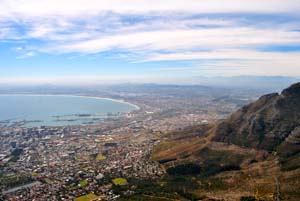
Capetown1After a short two-hour flight, we arrived in Cape Town where we would spend five days touring the city and its surroundings.

The first day, we took the cable car up Table Mountain and had the chance to see amazing views of the city. From the lookout, we were able to see Robben Island, where Nelson Mandela was imprisoned, the Cape of Good Hope, the southernmost point of Africa and even the new soccer stadium that is being used for the upcoming FIFA World Cup Tournament.

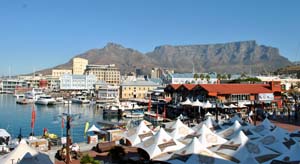
The following day, we drove along the coast of the Cape and stopped at the Victoria and Alfred Waterfront, one of the main working harbors of Cape Town, and wandered through the many shops and historic streets.

Capetown2Next, we drove to Stellenbosch, the second oldest European settlement in the province after Cape Town. While we were there, we saw many vineyards, as Stellenbosch is the center of the South African wine industry and even the site of the first school in South Africa that accepted girls!

The next few days were spent exploring the rest of the city and parts of the Western Cape. —Emily Black

Celebrating our Planet Earth

EarthWeekAnother year has passed since our last Earth Day and Environment Week at LCC. Unfortunately, on the global scale it’s easy to feel gloomy about the general state of the environment. Climate change is a huge topic, and while politicians around the world debate the issues—as they did at the Copenhagen Conference last December and only implement minimal change—we all ask, what is really being achieved?

I believe that at the grassroots level, people are more aware that the environment matters. Individuals, not governments are making a difference. People are more responsible and accountable, not because they have to, but because they want to.

How about within our own school community? Have we made progress by reducing our footprint and becoming greener? Are we building a more sustainable school?

I am proud that we have made a number of advances. Yet, I will be the first to assert that we have yet to develop broad universal “buy-in” and consciousness. For too many people in our school community, environmental changes remain only skin deep. More effort is still required to embed sustainable practices into our daily lives.

We have made achievements and some notable progress. Consider the following:
 We have made the environment and sustainability one of the seven pillars of our school’s current strategic plan.

 We have significantly reduced our energy consumption at the school in recent years thanks to some initiatives we implemented three years ago.

 Under the leadership of Ms. Scattolin and Mr. Olive, the LCC Green Team and a host of students have made notable changes including implementing a composting program.

 Our Sustainability Committee, made up of student, faculty, and Board representatives meet regularly outside of class time to consider new directions for our school.

 We have developed a Sustainability Mission Statement that will soon be endorsed by our Board and will define school practices well into the future.

 Our Board has made a commitment to build a sustainable green “Learning Commons” and we are aiming to construct a gold LEED-standard building.

 The environmental curriculum has been enhanced for students and interesting activities are available beyond the classroom.

 Creative and engaging “environmental video minutes” have been presented at school assemblies.

 Our focus has been on initiative and change, not window-dressing.

Clearly, LCC has made an open commitment to become a greener and sustainable school. The rest is really up to our students. At assembly this week, I was direct and asked students from grades 7 to 11 if they cared. Is environmental progress something they see as important or do they see it as someone else’s responsibility? Will more leaders emerge from our student body, or will students simply accept bad habits that we know we cannot sustain? What is our students’ vision of environmental management, as it will likely be the defining issue of their adult lives?

These are difficult questions. I hope we address them head on in the coming year. In the interim, remember that this is Earth Week and the importance of celebrating all the elements that make up our very fine planet. The other evening I left school following a short, light rain shower that had refreshed our now green fields. The smell of the dirt and the grass was fantastic; a reminder of how quickly the natural world adapts from a barren, Montreal snow-covered winter. Miraculously, our fields develop into the beautiful natural green space our school community enjoys from spring to fall.

This week, I hope you will participate in some of our Earth Week activities. I also hope you will find time to connect with nature and remember how blessed we are in Canada with so much open space and exceptional natural beauty. We all have to accept responsibility for stewarding what native Canadians have always called “Mother Earth.” Let’s all care for her with passion and a true sense of responsibility. —Chris Shannon, Headmaster

LCC Going Local

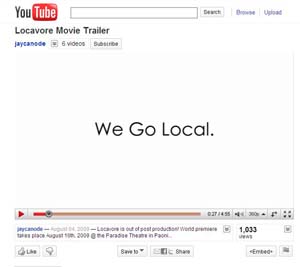
GoLocalGiven that what we eat has a large impact on the environment, the LCC Sustainability Committee is reviewing LCC’s food sources.

Thanks to the efforts of five graduating students from the Class of 2008, as well as our excellent chef Alain Thirion, we already have much of the data we need for this project. Make no mistake, in this day and age, it is challenging for a North American to figure out where their food comes from. We take it for granted that we can get fresh fruit in the middle of a Canadian winter. This luxury comes at a steep cost to the environment.

LCC is in the process of setting long-term sustainability goals, and we are attempting to create a balance between optimism for what can be achieved and realism for what may be expected. Ideally, we would like the vast majority of the food served at LCC to come from within 250 km of the school. This is not as difficult as it might seem. For example, Première Moison (bread) already gets all of its flour from Quebec. Much of the beef and chicken is from within the province as well.
Vegetables and fruits are another matter. They are one of the reasons we will likely not reach our 100% local food goal, at least until there are enough greenhouses supplying mid-winter fruit. Thus it is here that we face our key challenge.

To get a quick view of some locavore ideas, check out this link. –Chris Olive, Green team Faculty Liaison

The Visit of the Composting Display

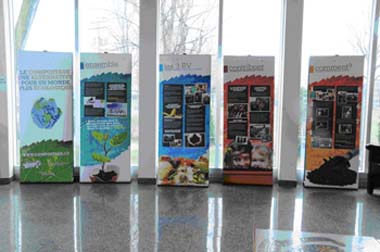
Fortunately for all of us, despite Quebec’s so-so performance on large environmental issues, there are many excellent programs of a smaller nature that are making themselves felt around the province. One such example is the L’Interre Actif compostage display that came to LCC thanks to the efforts of faculty member Jean- François Maurice.

CompostingDisplay

As many people know, LCC already has a composting program at the school. Vegetable and fruit scraps from both the dining room and the kitchen are directed into either our own (somewhat restricted) composting bins or alternatively, into the much larger program of Compost Montreal. — Chris Olive, Green Team Faculty Liaison

Olympien Yannick Lupien inspire les élèves de secondaire I

Voici des extraits de commentaires d’élèves de 7e année après la visite de Yanick Lupien.
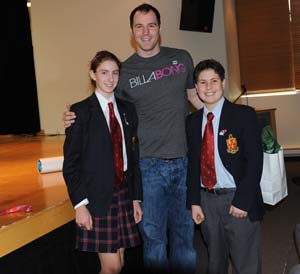
YannickLupienL’olympien Yannick Lupien est venu rendre visite à Lower Canada College le mardi 13 avril 2010. C’était une superbe idée car il m’a inspiré à travailler plus fort pour avoir ce que je veux dans la vie. J’ai aussi aimé sa détermination pour devenir un nageur olympique et un pompier. Il m’a montré que si tu veux réaliser tes rêves dans la vie, il faut que tu travailles fort. Je ne le croyais presque pas quand il nous a dit que toute sa carrière a commencé parce que sa mère a acheté une maison avec une piscine creusée et elle voulait qu’il apprenne à nager. Yannick Lupien est, et va toujours être une grande inspiration pour moi. —Adrien Perlinger ’14

Yannick Lupien m’a impressionné. Quand je l’ai vu rentrer dans le Chamandy, il était tout content de nous parler. J’étais impressionné par ses histoires; il se levait tous les matins à 5 h pour nager, ensuite aller à l’école, et finalement nager après l’école. Je pense qu’il est cool et il est devenu mon idole. Je vais prendre ses conseils et suivre mon rêve : jouer dans la LNH. —Zack Bélanger ’14

Je trouve que la présentation était très cool parce qu’il nous a expliqué des choses importantes, en même temps, il est drôle et amusant. Il est allé aux Jeux Olympiques deux fois et a nagé avec l’excellent Michael Phelps. Yannick est très costaud, il mesure 6 pieds 5 et il vient d’une ville appelée Elmer. Je vais toujours me souvenir de cette présentation. —Alex Desgagnes ’14

Yannick m’a appris de ne jamais abandonner nos rêves. —Kevin Ly ’14

Avec son enthousiasme et son charisme il nous a encouragé à toujours faire de notre mieux. Il nous a dit de continuer et de ne jamais arrêter une activité même si tu n’es pas le meilleur. Avec ces mots inspirants, plusieurs enfants vont continuer de poursuivre leurs rêves. Qui sait, peut-être quelqu’un en septième année ira aux olympiques! —Victoria Van Ryswyk ’14

J’ai vraiment adoré l’écouter parler. J’ai beaucoup appris de lui, ça m’a permis d’apprécier tout ce que j’ai. Quand il a parlé de ses difficultés pour nager tous les jours avant l’école, j’étais tellement surprise. Normalement, pour moi, quand je nage une longueur, je suis si fatiguée que je m’arrête tout de suite. Il m’a appris de ne jamais abandonner. Bien sûr, je ne vais pas nager 10 kilomètres, mais faire du mieux que je peux! —Kaitlin Markus ’14

J’ai vraiment aimé son discours. Il a vraiment ouvert mes yeux sur mon futur. Il nous a expliqué comment bien réussir à l’école et de ne pas abandonner nos rêves. Je serais content s’il revenait nous parler. —Eric Tellier ’14

Yannick Lupien est un homme très gentil et inspirant. Il a dit, « Quand vous travaillez pour quelque chose, vous êtes récompensé ». Même quand on se moquait de lui, il a continué à travailler très fort. Il était très chanceux d’avoir une famille qui le supportait. Il racontait toujours des blagues qui nous faisaient rire. Yannick est vraiment un champion. — Sonia Toy ’14

Il m’a tellement inspiré que je suis encore sous le choc. Il nage environ 10 km par jour, tous les jours! Après avoir célébré la nouvelle année avec notre famille et nos amis, il nage! En plus d’être un nageur professionnel, il est également pompier. Il sauve des vies, nage, il persévère (même avec une infection aux oreilles) et gagne sa course, c’est une source d’inspiration. —Claudia Melka ’14

M. Lupien nous a expliqué que rien n’est facile, il faut travailler pour obtenir ce que tu veux. Il a aussi mentionné que même si des gens se moquent de toi à cause de ton sport, il ne faut pas arrêter de faire ce que tu aimes. Il faut toujours croire en toi, même si les autres doutent. J’ai beaucoup appris de sa présentation. C’est une personne qui motive beaucoup les jeunes. —Luca Saputo ’14

J’ai pensé que la présentation était extraordinaire. Yannick m’a fait beaucoup rire, il m’a également montré qu’il ne faut jamais abandonner. Il donne son 100% chaque fois, il ne lâche jamais. —Nathan Reid ’14

Une personne très sage a dit : « Dans la vie, les trois choses dont vous avez besoin pour réussir sont; la persévérance, la persévérance et la persévérance. ». Cette personne fantastique, a réussi à motiver les adolescents, ce qui est une chose de très difficile à accomplir! Je m’appelle Lola Flomen ’14, et mon héros est Yannick Lupien.