Après Paris

Flag-Pins-France-CanadaWe were all saddened by the horrendous events in Paris last weekend – 129 killed and several hundred people seriously injured in coordinated terrorist attacks across the “city of light.” French President Hollande has now declared France at war with ISIS and US President Obama has called these events “an attack on the civilized world.”

This violence by ISIS has been linked to the recent bombing of a Russian aircraft over Egypt and horrendous suicide bombings in the suburbs of Beirut, Lebanon. In each case, the victims were innocent and unsuspecting civilians, who by virtue of travelling, shopping in public, sitting in a café, or attending a rock concert, they represented the very idea of openness that ISIS detests.

These activities and freedoms are what we often take for granted – the hallmarks of our free and civil society. To the ISIS terrorists, this way of life is the enemy – no distinction is made between civilians or combatants. All so-called “unbelievers” who don’t support a radical interpretation of Islam, are enemies and conflict and mayhem in the West is what they want.

In this week’s high school assembly I spoke to LCC students about the origins and motivation of ISIS, also known as the Islamic State. I noted that even Al Qaeda disowned the group in 2014 because of its sheer brutality, driven literally by a medieval interpretation of the Koran. This includes stoning, crucifixion, mass beheadings, and very limited rights for women.

ISIS controls some oil fields in both Syria and Iraq. It is estimated that by selling it on the black market, it earns about $3 million/day to fund its operations.

The group has effectively used the Internet and social media as a way to lure disaffected youth to join their twisted cause. It is estimated that up to 10,000 young people have gone to Iraq and Syria from the West to join the Jihadi movement – and the largest proportion of those people who have been radicalized from the west have come from France.

France has been targeted for being a former colonial nation in the Muslim world. Many second and third generation Muslim youth have found full integration into French society to be challenging – a perfect breeding ground for the unemployed and frustrated to be “radicalized” by ISIS.

France was first targeted in last January’s attacks on free expression at Charlie Hebdo France has also been fighting Muslim extremism for several years in Mali in West Africa, while sending more bombers to ISIS targets in the Middle East than any other nation. At home, France is a very secular society, with a very clear division in political life between religion and politics – the complete opposite of ISIS which is driven by a radical religious foundation – a twisted interpretation of a faith that is actually dedicated to peace.

ISIS believes in an unavoidable apocalypse – that the end is coming in a kind of modern crusade that will also destroy most Muslims who do not share their skewed medieval worldview.

They believe in waging war, not in creating treaties. So analysts tell us to expect more attacks and disturbances from ISIS. However, I recall similar claims years ago at the start of the 1st Gulf War against Saddam Hussein – and also following the 9/11 attacks on New York and Washington. Sometimes these radicals find most satisfaction in the psychological aftermath of terrorist acts – the upset, unease and nervousness they unleash in the mind.

Since 9/11, collaboration amongst Western allies has actually tilted the War Against Terrorism in our favour. Like journalist Gwynne Dyer, who spoke to LCC students last year, I believe this trend will continue. Yet, we need to be prudent and remember what we value and what we are proud of in our open democracies. Let’s celebrate our core values, but not be drawn into an unwinnable war. That’s exactly what ISIS wants. – Chris Shannon, Headmaster
Humility First

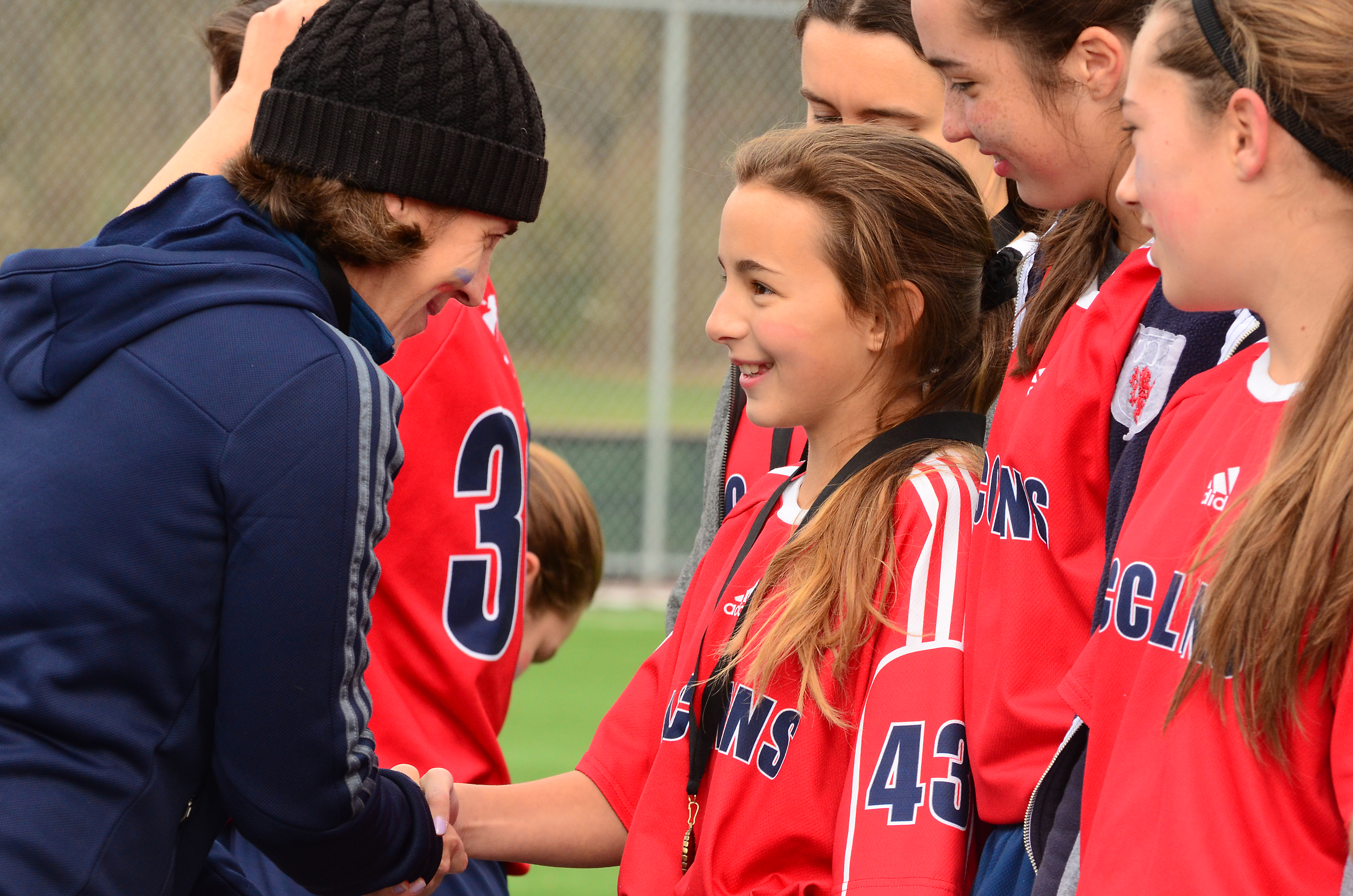
DSC_9239The past week has been a very good one for LCC Athletics. Congratulations to the Juvenile Girls Soccer and Bantam Boys Soccer teams who won the championships in their respective GMAA soccer leagues. My congratulations as well to all other teams during our fall athletics season – and to all coaches for their significant support and guidance of our scholar athletes. Some of the most memorable experiences in athletics this fall may have come from students who were not on championship teams; there was surely a lot learned in a wide array of experiences – in living them and reflecting on them.

This brings me to sport at the international level and lessons learned from a titanic match played last Saturday in the final of the World Cup of Rugby that occurs only once every 4 years. For those who are not big rugby fans, it is worth noting that rugby has a wide global audience in both the northern and southern hemispheres. In fact, the World Championship tournament, hosted this year in the UK, is the world’s third largest sporting event after the World Cup of Soccer and the summer Olympics. It runs for weeks, culminating this past weekend with a TV audience of more than 120 million.

On Saturday, New Zealand and Australia met in the World Cup final match for the first time, despite their excellent reputations and deep rugby traditions. New Zealand was the defending champion from four years ago, so the team was also vying to be the first country to win back-to-back world championships – a very tall order indeed.

Going into the game, both teams were undefeated with spotless records in the tournament. So with millions of fans watching, a lot was on the line – and a lot of pressure was on the shoulders of those professional athletes and their coaches.

The match itself did not disappoint. Played at Twickenham stadium in London in front of 85,000 fans, it was a very impressive display of skill and competition at the highest level. The New Zealand All-Blacks emerged triumphant after a very memorable hard-fought game played by what were clearly the two best teams in the world today.

Interestingly, I believe there is something special to be learned from this tournament and the New Zealand All-Blacks in particular. It has to do with something fundamental that I believe has been lost among many professional athletes in Canada, the United States, Europe and South America. That something is humility with a strong focus on sportsmanship and genuine respect for one’s opponent.

In our culture of athletic trash talk and media denunciation of peers by some professional athletes, it’s often unfortunate that certain players are role models – and too often the behavior and attitude drops down to youth sport, which in my view, is a true disappointment and at times a travesty.

New Zealand has always embraced rugby as its national game and a great way to build friendships and community. Most children in that small country of only 4.5 million people play the sport, starting with organized touch leagues for 4-year- olds and they progress from there. At every level there is a strong emphasis on sportsmanship, and it’s only been about 25 years since the men on the national team have been paid professionals. Until then, farmers, mechanics, teachers, office workers and others would rise to the national level and would have to take holiday time from their full-time jobs to experience the distinct honour of representing their country at the international level. But once an All-Black, always an all-Black, and men would take that mark of distinction to their graves. Whole communities were proud to have an All-Black in their midst, even under a gravestone.

So after more than two decades of professional rugby, where even the All Blacks played their sport full time as professionals, in came coach Steve Hansen in 2012. He took issue with the verbal snipes and jibes that our media culture helps to make the norm in professional sport and he set out to change it. And change it he has done, embracing what can only be called “old-school values.”

Despite the strength and dominance of the All-Blacks, Hansen emphasizes respect for the effort and contribution of all players in a match to do their best – on both teams. So Hansen decided to do something radical in professional sport:  At the end of every international match the All-Blacks invite their opponent into their dressing room as a sign of respect and camaraderie. That’s exactly what happened at the World Cup matches in the UK and the effect has been notable and positive.

Team results remain hugely important, but Hansen didn’t want them to be the sole mechanism by which his team is judged. Nearly as important is the manner in which his players conduct themselves on and off the field.

Hansen has ben quoted as saying “we acknowledge we have played another group of men who have tried to do what we have done. So we say, ‘would you guys like to come into our changing room?’ They are all ordinary guys and they make lifelong friendships.”

Players from Namibia and Georgia were blown away to be invited into the All Blacks’ changing room after their matches in the World Cup. Their players queued for the opportunity to be pictured with the All-Black veteran star players and didn’t want to leave. They arrived with jerseys to hopefully swap and cell phones poised for personal keepsake photos. They expected ferocity on the field and had no idea they would encounter such warmth and camaraderie off of it. It was a massive gesture by the All Blacks – as few champion teams would extend that sort of invitation and engage for so long and readily with any opponent

In our hyper competitive culture of athletics and media presence, there is much we can learn from that small nation in the pacific. What’s the core learning? In essence, humility, respect and community always trump greed, arrogance and trash talk.

I have asked our high school students to give this some thought as they begin their next athletic season, in their dealings with friends, debating opponents or colleagues at Model UN’s or other activities. Competition is healthy, but respect and collaboration trumps undermining one’s opponents. We all need to think about that in practice! – Christopher Shannon, Headmaster


Le grand nettoyage des rivages canadiens

IMG_3544Chaque année, des milliers de Canadiens s’unissent pour lutter contre les déchets riverains, qui menacent gravement nos voies d’eau navigables, et prennent part au Grand nettoyage des rivages canadiens. Il s’agit d’une initiative de conservation de l’Aquarium de Vancouver et le WWF et du plus important programme de conservation par l’action directe au Canada. Cette année, nous avons eu un soutien logistique d’un organisme
local : Pro-Vert Sud-Ouest. Nous tenons à les remercier.

De plus, un des piliers du Round Square est la protection et la prise de conscience de l’environnement, il est donc logique que nous soyons impliqués.

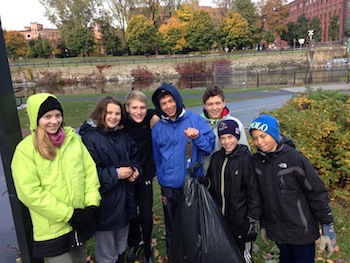
Malgré la pluie, la neige et le froid, un groupe d’élèves du Middle School a prêté mainforte à la lutte contre les déchets riverains en procédant au nettoyage du Canal Lachine entre Wellington et Charlevoix, le samedi 17 octobre 2015 de 9h30 à 12h30.

Voici des exemples de ce que les élèves ont ramassé :

– Mégots de cigarettes (en grande quantité), bouchons de bouteille de bière, sacs en plastique sur les berges et dans le canal, bouteilles …

Voici quelques impressions des participants :

« Je pense que c’est surprenant que tout le monde jette les déchets par terre. »

« It was hard to spot cigarettes amongst the leaves on the ground. I think I have become accustomed to seeing them on the ground. »

« j’ai trouvé qu’il y a beaucoup de personnes qui ne s’occupent pas des déchets. »

« J’étais surpris qu’il y avait beaucoup de mégots de cigarettes et que beaucoup de personnes jettent leurs déchets dans le parc. »

« I was really amazed at what people put on the ground without realizing that they shouldn’t do that. »

« L’expérience a été très amusante et j’ai été très surpris de trouver plusieurs choses qu’on n’aurait pas pensé trouver dans le Canal Lachine, comme une bouteille de whisky. »

Galerie de photos


Projet semences d’avenir au Mont-Royal

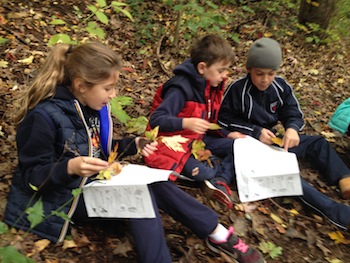
photo 5Les élèves de 3e année, dans le cadre du programme de science et technologie, participent cette année au Projet semences d’avenir. Cette activité est organisée par les Amis de la montagne, une association à but non lucratif qui vise à sauvegarder et à valoriser la faune et la flore que l’on retrouve sur le Mont-Royal.

Vendredi passé, les enfants participaient à la première étape du projet qui consistait à recueillir des semences d’arbres communs à la montagne. Les jeunes ont profité d’une belle journée automnale et sont revenus enchantés de leur premier contact avec cet environnement.

Ils étaient accompagnés d’élèves du Middle School Pride. L’objectif étant de créer des relations entre les enfants du Junior School et du Middle School.

Tous ont très hâte de revoir leurs animatrices dans une rencontre à venir. Ils apprendront alors au sujet de la germination des graines récoltées et de la transplantation des jeunes plants dans la forêt.

Comme il est valorisant de participer de façon si concrète à la sauvegarde de notre planète tout en acquérant des connaissances scientifiques!

Galerie de photos


Active Learning at LCC: Coding & Robotic Engineering

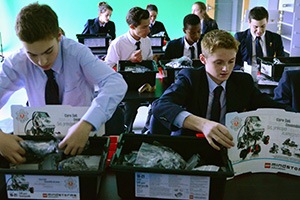
DSC_6913LCC’s Coding & Robotic Engineering Programme provides innovative active learning opportunities. This year, coding & robotic engineering will be more accessible than ever from grades 7 through 12. There are specialty courses, integrated projects, and clubs, which include professional mentors from the engineering industry.

Integrated Coding Projects in Grade 8 Science

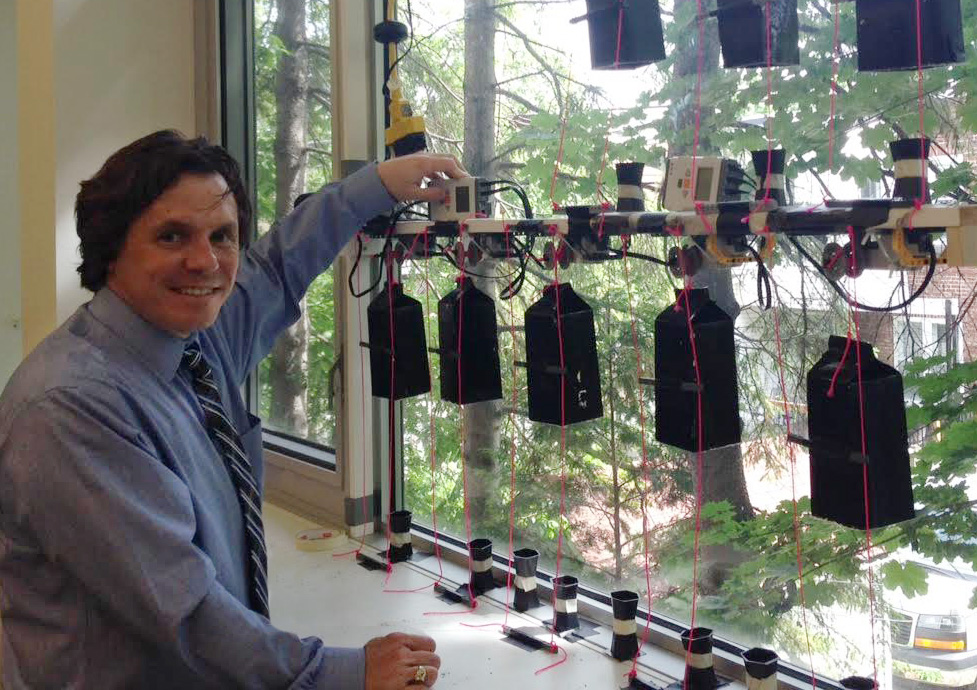
Last year, grade 8 science students used coding and robotics to set up an experiment that would help them better understand the effects of photosynthesis. This year, the experiment will be expanded, and will once again involve measuring the growth of numerous bean plants over a 30-day period. Each plant will be assigned different amounts of exposure time to sunlight. Robots will be used to lower a milk carton over the plants to keep them in the dark, or to raise the carton to give the plants sunshine. Students will program their robots to raise the cartons for their daily allotment of sunshine over a 30-day period. At the end of the experiment, the plants’ growth will be measured, and students will then formulate assumptions regarding the impact of light on the growth of their plants (view the apparatus demo and project site). This year, approximately 100 grade 8 students will participate in this experiment led by Mr. Tukkonen, Mme. Lalonde, and Mr. Auclair.

LCC Joins First Robotics Competition (FRC) with Industry Mentors

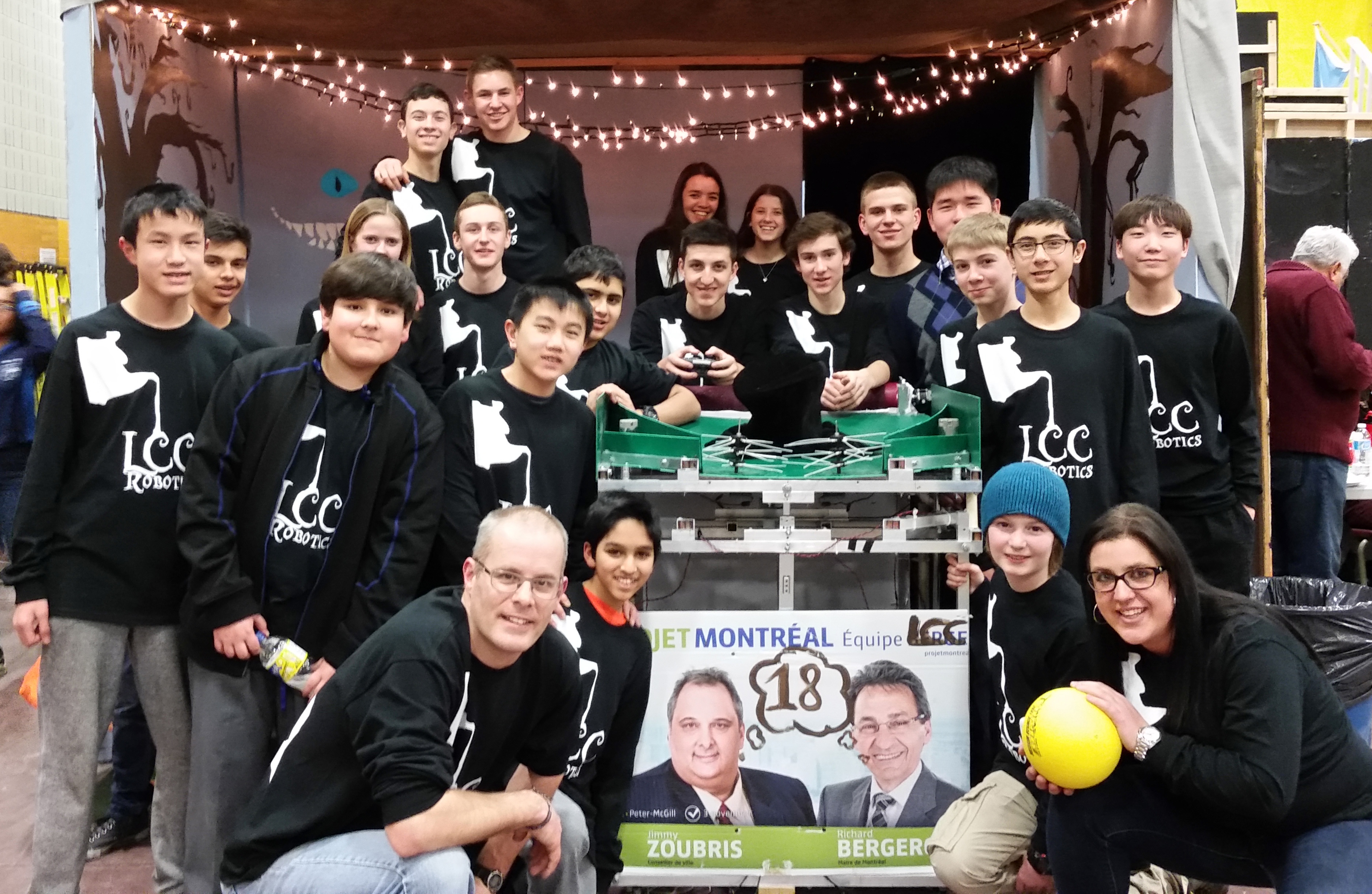
This year, Lower Canada College’s robotics team, comprised of 35 students, will be partnering up with mentors from the aviation industry as it competes in the globally renown First Robotics Competition. FRC is quite a change from the Canadian Robotics Competition (CRC) that LCC traditionally competed in; while engineering is still key, programming is also a featured skill. In fact, one of the coding platforms used in the FRC competition is Labview, an industry standard programming tool that is also used at all grade levels at LCC. Interestingly, Labview was also used to program several Mars explorers and it is compatible with LCC’s Vernier scientific sensors, leaving the door open for further cutting edge projects. This project will be coordinated by Madame Lalonde, Mr. Searle, Mr. Zuccheroso, and Mr. Auclair.

Middle School Coding Club

Now in its second year, Lower Canada College’s Middle School Coding Club now provides students opportunities to program on their iPads using Mindstorms. Add into this mix the latest EV3 robotic kits, and you have a recipe for some sophisticated active learning opportunities. Mr. Auclair and Mr. Tukkonen will be challenging students with a number of programming tasks throughout the year.

Specialty Coding Class in Grade 10

In grade 10, students have the option of taking a computer programming course with Mr. George. Using Visual Basic in combination with Excel, students delve into the more fundamental aspects of manually coding increasingly sophisticated projects. Precision, logic, and math figure prominently in this class.

Optional Course in Robotic Engineering, Programming & Artificial Intelligence

Now in its 14th year, approximately 20 students are enrolled in Mr. Auclair’s Senior robotics class. This course explores concepts  in physics, biology, and psychology in relation to the engineering, programming, and logic behind the design of autonomous robots. Students are provided with a variety of hands-on challenges to design and program innovative, functional robots that can make decisions on the fly. Past projects included robotic football, obstacle courses, and the development of an interactive humanoid.

– Christian Auclair, Coordinator of the Computer Science Department

auclair_plant_robots

robotic team 2015