On Wednesday, February 29, we dissected a rat in Mr. Shefler’s Grade 10 biology class. At first, we were nervous and didn’t know what to expect. But, once we got going, we realized it was actually pretty cool. It was interesting to see such a complex digestive system in such a small body. Seeing the organs in person, instead of just inside a textbook enhanced our understanding of the bodily systems. We feel very privileged to go to a school that offers such dissections.
–Jacklyn Greenspoon ’13 and Lizzie McInnes ’13
The Value of “Almosts”
We almost did it… We got so close… So frustrating! There were a lot of LCC athletes with that feeling last week. Within 24 hours, four very solid LCC Lion teams of athletes lost four separate nail-biter games; two of them at home and two on the road. Close. So close. There’s an old saying that “close only counts in horseshoes and hand grenades.” Although this presents some interesting imagery, I disagree with the premise of the statement. We all learn from coming close, from the pile of “almosts” we accumulate in our lives. They are valuable learning moments.
I had the good fortune of seeing both of our home games: Juvenile Boys Hockey vs. Selwyn House and the Juvenile Girls Basketball game the following day against John Rennie. Both were great games; evidence of lots of solid preparation, with a lot of skill on display, solid teamwork, physical hard work and genuine emotion laid bare on the ice and on the gym floor. I’m told it was the same for our squads playing playoff games away: Bantam Boys Hockey and Juvenile Girls Hockey.
The Juvenile boys game on our home ice was a classic barnburner. It took five periods and a 16-man shootout to decide the outcome. Well before the shootout began, the piles of snow were becoming ridiculously thick since they hadn’t cleaned the ice in so long, and it had become almost impossible for players to handle the puck.
Without a doubt the four final outcomes were frustrating, disappointing and upsetting: but they were also so memorable. In fact, that is one of the greatest qualities of competitive athletics in school. We don’t always win. You can’t always win. There are always factors beyond our control, and even when our teams play very well—as they did last week—a roll or a bounce or a fine play by an opponent can make all the difference, but not always in your favour. I am certain that for all our athletes on those four teams, they would have surely preferred a different outcome. But they will never forget that difficult loss and the experience will help make them better next time…. Not just as an athlete but when they find themselves under pressure, when emotions are high and something important is on the line.
We all like to win and we’d all like to see an “A” on the report card in every subject but despite our efforts to control our fate and destiny, real life has a way of creeping in and reminding us that despite all the hard work and preparation, things can’t always go our way. That’s a key element of life that we all learn one way or another and, in an odd way, it’s good that our students have such valuable concrete experiences with hurdles and frustration during the high school years.
That said, I congratulate all of our teams who proudly wore the LCC Lion on their chests last week. They did their best and impressed all of us who were out to support. They have all progressed a great deal since the start of their respective seasons, and the coaches deserve much of the thanks for that. We thank them for their dedication, inspiration and helping our students develop the resiliency necessary to pick themselves up and stay positive.
I also saw these same qualities at play at the robotics competition last week at Vanier College—where our team placed among the top 10 teams, including CEGEPS—and in the creative flair presented in the Senior School play, “Departures and Arrivals.” Great job, LCC Players!
All of these activities outside of the classroom have helped to make each of you stronger, wiser, better teammates, more insightful.–Chris Shannon, Headmaster

Duke of Edinburgh: Gold Winter Trip
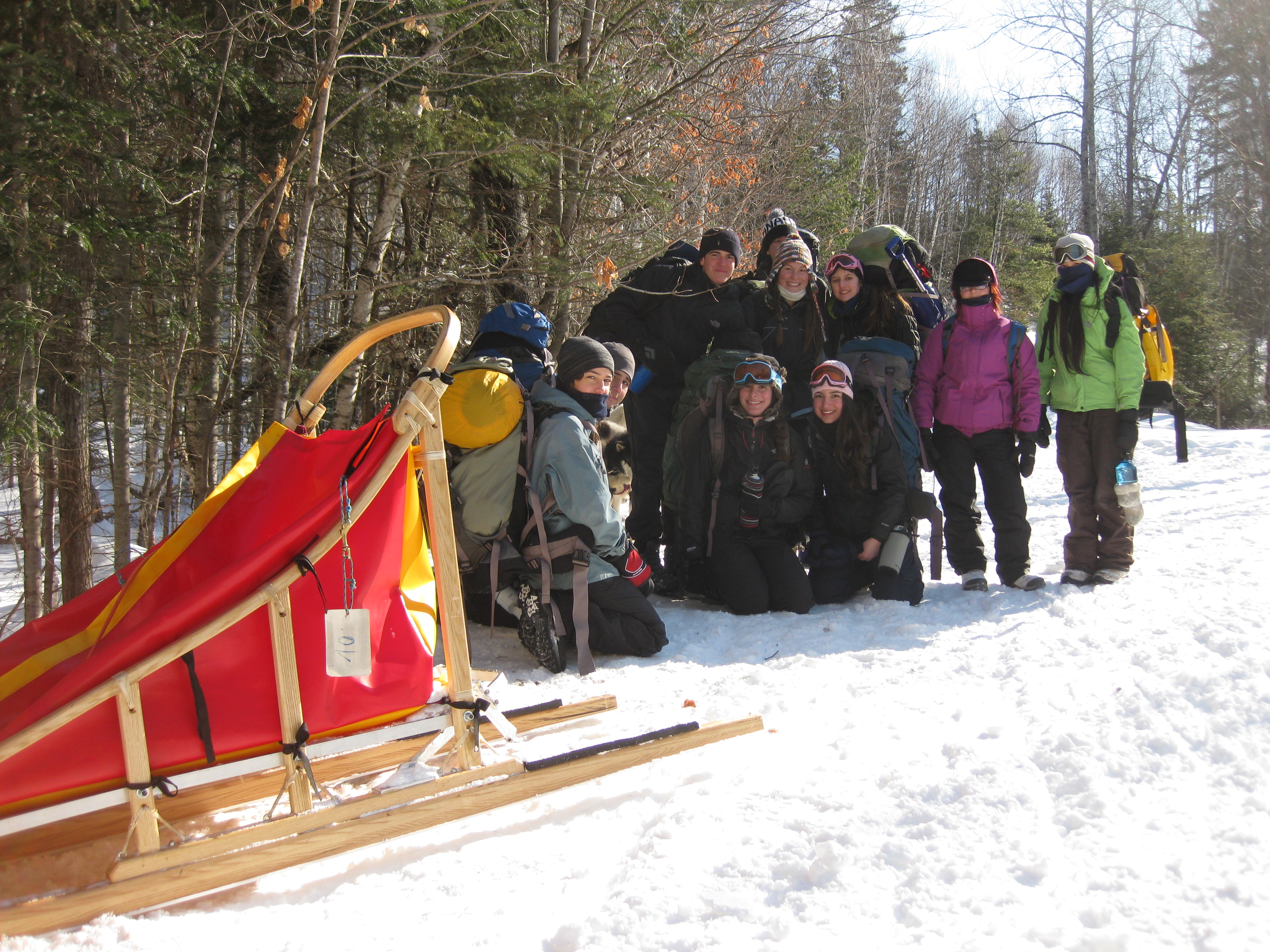
From February 16 – 19, ten grade 11 students attended the Winter Duke of Edinburgh Gold journey. It was definitely a challenge, hiking and snowshoeing 44 km and dog-sledding 70 km within such a short span of time, and yet it was all so rewarding.
The part of this journey that remains so vivid in my mind is having the opportunity to hike through the sunrise. On the third day, we had to wake up at 4:00 am in order to accomplish our hike to arrive at the dog-sledding on time. Walking with flashlights when we commenced our hike and then slowly but surely seeing the sunrise is not only a memorable but also a beautiful experience.
Perhaps waking up at that hour was not ideal, but accomplishing such a unique hike was definitely worthwhile. After all that hard work, we spent two incredible days with the dogs we were dog-sledding with. The entire journey was one I will never forget and I am so proud to have completed it.—Caroline Ballard ’12.
Australia: New Experiences
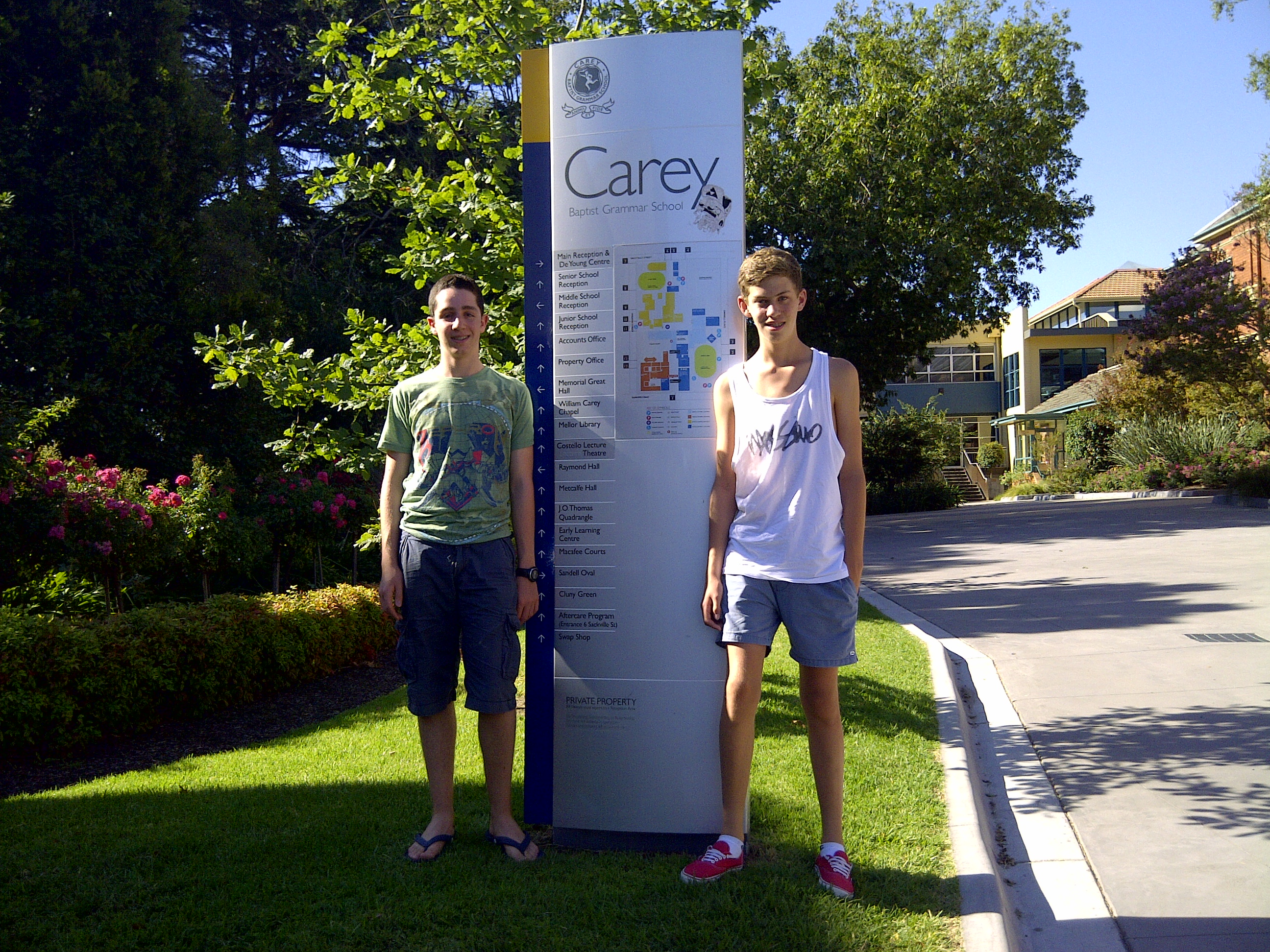
For just over a week, I have been living like a true Australian. So far, I have had the opportunity to visit the CBD of Melbourne, attend a footy game and appreciate Australia’s outstanding nature.
Here I am at Carey Baptist Grammar School, a partly outdoor school in the middle of the summer, while back home there are temperatures of below zero degrees! I have learned many new things about a country that used to seem so foreign to me. I now feel like I belong, having done nearly everything that an Australian would do on a daily basis.
My host family did a very good job at giving me a warm welcome to this country. On the very first day, it was a pleasant discovery to taste Tim Tams, which are incredible Australian cookies! On my second day, I went to school and made many new friends. My teachers were extremely kind to me as well. After school, on my third day, I had the opportunity to experience some of the beautiful nature of this country. I went to Studley Park and enjoyed the view of massive and stunning trees as well as exotic flowers.
On the Friday of my first week, I had the chance to attend an Australian “footy game.” This sport is mainly played in Australia and is similar to rugby. However, in contrast to rugby, to pass the ball to a teammate, you are allowed to throw or kick it. In order to score a goal, you must throw or kick the ball through goal posts. It was my very first time even hearing about this sport, and I thoroughly enjoyed watching a game. The game I attended was a preseason game in which three teams played: the Hawthorn Hawks, the Richmond Tigers and the North Melbourne Kangaroos. That night, each team versed each other once. In the end, they each had one win and one loss. I loved this experience!
On the weekend, I visited the CBD, Central Business District, otherwise known as downtown Melbourne. While I was there, I went biking along the Yarra River. Just two days later, I went kayaking on the Yarra River! Both activities were very amusing and exciting. I found it quite interesting to travel to downtown Melbourne from the bike path and waterway as there were things that caught my attention from kayaking on the Yarra River that I had not noticed when I was biking along it.
All in all, this has been a most amusing week and I am keen to know that there is much more to come. I have yet to see a kangaroo or a koala, but by the end of my six weeks, I will surely have done it all!–Matthew Kaspy ’14
Cultural Intelligence
Earlier this week I asked our high school students if down deep they believe they are smart. Are they confident they are bright, intelligent, capable, insightful and competent? Do they genuinely believe in their own capacity to learn, to grow, to lead and to truly maximize their potential?
As our students progress through school and life, various factors contribute to their perception of their own abilities and potential. We are all familiar with IQ (Intelligence Quotient) as a test that has long been used as a supposedly objective measure of one’s brain capacity. In recent years IQ has been criticized as having limitations. People with high IQs are sometimes accused of lacking “people skills.” So in an effort to better understand the complexity of intelligence, about 20 years EQ (Emotional Quotient) gained credibility. In a world where social interaction, teaming and group work are more prevalent, EQ stresses the importance of social intelligence and genuine interest in the welfare of other people, kindness, empathy and a capacity to naturally bring people together. For the past two decades we have been told that we can’t simply depend on IQ as a dependable measure; EQ is also key to success in today’s world.
Now there’s a new kid in town. Enter CQ—“Cultural Quotient” or “Cultural Intelligence.” It reflects a genuine desire to overcome cultural barriers and a confidence in one’s ability to communicate with people from different cultural backgrounds. Supporters of CQ assert that a heightened awareness and sensitivity to different cultures are critical tools in a world that is increasingly multicultural and interconnected.
Last fall the Association for Canadian Studies conducted a large study of CQ in the world’s four most multicultural countries: Canada, USA, Britain and France. Good news, Canada rated highest on the CQ scale! It has a lot to do with our culturally diverse population. Here at LCC it also reinforces the importance of cultural international exchanges and service projects outside of Canada. Experiential learning trumps all in the 21st century, as learning by doing tends to be most memorable So what are our students doing to expose and challenge themselves in this important domain? Are they taking steps to explore new cultures with genuine curiosity and actively develop their own Cultural Intelligence?
Back to the original question: are our students smart? Of course they are, but they need to strike a balance between the three domains: IQ, EQ, and CQ. —Christopher Shannon, Headmaster