Classe Rouge : Une bonne première impression

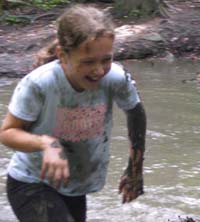
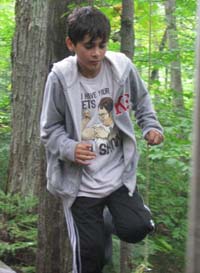
IMG_2930IMG_2957Aujourd’hui on est allé à la Classe Rouge. Avant qu’on embarque sur l’autobus, j’étais nerveux, anxieux et excite en même temps. Quand je suis arrivé a Jouvence, j’ai trouvé que c’était un camp moderne et beau. La première activité que mon groupe et moi avons fait était l’hébertisme. C’était une activité amusante. On est allé dehors dans les bois et on a fait des course et des activités amusantes. Aujourd’hui, j’ai eu une bonne première impression. –Andrew Black ’17 (grade 5)

Connecting for Life

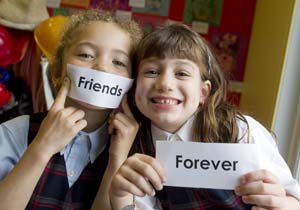
FriendsFriendships and feeling connected: among the most important aspects of the school experience and children rely heavily on their close friends during these formative years. In fact, sociologists note that the influence of peers can be even stronger than family during the teen years.

We understand the importance of students developing close relationships. It’s very normal for them to depend on friends for fun, guidance, advice, and even inspiration.

I am amazed by how LCC friendships tend to grow, blossom and carry on. In fact, endurance tends to be a notable quality of LCC friendships. They begin with sharing classroom experiences and a host of activities. Our students enjoy countless hours of social time together and share incredible stories about competitions, tournaments, and memorable field trips.

What we witness in our graduates—“young,” “old” and somewhere “in between”—is that experiences as teenagers at LCC are more than formative; they often define core friendships that last a lifetime.

This coming weekend we host our annual LCC homecoming event, LIONfest with more that 250 graduates returning to campus for dinner and festivities. At LIONfest we focus on the graduates celebrating anniversary years—10, 20, 25, 30, 40, 50 years—and they will come in large numbers, and many will travel great distances to return “home.”

In fact, our two oldest living graduates are going out of their way to attend this event as they both feel a strong connection to LCC. Both 96 years of age and from the Class of 1932, they are excited about returning to campus, to see “their school.” One is even travelling from as far away as Vancouver with his son, who is also an alumnus.

This takes the significance of friendship and connection to school to a completely different level. In addition to providing an excellent academic foundation, LCC helps students form relationships that will last a lifetime. What a great privilege for us all! —Chris Shannon, Headmaster (Pre-U ’76)

Literacy Matters: The Importance of the “Gateway” Book

books03In The Book that Changed my Life, seventy-one writers reflect on the texts that had the biggest influence on them when they were children, adolescents or young adults. Some, like novelist Elizabeth Berg, whose life was changed by reading Catcher in the Rye, cite a single volume: “I couldn’t sit still after I read that book. It was the literary aphrodisiac to end all literary aphrodisiacs.” Others, like Yale University’s Harold Bloom, cannot nominate just one book. The closest he can get is the complete works of Shakespeare. Regardless, all fledgling writers have literary epiphanies that compel them to create their own works, whether they are poems, essays, plays, novels, articles or blogs.

Even if one does not become a professional writer, the pleasures of reading engender the enduring benefits of learning about the human condition, experiencing the lives of others, both real and fictional, and gaining knowledge about the myriad mysteries of life, our world and the universe. Whether one is reading in print or online, the experience gives one the comfort that no one is alone and the awareness that knowledge is limitless. As the poet Billy Collins observes, “We read in order to travel, or be borne, to that other place [beyond our own reality] and thus interrupt the curse of having only one life to lead.”

Even though I lived in a literate household with plenty of printed material lying around for the taking, I would not have classified myself as a serious reader prior to my mid-teens. I like to share with my students that my life-altering book was Kurt Vonnegut’s Breakfast of Champions. When I read this novel in 1974, at the impressionable age of fifteen, I had the sudden insight that reading can be a pleasurable activity, not a chore or something I had to do only for school. Vonnegut’s satirical and somewhat taboo sense of humour appealed to me in a way that no other writer’s sensibility had up to that point. From that book on, I was hooked. Thirty-six years later, words still transport my imagination to places and states of mind I may never experience otherwise.

On some level, perhaps instinctively, I have come to realize that reading is highly personal and based entirely on one’s interests and personality. This is why I always counsel parents to find books that will appeal to their children’s passions. The fire of reading can be lit by a single text, so do your best as a parent to search out titles that will provide the spark. If you are having trouble locating this “gateway” book, contact, your child’s teachers and school librarians, your local library or bookstore. I maintain that every child can become an avid reader, but only if he or she associates reading with pleasure, not drudgery. If a person gets hooked on books, the habit of reading will become second nature and intellectual growth will be a matter of course. And, to paraphrase Dr. Seuss, who knows the places they will go…
–Brian Moore, Senior Department Head, English and Literacy

The Need to Develop IDEALS in Children

RoundSquareLast Saturday was the 9th anniversary of 9/11; the tragic attack on the World Trade Center in New York that took the lives of over three thousand innocents. A solemn memorial service took place at Ground Zero to commemorate those who died and to offer condolences to families for their losses. However, while most of us across North America offered thoughtful reflection, the “crazies” also came out of the woodwork.

Unfortunately, leading up to Saturday’s anniversary, a little-known Christian preacher from Florida publicly threatened to burn the Muslim Holy book, the Koran, on the anniversary of 9/11. This was to be his personal form of protest against radical Islamists. Yet it was simply an unfortunate public statement of intolerance. The burning did not happen, but we certainly learned a few lessons from the threat.

Lesson # 1: Freedom comes with responsibility. Although in Canada and the USA we have freedom of expression, the Florida Minister’s overt video threat was insensitive, provocative, incendiary and disrespectful—unacceptable from my perspective and he should still face criminal charges.

Lesson # 2: This incident was a clear example of the extraordinary capacity of the Internet to spread nasty messages globally. Although coming from a very questionable source, the message still went viral and provoked riots in Muslim communities and upset people on worldwide.

Lesson # 3: Schools need to be proactive about helping students develop genuine sensitivity and empathy for others. We need to expose young people to difference so that the ignorance and bigotry the minister displayed do not dominate their lives.

That’s why we speak so much about respect—for oneself and others—at LCC. It’s also why we are a part of the Round Square association of schools; a network of more than 80 schools around the world that promote respect and international understanding through exchanges, service projects, conferences, and leadership development.

Also, all 80 schools adhere to core pillars or IDEALS: Internationalism, Democracy, Environmentalism, Adventure, Leadership and Service. In fact, it was no coincidence that these were the themes we chose for our Middle and Senior School Experience field trips to start the year.

 Grade 7 – Orientation/ Environment & Adventure @ Camp Nominingue
 Grade 8 – Environment
 Grade 9 – Outdoor Adventure
 Grade 10 – Community Service & Philanthropy
 Grade 11 – Leadership

We constantly ask our students to consider how they can reach beyond their comfort zones through experiences at school, in the community and at the international level. We see it as our job to help students develop empathy and sensitivity in a world which is crying for more citizens who possess those important qualities. Only then will we drown out the crazies. –Chris Shannon, Headmaster
A New School Year: A Voyage of Discovery

Blog_Learn_08Sept2010As this new school year unfolds I am reminded how much I love the energy of new beginnings. Figuratively speaking, each of our students is now standing on the shores of possibility. Each girl and boy possesses so much potential for involvement, learning, growth and achievement. With help and guidance from teachers and parents, plus a healthy dose of personal initiative, great things can happen in the coming months. We all look forward to helping our students reach out and navigate both calm and stormy waters and meet their full potential.

A key factor influencing student achievement is helping young people to develop a special fascination with an academic discipline, a personal passion for a subject, or the development of a unique personal interest or skill.

Personally, I have a real passion for the sea—its power, the many interesting creatures that live in it, its mysteries, its sheer beauty. Whether under stormy or sunny conditions, the ocean is a fantastic massive classroom. Whenever I am at the seashore my curiosity is always piqued about the ocean and its complex patterns and many life forms.

Consider that late this summer scientists on Canada’s west coast were baffled as 30 million salmon suddenly appeared in the annual salmon run from the Pacific Ocean up the Fraser River. This comes after years of declining stocks—a mere 1.5 million salmon appeared last year on the Fraser at the same time. Until now, it looked like the west coast fishery might shut down like the cod fishery on the east coast. Somehow, this year on the Fraser there are actually more salmon than have been seen in almost a century. In recent years were the fish hiding in deeper ocean waters? Have they somehow adapted to water temperature changes brought on by global warming? Scientists don’t have clear answers. The salmon are back, but are they here to stay? This remains a mystery. There are so many questions that still need answering. I for one will be paying attention because I am genuinely fascinated by learning more about the cycles of the sea.

Whether it is this mystery, fundamental mathematics, science, English or history, I hope every student in our school will develop a deeper love of learning this year. This usually comes from the magic of dedicated teachers. What a difference they make in the lives of our students!

Our core mission is to help students develop a fascination with the world and help them understand that the more we learn, the more exciting the journey becomes. I look forward to accompanying all our students on this special trip together. –Chris Shannon, Headmaster