Our African Experience and HIV/Aids

This past summer, Melissa and I embarked on the trip of a lifetime. Not knowing anyone, we signed up to go on a community service trip to South Africa, Botswana and Zambia. All we knew was that the food may or may not be good, the people we’d meet may or may not speak English and the bugs may or may not give us malaria. What we didn’t know was that HIV/Aids would be the topic of conversation for 12 days out of our 25-day trip. We had known that Sub-Saharan Africa was more infected with Aids than the rest of the world. Out of all 35 million people infected with HIV/Aids, 25 million of them live in this region. But we didn’t understand that the majority of the people infected had little to no understanding of how to save their own lives.

To our knowledge, the first community we visited was where HIV/Aids had the most impact out of the rest of the towns we went to. This township was called Acornhoek, located just west of the famous Kruger National Park in South Africa. Acornhoek has a population of 150,000 people. 50% of this community is infected with HIV/Aids, which means 75,000 people are infected. The average income in this region is 300 to 1000 rand a month, which translates to a maximum of 120 dollars per month, which only covers 14% of the monthly cost of ARV’s, the aids treatment medication that lessens the symptoms. The cost of ARV’s is from $10,000 to $15,000 a person PER YEAR or $833 PER MONTH.  This fact is not only extremely sad, but it is also very scary.

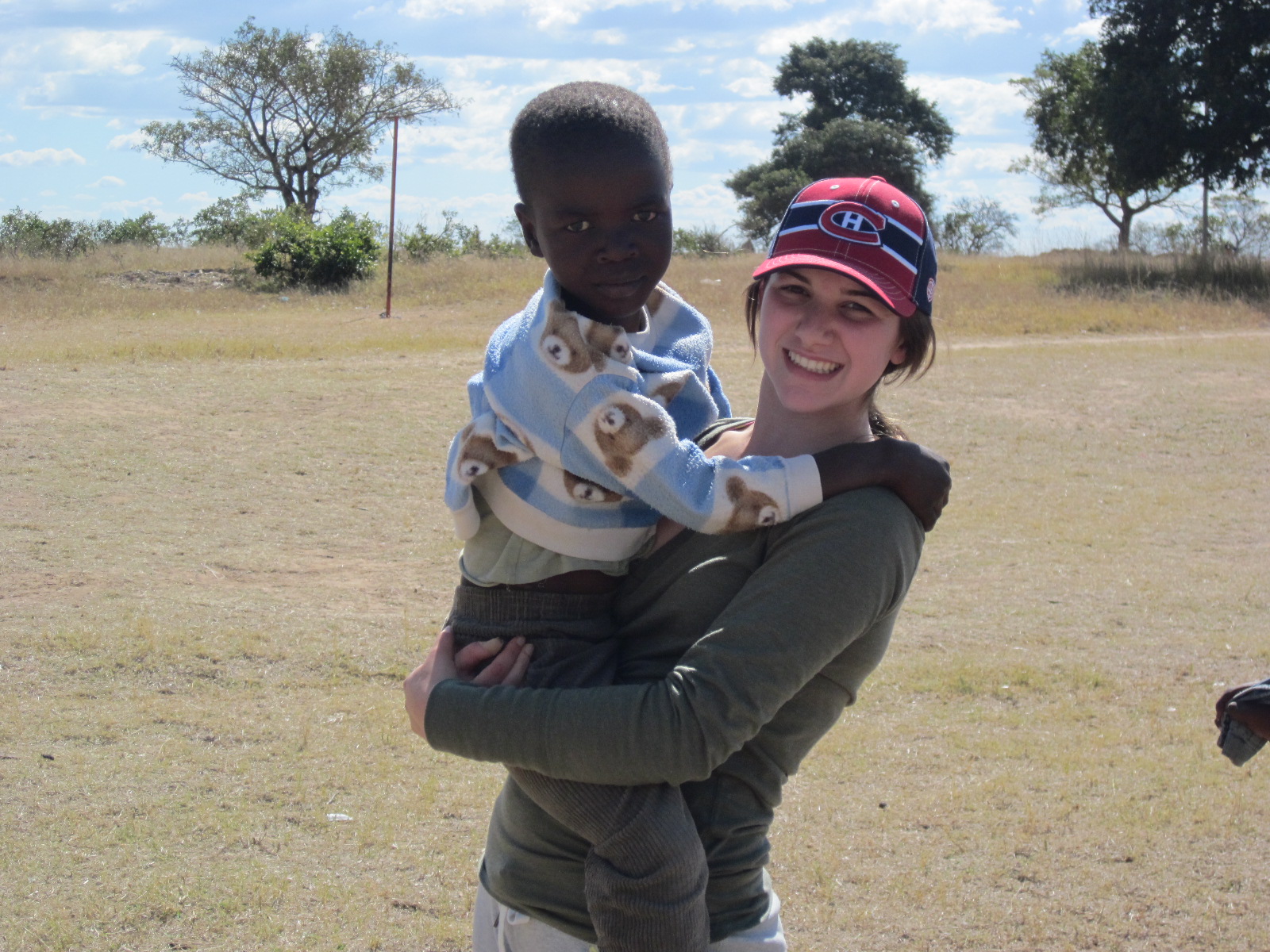
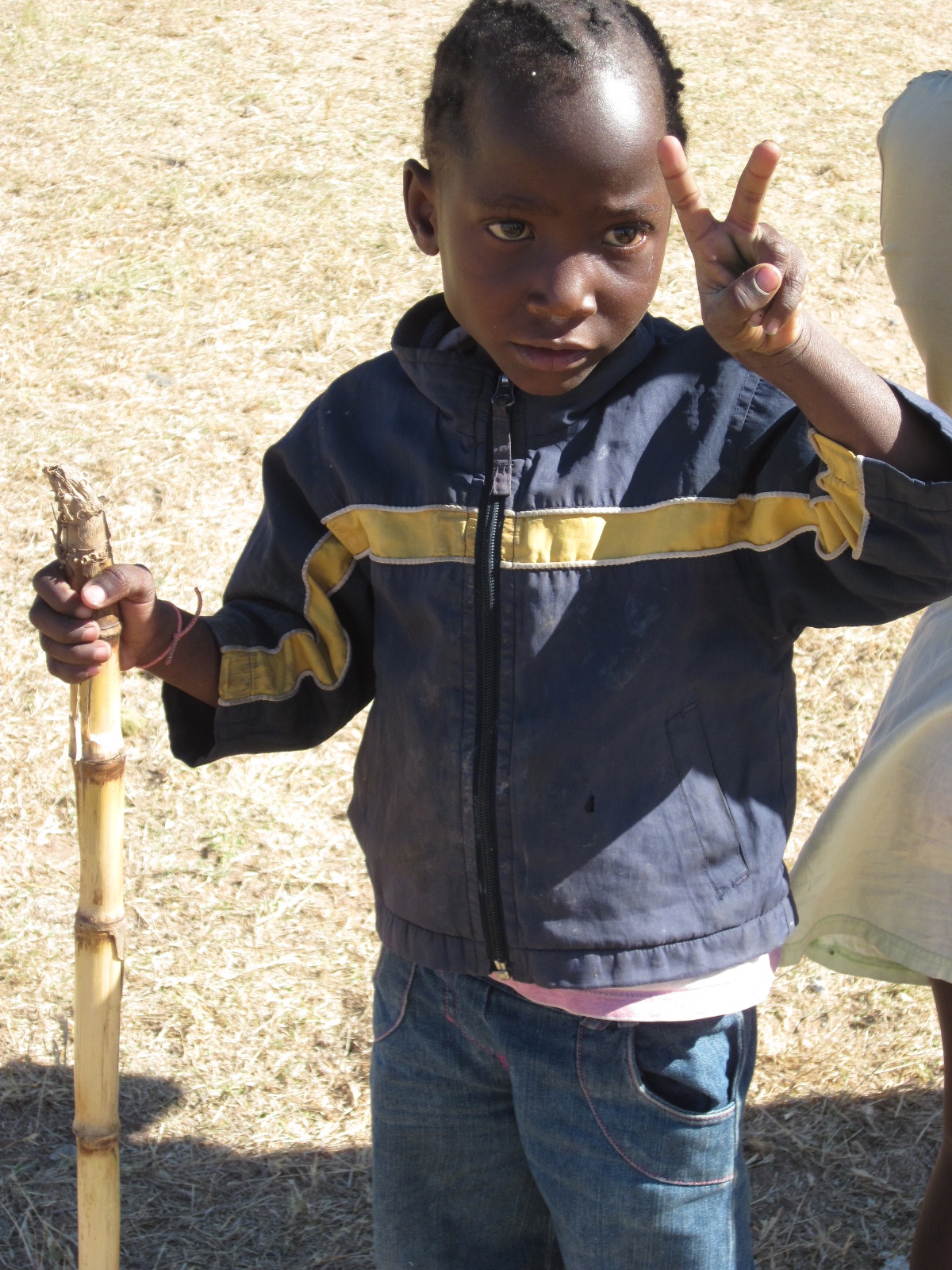
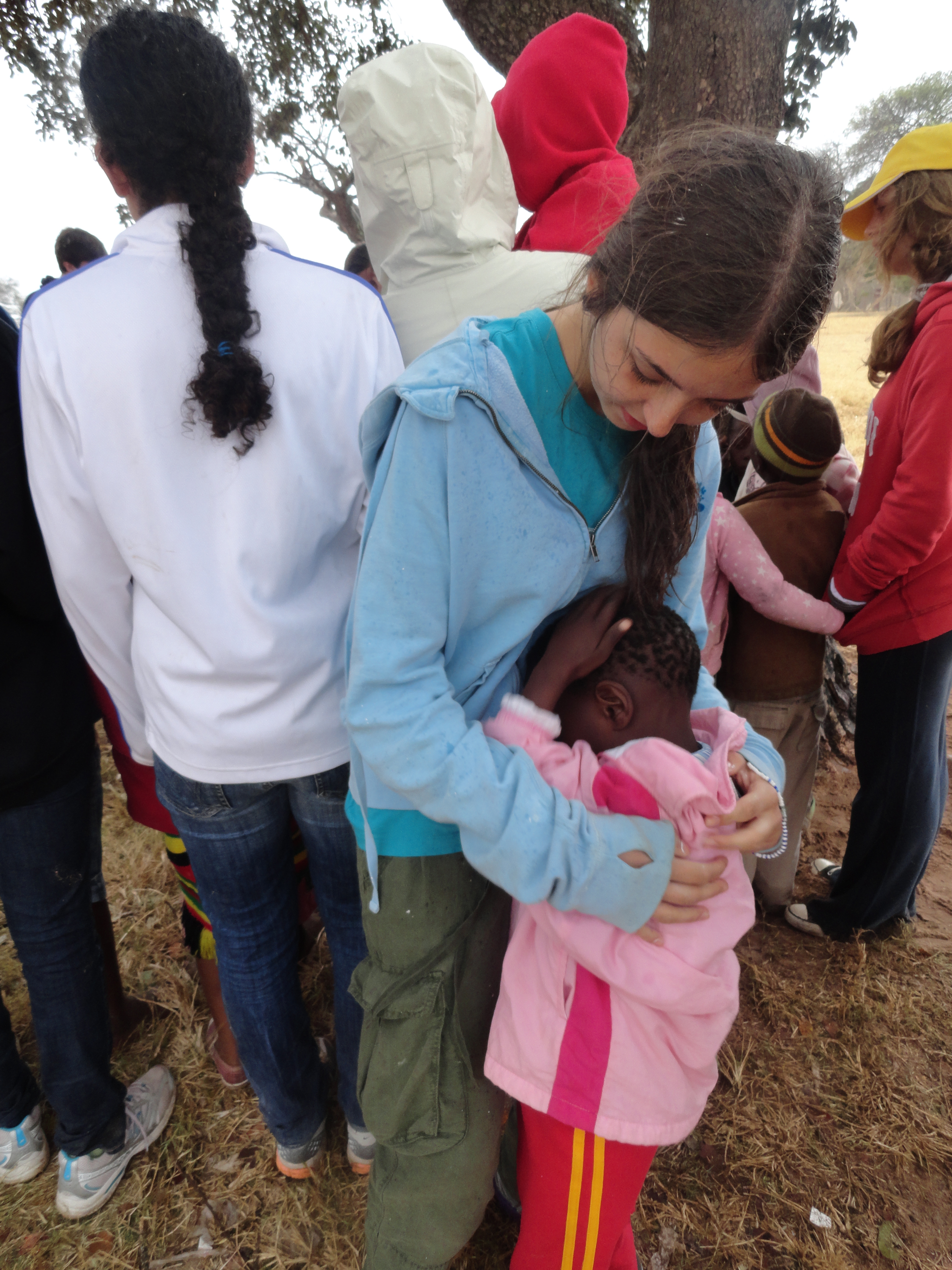
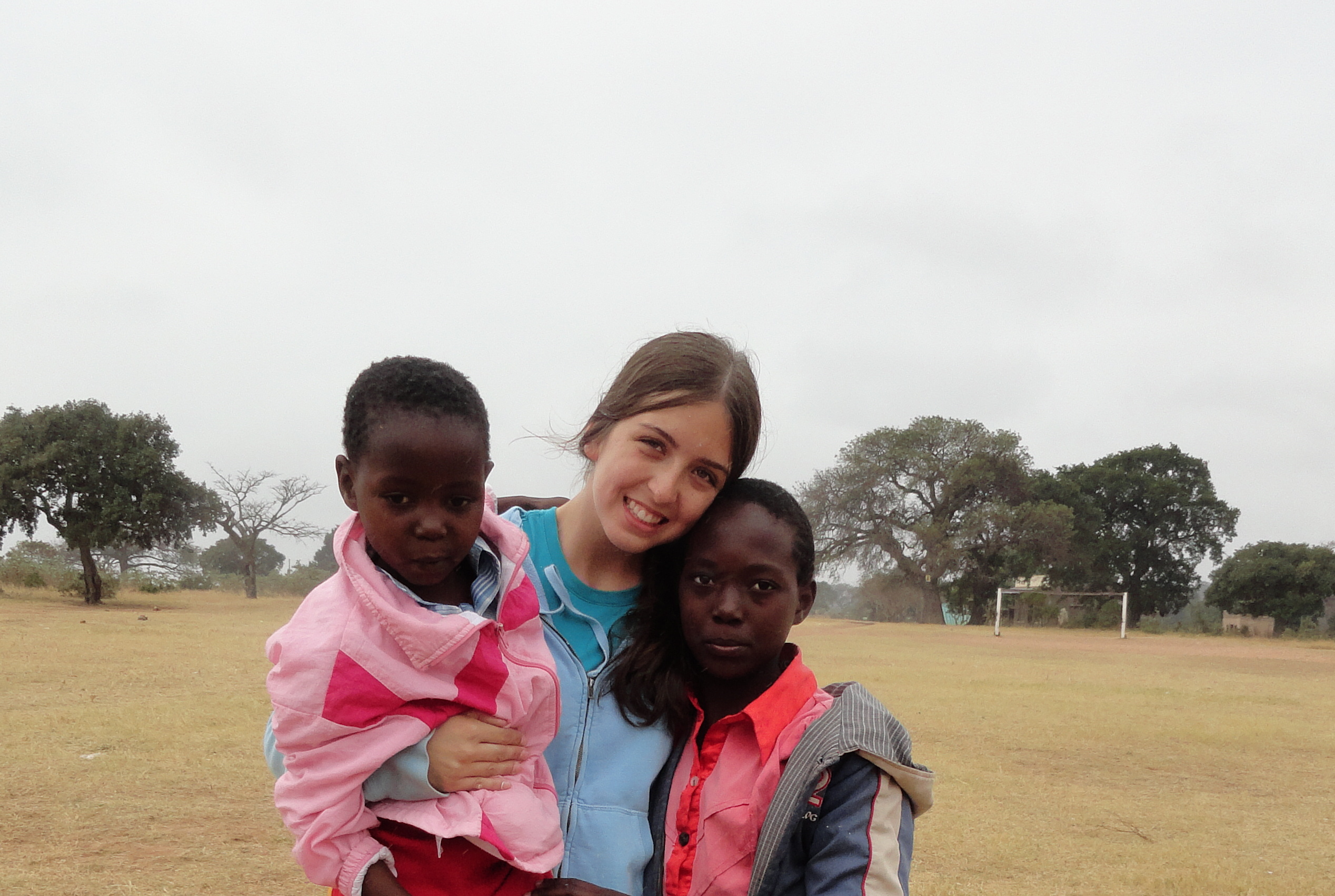
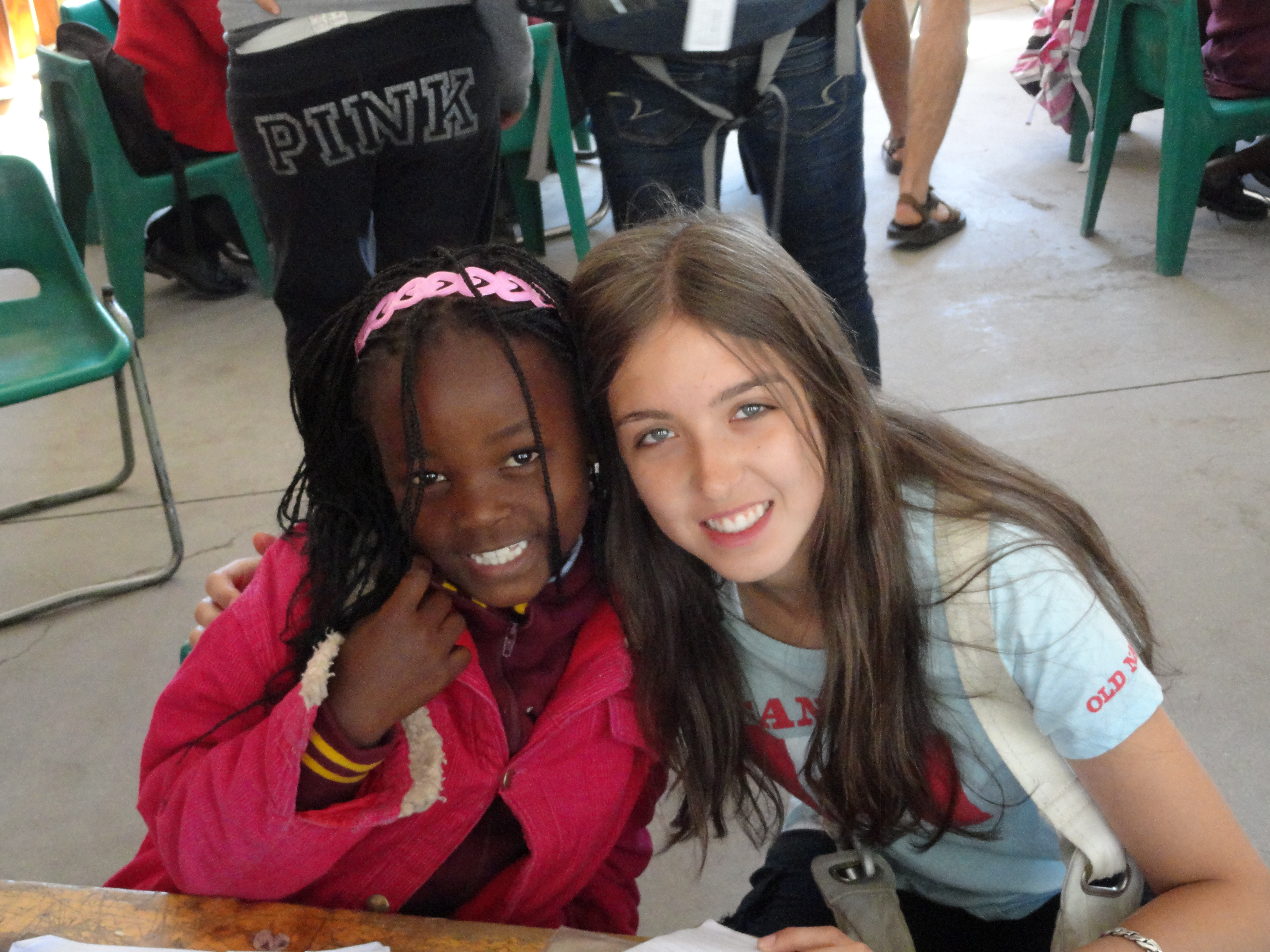
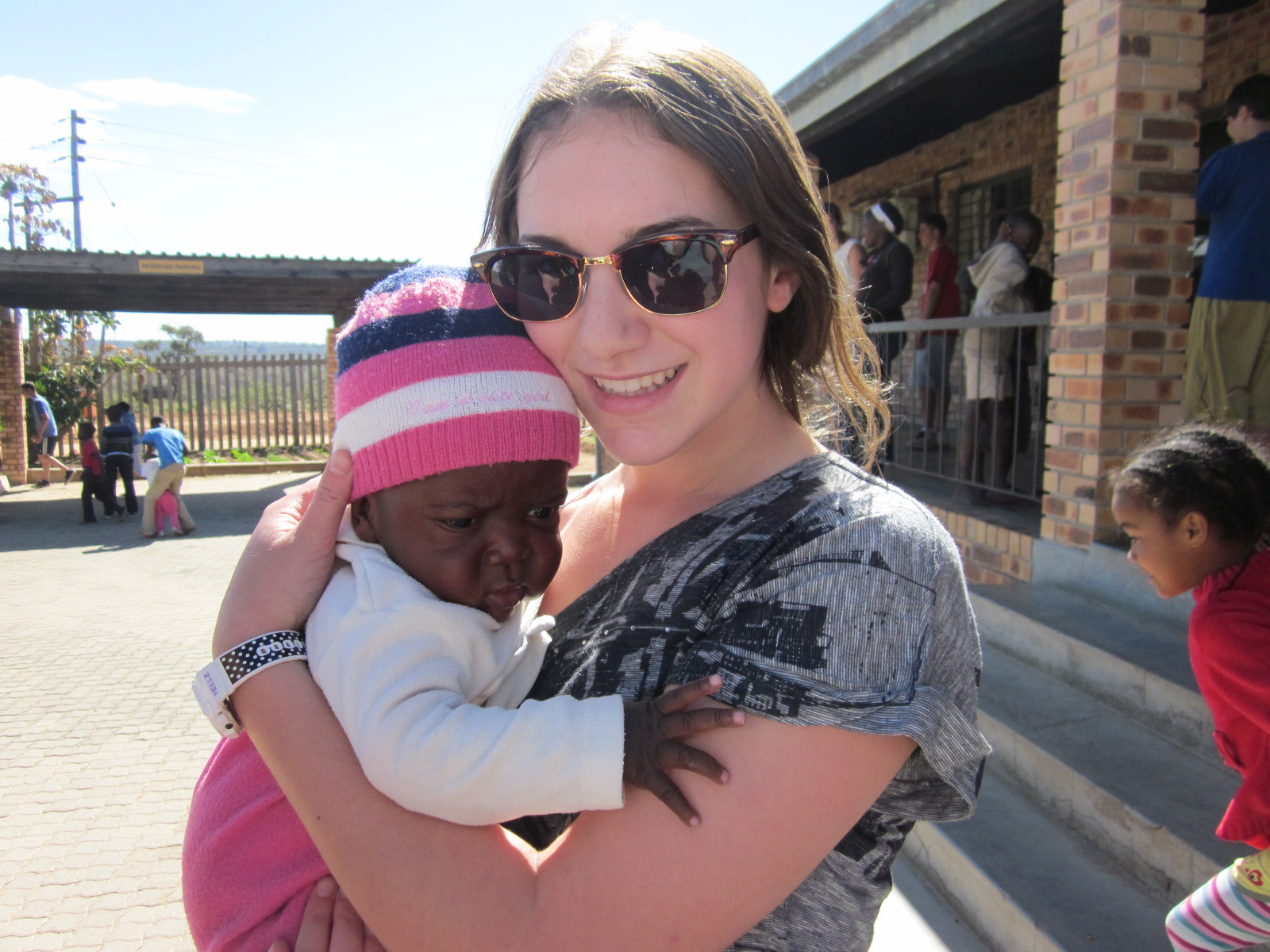
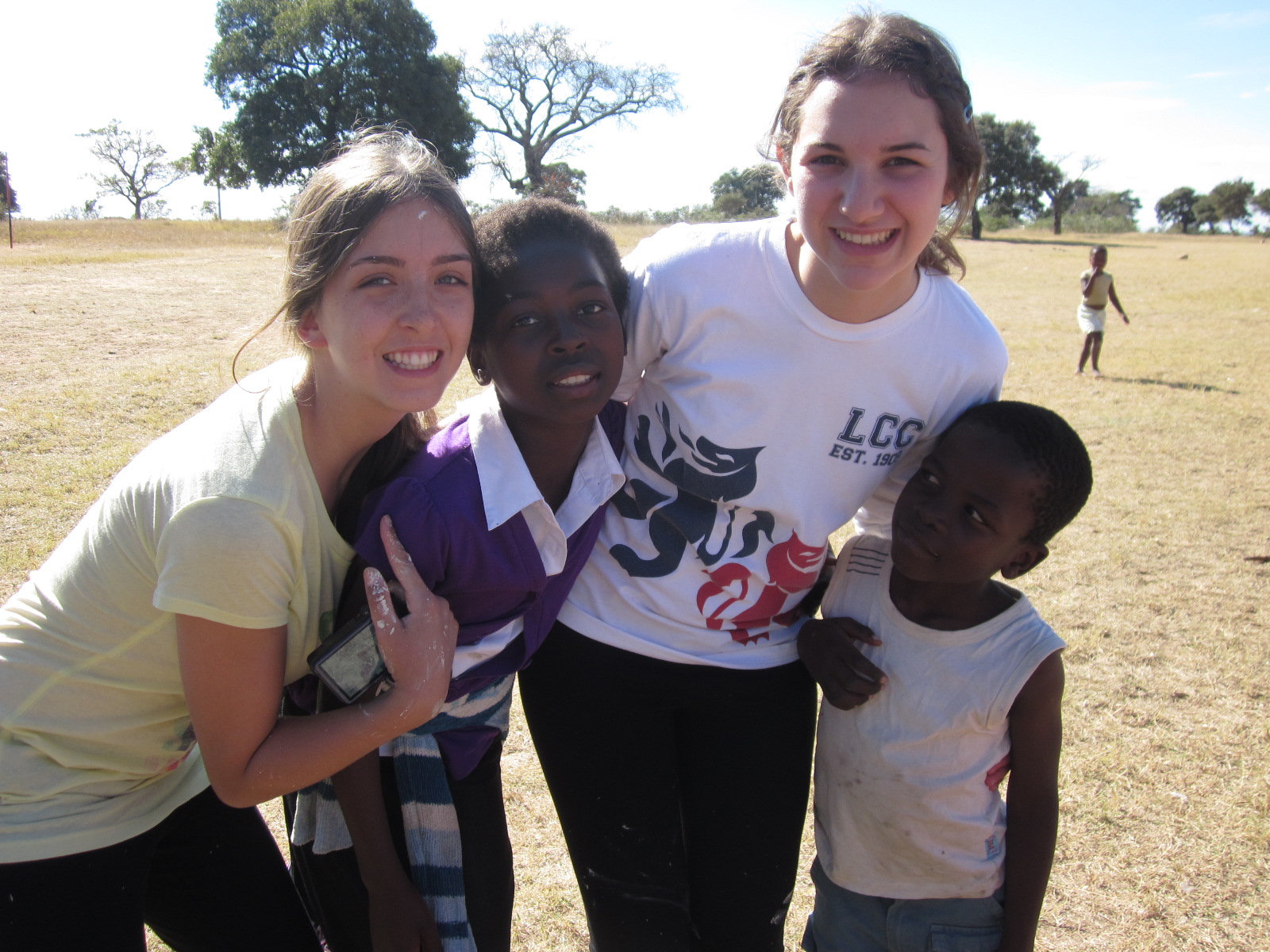
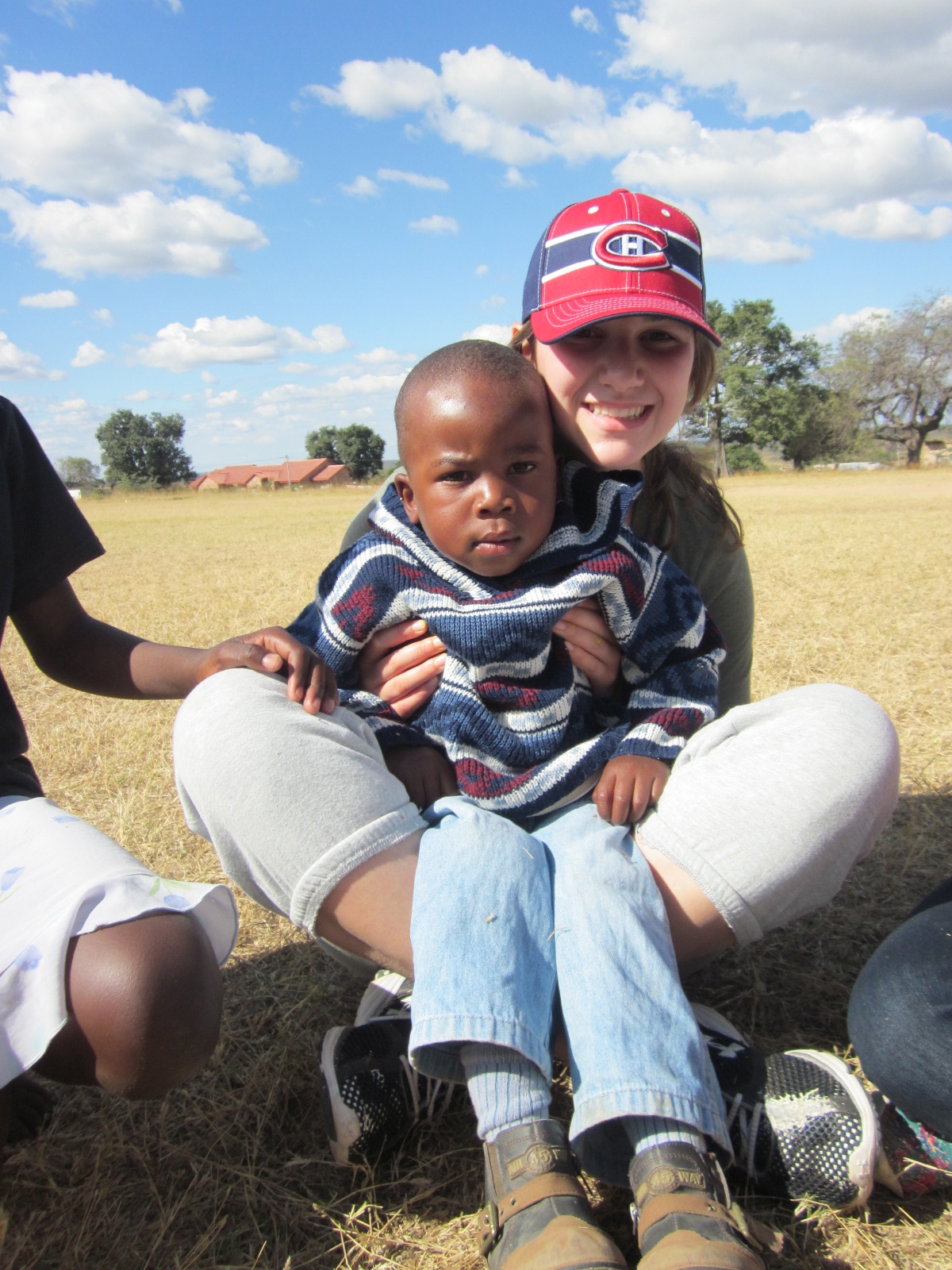
We worked five days in a smaller village within Acornhoek, at  the Sihlekisi Primary School. This school was government funded, however, the caliber of the teachers and the curriculum was questionable. In the schools, they learn very basic things about HIV/Aids prevention, but it is often times countered by the stigmas in their culture. Another problem is that the things they learn about HIV/Aids are in English, and the children understand very little English. The children were on their break when we were there, so they came to schoolyard everyday to play, and everyday they returned wearing the same dusty clothes, the same bare feet and the same smile running from ear to ear. Despite the 50% chance that these kids were fatally ill, and that they were extremely poor, they always had a smile on their faces and were ready for any game of soccer or any hand game we had prepared. The hardest part was that we couldn’t believe that our new little friends might be sick. It didn’t make sense to us that a child so happy and so pure could have HIV/Aids. The realization when we were given the 50% statistic hit us like a brick. It just made no sense.

One of the nights we spoke with an older Afrikaans man named Pieter; he owned the lodge that we stayed at near Acornhoek. He was the man who told us of the fate of 50% of the children, and he explained the stigmas of the native African people in Acornhoek. The first stigma he explained was the city theory. This theory is that women believe HIV/Aids come from the city, mainly Johannesburg. They believed this because the men often go away to work in Johannesburg for six months at time. When they are there, the women believe that they get lonely and hire prostitutes. When they come back home to their isolated villages, they force their wives to have unprotected sex because they view condoms as a symbol of betrayal and distrust. More often than not the women, the men and their children wind up getting infected, which only validates the assumption women make that their husbands are cheating on them.

Once contracting HIV/Aids, the people view it as a consequence to sinning and are completely shunned. Women will hide when they bottle-feed their children, as using bottles is a sign of sickness. Another reason to be shunned in these types of villages is to want a better life. The people who leave to get higher education in Johannesburg or Cape Town often times cannot return home, because they are seen as traitors who leave their families behind. This causes a lot of trouble because we all know that with education comes knowledge on prevention and, obviously, success. A successful person within these communities is exactly what they need for motivation, and that very rarely happens because people do not want to be excommunicated.

Another one the major problems is the government’s release of false prevention tactics. In 2005, a 31-year-old woman who was known to have HIV accused Jacob Zuma, who is now president of South Africa, of rape. Jacob Zuma insisted that it was consensual, however the girl still kept pressing charges. The problem in all this was that it came up that he did not use a condom, even though he knew she had HIV. In response to that, Zuma stated that he took a shower to, quote on quote, “cut the risk of contracting HIV.” HIV/Aids specialists and health educators tried desperately to clear this mess, however, in a country where HIV/Aids is so widespread, it is RIDICULOUS that a political leader would say something so untrue and detrimental to the health of his own country.

Many of the children in these towns have been orphaned by the HIV/Aids epidemic. Since many of middle-aged parents are dying due to the sickness, the grandparents of the children end up being their caretakers. The elderly have no source of income because they are too old to work. Essentially, this also makes them too old to care for children, and the government has no pensions or funding for guardians. Currently, there are very few organizations that care for the elderly. Since the grandparents and parents of children have such a high mortality rate, children very often become orphaned, which has grave consequences. When children, mainly young girls, cannot support their families, they resort to prostitution. This leads us back to the spreading of HIV/Aids mentioned before. The entire process seems to go around in circles.

After our trip, we came home with so much more insight on what our role was in the future pertaining to HIV/Aids prevention. This trip has forever made us activists on what Africa really needs in order to stop this epidemic. They don’t need shoes, because they won’t wear them. They don’t need toys, because that causes dependence. They need money for ARV medication, they need care for the elderly, and they need knowledge and a change of view on condoms. What they really need is access to education – not the tangible things we can give them. They need to learn how to take care of themselves, because if we do it for them, they will never learn. The money you all have donated to the Stephen Lewis Foundation will give them treatment, care for the elderly and education. When it comes to Africa, give back in ways that will improve health and education, because with health and education comes a better life.

Help prevent HIV/Aids, help save Africa, help save the world. Thank you.—Melissa Cape ’12, Alexandra Storozum ’12
Soirée de poésie au Senior School / Senior School Poetry Night

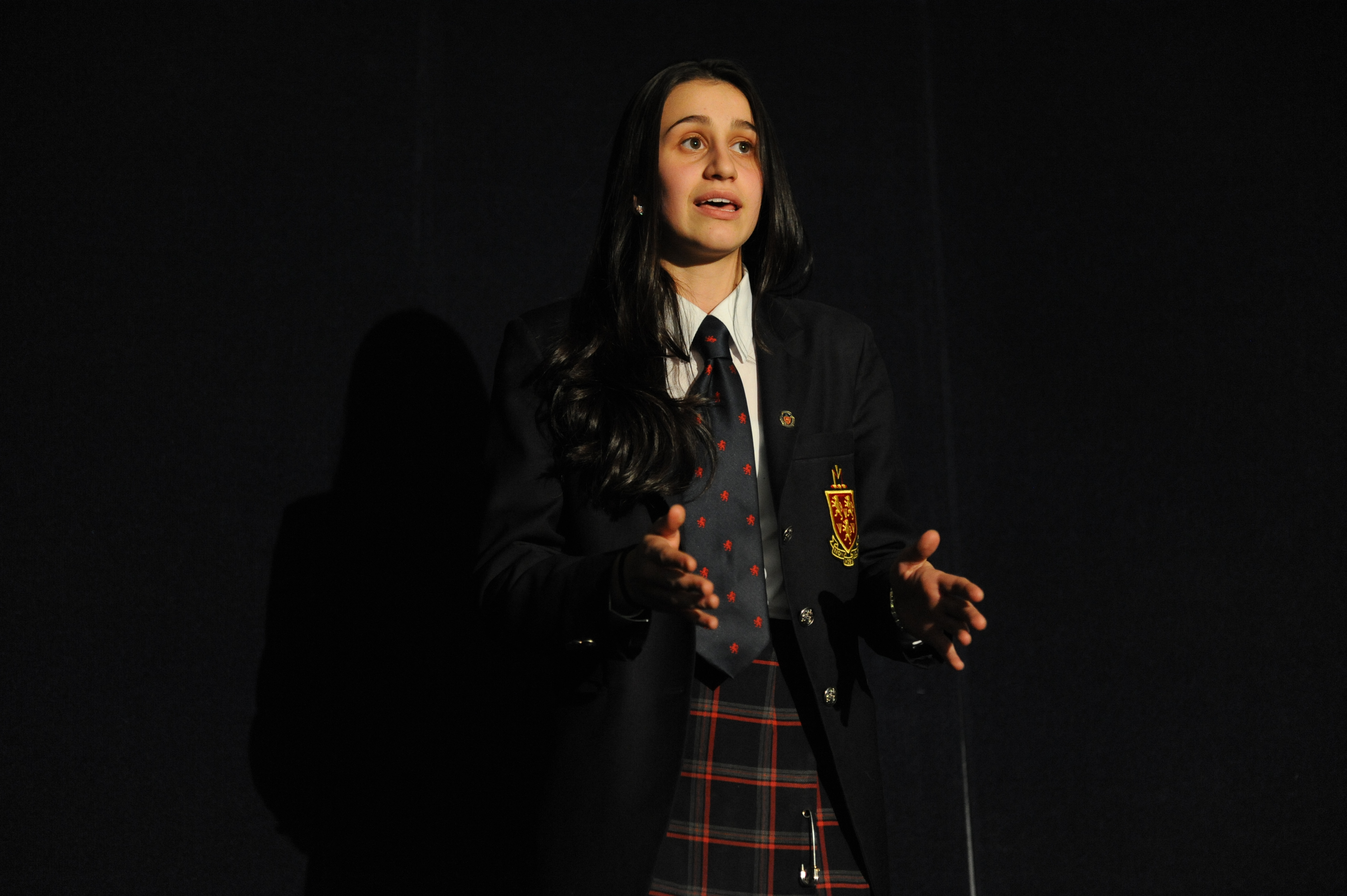
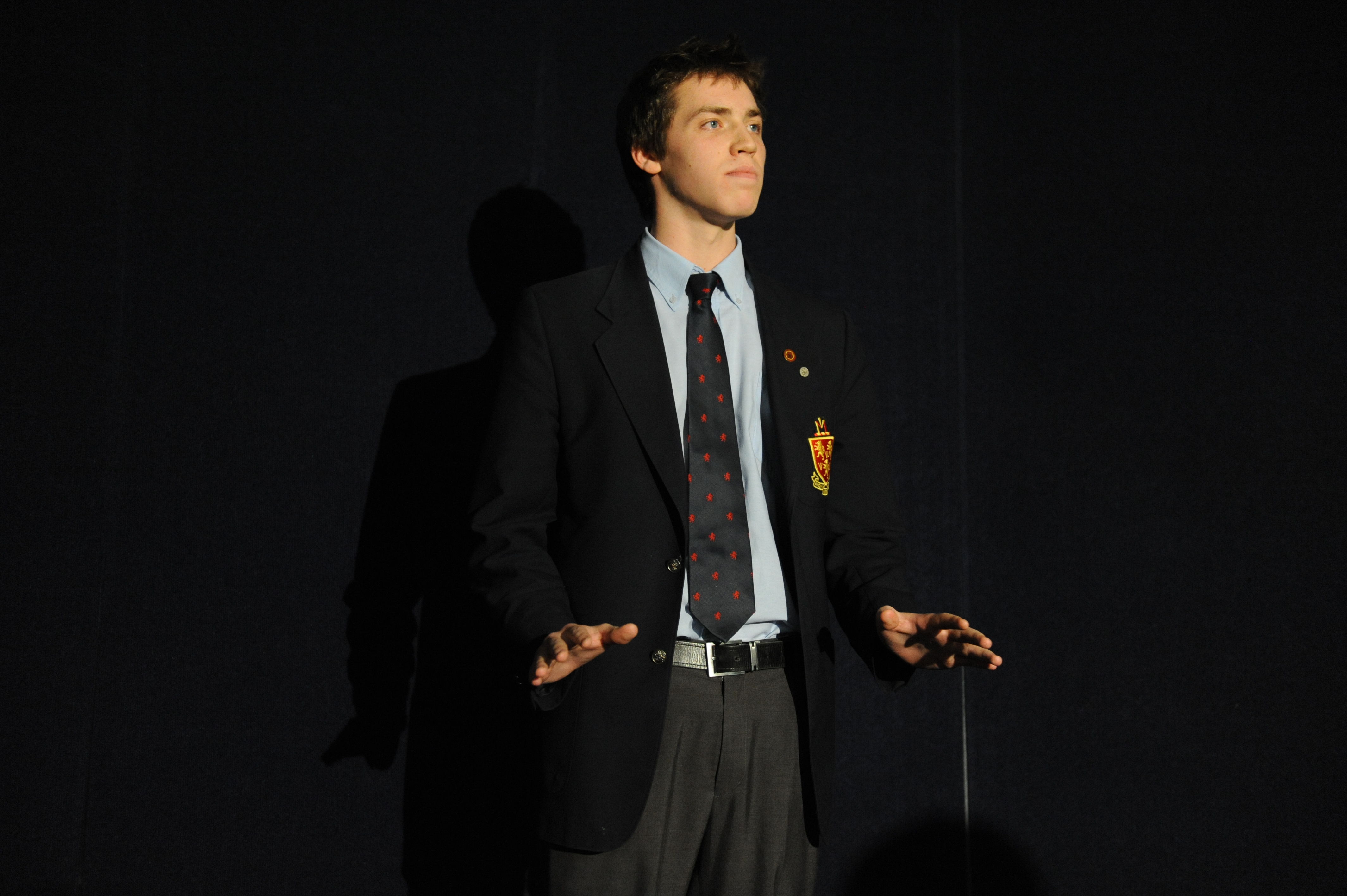
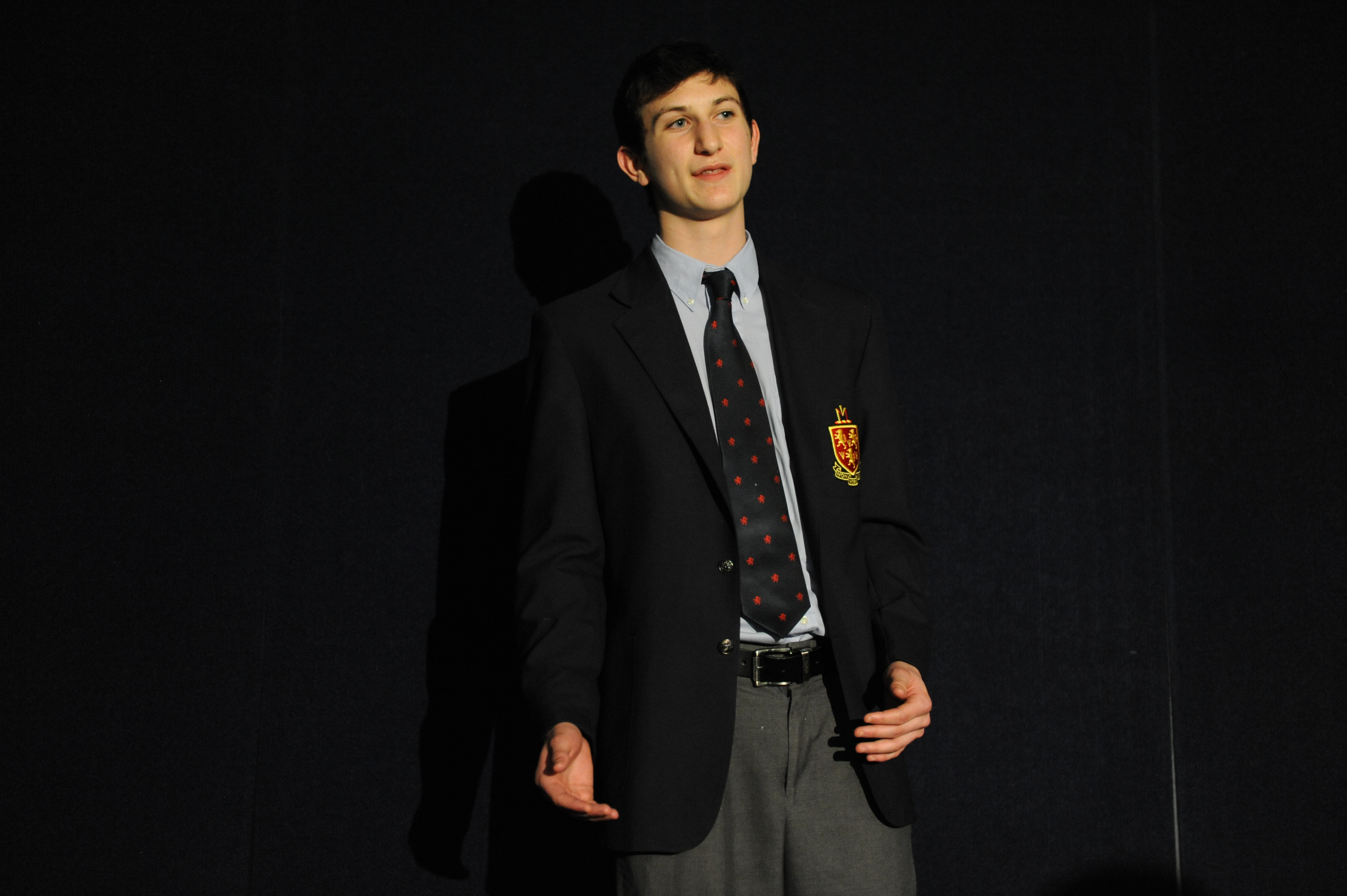
Nous sommes fiers d’annoncer que la soirée bilingue de récitation de poésie a été un immense succès. En effet, cette soirée s’est déroulée le mercredi 30 novembre 2011 en présence des parents, des amis et des enseignants. Parmi les invités se trouvaient Mme Gendron, M. Neal ainsi que Mme Anvar directrice du volet francophone du concours. Il est aussi important de mentionner l’apport inestimable de nos juges : Mme Bradley, Mme Brault (volet francophone) ainsi que M. Hirtle et Mme Mazzella (volet anglophone). Également, dans un souci d’équité envers les participants, M. Maurice et M. Soret s’occupaient du pointage. Soulignons aussi l’excellente animation de la soirée par deux élèves, Alexandre Sinor et Cole Ellicott. De plus, la présence du LCC Jazz Band de M. Cox a relevé l’ambiance et l’importance de cet événement. Merci également à Harrison Goldberg (vidéo), Olivia Auclair (photo), M. Meloche (décor), M. Geddes (éclairage).

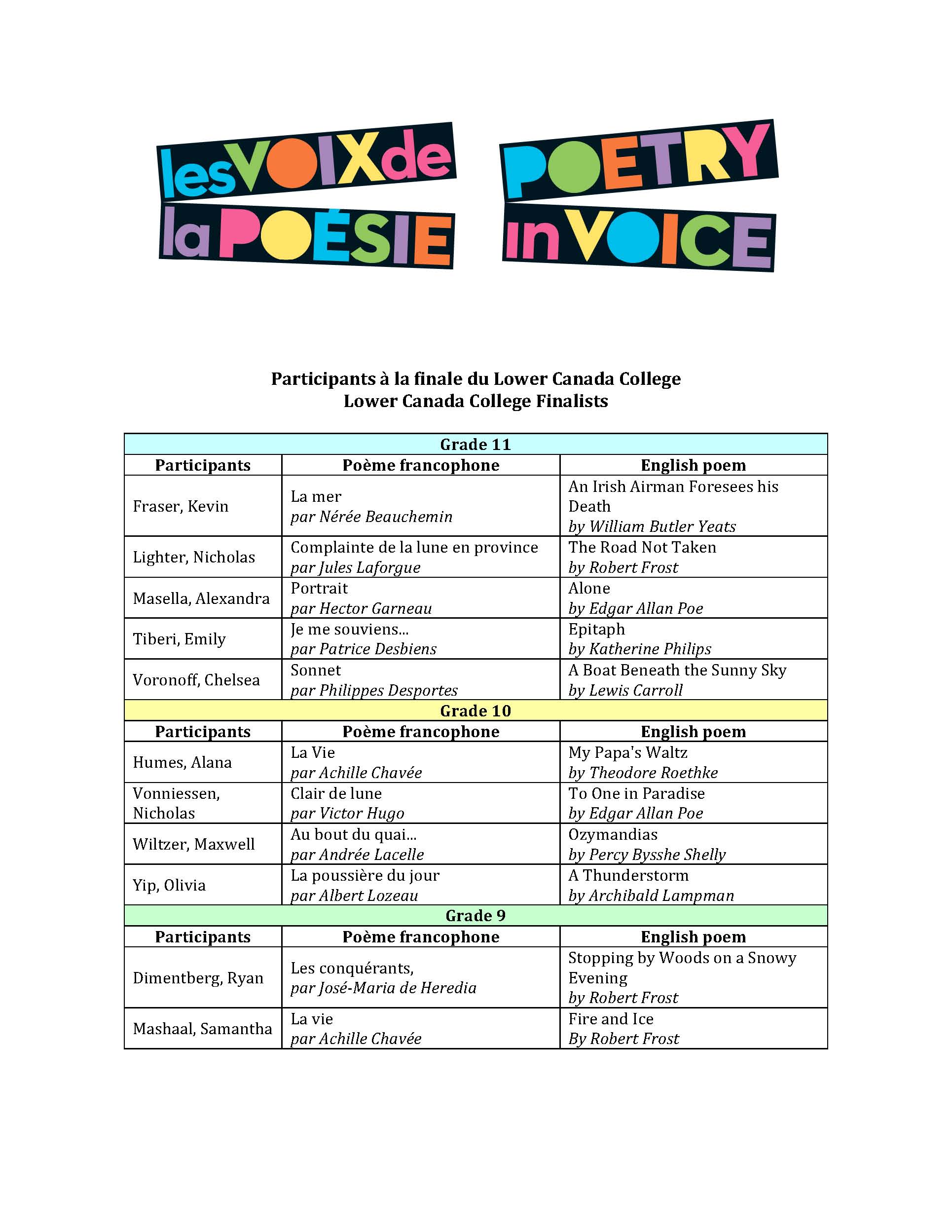
Vous trouverez le tableau récapitulatif des participants à l’édition 2011-2012 ici.

Les gagnants de cette édition sont :

  • Première place: Emily Tiberi
  • Deuxième place: Kevin Fraser
  • Troisième place: Ryan Dimentberg

Emily ira donc défendre son titre lors de la finale provinciale le 2 avril 2012 au cégep du Vieux-Montréal. Le champion ou la championne de la finale provinciale du Québec gagnera 1 000 $ et la bibliothèque de son école recevra un chèque de 500 $ pour l’achat de recueils de poésie. Les trois meilleurs élèves de la finale provinciale du Québec seront invités à se présenter à la grande finale canadienne à Toronto le 24 avril 2012.— M. Denis Chouinard, organisateur pour la finale LCC.

Voici quelques commentaires d’élèves :

La soirée de la poésie était une expérience merveilleuse. Je me suis enrichie en écoutant les performances remarquables de mes pairs et la poésie classique qu’ils ont récitée. L’expérience m’a fait connaître de nouveaux poètes. Elle a également encouragé les élèves à développer une passion pour l’art. Ma performance m’a permis d’améliorer mes compétences en art oratoire, en mémorisation et en théâtre. Ce fut une soirée couronnée de succès qui démontrait le soutien de LCC pour le bilinguisme et l’apprentissage de manière créative.— Samantha Mashaal ’13

La soirée de la poésie nous a donné l’occasion de participer à quelque chose de tout à fait unique. J’ai beaucoup apprécié l’atmosphère d’un club de jazz créée par une diversité de musique jouée par notre propre Jazz Combo. La lumière qui illuminait les élèves lors de leur récitation et le décor foncé créaient des ombres qui remplissaient la salle d’une atmosphère intime. Les juges donnaient un air officiel et nécessaire lors d’une compétition. Les animateurs de la soirée, Alexandre Sinor et Cole Ellicott, ont été exceptionnels. Avec une salle remplie d’enseignants et de parents, les compétiteurs ont eu de bonnes raisons d‘être nerveux, mais ils ont tous présenté leurs poèmes de façon émouvante et impeccable. Félicitations à tous les élèves pour une soirée bien réussie!— Emily Tiberi ’11

Shannon’s Top 10 Reasons to Read

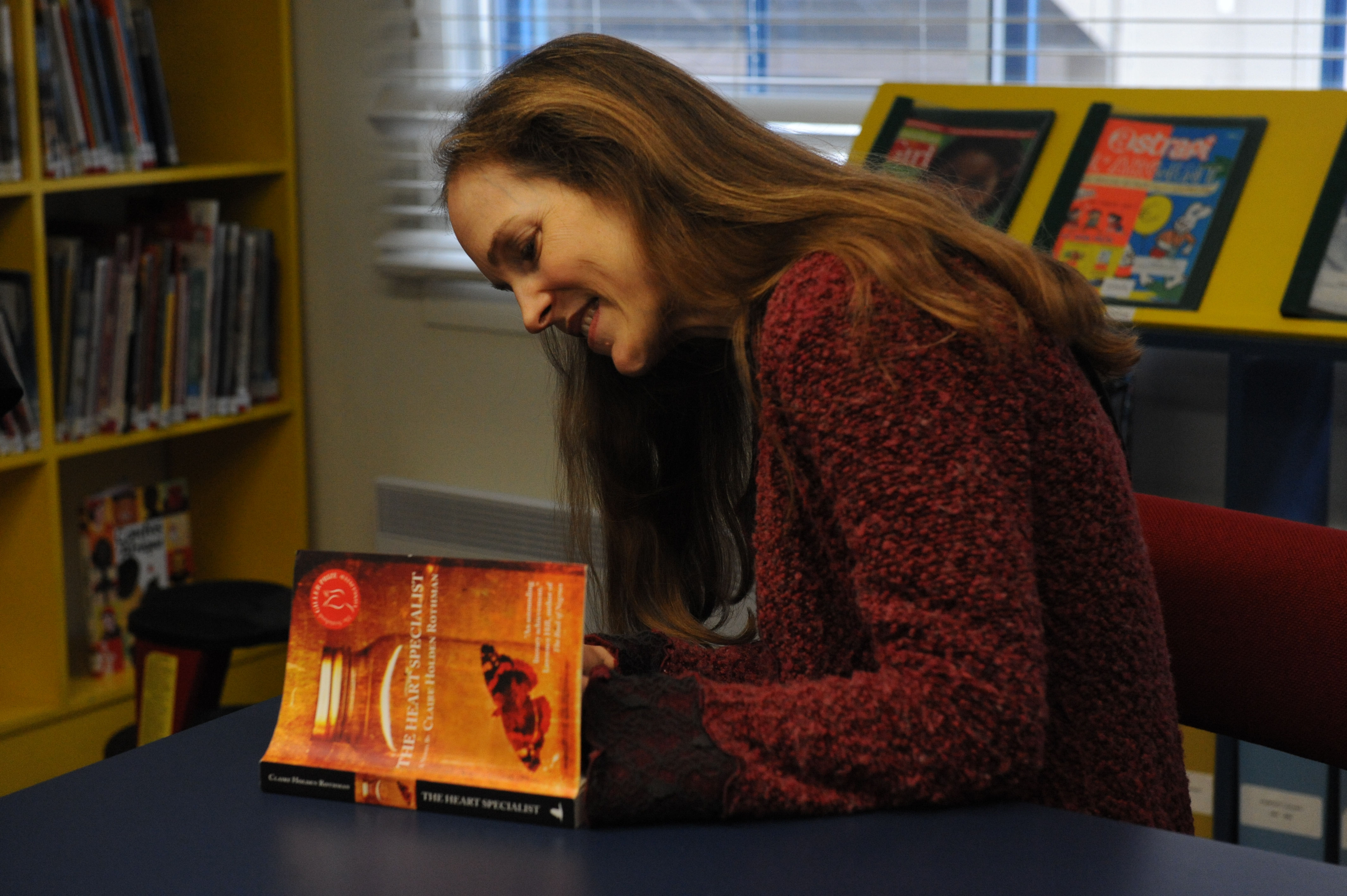
ClaireHodenRothmanThis week we welcomed Claire Holden Rothman, author of this year’s LCC Reads book The Heart Specialist as well as Dr. Ariane Marelli, Director of the MAUDE Cardiology Unit at the Montreal General Hospital (Lib_LCCReadsAssembly_01Dec2011).  In the spirit of discussing this book, I put together my own Top Ten list about the importance of reading (view LCC Reads photos).

1. Academic Success – Research confirms that the greatest single predictor of success in senior high school and post-secondary programs is the capacity of a student to read.  Reading builds knowledge and makes students smarter.

2. Vocabulary Development – Reading helps put words in context and broadens our word recognition ability.

3. Imagination – Reading takes us to new and imaginary places and helps us to be more creative; it certainly helps develop more colourful ideas.

4. Quiet and Calm – The opportunity to quietly pause and focus in a busy/noisy world is an important attribute of focusing on a text.

5. StorytellingStorytelling is so powerful that many ancient cultures continue to stress key stories as the foundations of their cultural identity.  This remains the case with many aboriginal nations in Canada.  Consider also how in mainstream culture the Harry Potter series excited and engaged a whole generation of young people.  The release of every new book in the series caused pandemonium around the world.

6. Choice – Read whatever interests motivates or excites you.  Whatever makes you think and develop original ideas, develop solutions to problems, or create a greater awareness of the complexities of the world is meaningful.  Reading can actually lead to discoveries and have a “wow factor” that motivates us to achieve.

7. Inspiration – Martin Luther King’s “I have a dream” speech, John F. Kennedy’s inaugural address “Ask not what this country can do for you, ask what you can do for your country,” Nelson Mandela’s inaugural address as the first black President of South Africa… these are all examples of how the written word can awaken deep feelings in all of us. Also, stories of courage can motivate us and the written word presents the opportunity for a clear voice by people who are somewhat shy in groups and less inclined to speak out.

8. Meaningful – In our Junior School we use an active reading methodology called “AIM” which focuses on students’ meaningful personal connections to texts.  While students are quietly reading they employ gestures that indicate what the material makes them feel, think, predict, connect and remind them of. Each sentiment has a quiet gesture.  One-on-one, the classroom teacher listens to the student’s oral explanation of why something is personally meaningful.  In short, the reading material becomes more relevant – and young students become more actively connected to the content.

9. Power of Words – Words resonate deeply.  Remember that two winters ago Canada’s Olympic team chose a simple word to motivate our athletes and a whole nation – “Believe.”  It was Canada’s mantra, “Believe.”  The word inspired athletes, teams, and a whole country as we earned the greatest medal haul in our history.

10. Reading Builds Community – We begin young by reading some common texts/stories in school and continue to share stories in English classes in high school.  Beyond school, book clubs are very popular in Canada (at LCC as well at various levels).  Our LCC Reads program has helped to bring hundreds of people together over a single book.

Thanks to all of our English teachers for their support of reading and literacy skills here at LCC.  A special thank you to Mr. Moore, Head of our English department and co-chair of the LCC Reads committee, along with our chief librarian Mrs. Varvarikos and dozens of students who are active members of our LCC Reads Club. Continue to read, learn and be inspired by the written word. Remember, literacy is timeless!– Christopher Shannon, Headmaster

L’illusion de Pierre Corneille

Le 24 novembre 2011, nous avons assisté avec les élèves de 8e ,9e et 10e programme accéléré à la pièce de théâtre: l’illusion de Pierre Corneille, écrivain dramaturge du 17e siècle. Cette comédie, quoique composée à 29 ans, témoigne d’une grande maturité.

L’histoire raconte la vie de Clindor, forcé de quitter son père, dont <<les traitements trop rudes>>, le contraignent à l’exil; il errera pour finir servant du glorieux Matamor. Parallèlement à cette histoire, Isabelle doit, elle aussi affronter son père Géronte, qui veut la marier à Alcastre. Cette histoire en alexandrin, accompagnée d’un orchestre nous fait découvrir la magie du théâtre, ou plutôt l’illusion. Enfin de compte, des rencontres, des quiproquos, des déceptions, des duels et une  issue heureuse seront le résultat d’une fin tragico-comique de cette pièce.

Mais laissons la place aux commentaires de certains élèves:

En écoutant la pièce de théâtre, j’ai beaucoup apprécié le français utilisé. Les acteurs prononçaient chaque syllabe et ils n’ont jamais hésité malgré la difficulté des vers. Au début, j’étais capable de comprendre les actions de la pièce et l’interaction entre les personnages et leurs liens. J’ai adoré la musique jouée, car elle me permettait de rester attentive à l’intrigue. Les costumes colorés étaient magnifiques. En conclusion, j’ai beaucoup aimé la pièce, même si je ne comprenais pas toujours exactement ce qui se passait. — Emily Smith ’13

Pendant cette pièce de théâtre, j’ai bien aimé sa scénographie. Le directeur a bien utilisé la scène pour raconter l’histoire. La musique, pendant la pièce, donnait un air familier et a capté mon attention. Je trouvais que c’était intéressant que la musique reflète les émotions des personnages. L’histoire était un peu déroutante, car je ne savais pas que c’était composé de différentes pièces de théâtre et, c’était difficile à suivre. Les personnages étaient très bizarres avant que je les connaisse, mais ils étaient talentueux, même si je ne comprenais pas tout ce qu’ils disaient. — Stephanie Hwang ’14

J’ai apprécié la pièce de théâtre qu’on a vue aujourd’hui. Je l’ai trouvé très drôle et j’ai beaucoup aimé les rimes. En particulier, j’ai aimé la fin musicale, car c’était amusant et captivant. — Alexa Dlouhy ’13

J’aimais beaucoup les costumes dans la pièce. De plus, j’aimais le décor et la combinaison des couleurs. Dans l’ensemble, c’était très beau visuellement. Aussi, les acteurs étaient très impressionnants et leurs émotions semblaient authentiques. —Allison Mayers ’13

Les acteurs dans la pièce de théâtre étaient très talentueux. Ils ont montré beaucoup d’émotions et ont du mémoriser plein d’alexandrins. Ils ont incarné leurs personnages d’une manière efficace. Cependant, j’ai trouvé que le dialogue était difficile à comprendre, car il a été écrit dans un style poétique. — Jacklyn Greenspoon ’13

Je pensais que l’histoire était difficile à comprendre au début, mais une fois que j’ai compris, c’était une excellente histoire. J’ai aimé les différents concepts employés par Corneille. C’était très créatif la façon dont Corneille a abordé cette histoire d’une pièce de théâtre dans une autre et aucune d’entre elles n’était réelle en fin de compte. Les rimes étaient très intéressantes, c’était amusant d’écouter les acteurs parlés. Alcandre a fait un excellent travail pour faire comprendre à Pridament qui n’aurait pas du être si dur avec son fils. La musique était amusante à écouter, elle m’aidait à comprendre l’émotion que les personnages ressentaient. Le décor m’a aussi aidée à comprendre la pièce. Je pouvais toujours savoir quand Pridament et Alcandre observaient de l’extérieur en regardant à l’intérieur. Le décor a aussi changé quand il y a eu la deuxième partie. — Eloïse MacIntosh ’14

Mackay Center & Camp Massawippi: LCC Students Learn About Themselves and Others

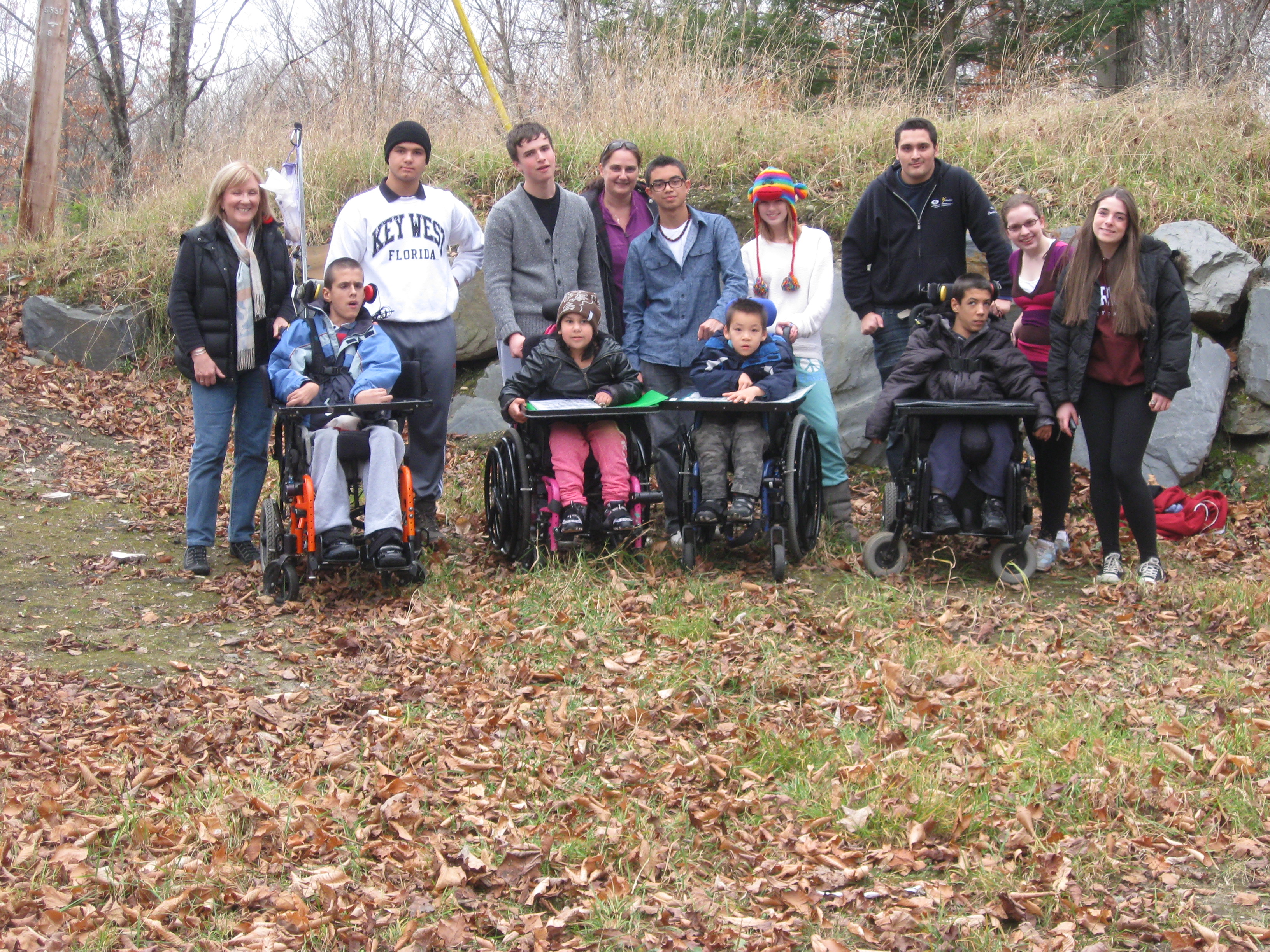
On Monday, November 7, we left on our experience trip with the Mackay children to Camp Massawippi (view gallery). We departed from the MacKay Centre at around 9:00 am and as we boarded the adapted transport bus that would take us to the camp, all the Mackay kids had huge smiles on their faces as per usual. We were all extremely excited for this new adventure. We stopped at Tim Horton’s for someMacKay_Massawippi donuts, coffee and hot chocolate on the way, and when we arrived at camp it was already around 11:00 am.

It was a beautiful fall day, so after unpacking and having a quick lunch we all went on a short hike. To be honest, it was no easy feat pushing the wheelchairs up the mountain but it was worth it in the end. We cut down a small tree for them to take back to their classroom to decorate for Christmas. As hard as it was, to see the children constantly smiling, we would have had pushed the wheelchairs up and down a thousand times.

After the hike we had an arts and crafts session where we made picture frames and portraits with the kids. We let them dry in the back and proceeded to the next activity, which in fact was dancing. The kids all have their own music preferences, and they really had fun as we danced and moved the wheelchairs to the rhythm of the music.

Finally dinner came along and BBQ chicken had been prepared. The meals were delicious and it was just like being at home. After dinner we went down to the lake where some of us had already prepared the campfire. We talked and laughed and roasted marshmallows and prepared banana boats. The first day was a dream and it went by so quickly!

On our second day at Camp Massawippi, we had another great day filled with fun activities. After the kids woke up and ate some breakfast, we took them on a nice walk along the road leading to the camp, and met up with Mark, one of their teachers who couldn’t come for the whole trip because of an injury, so the kids were really happy to see him when he drove up for the day. The weather was beautiful once again, and we all really enjoyed the walk. The sun was out and it wasn’t too cold or too hot. Afterwards, we hung out down by the beach and Mark talked to the kids while we were playing with his hyperactive dog, Mario.

We returned to camp for a lunch of chicken fingers and French fries, which everyone enjoyed. Later on, a couple of the Mackay kids got to lie down on a mat and play with Mario, who was very careful and affectionate with them. The weather was so nice that day that we even had the chance to go out and play in the field, throw some balls around (before Mario ate them!) and relax. That afternoon we also painted a mural with the kids that was really nice; hopefully it’ll be hung in their classroom at the school. Afterwards, we were all ready for a rest and decided to watch the movie Up! For dinner we had lasagna and salad, and apple crumble for dessert. That night we went out for a second campfire, this time in the field and ate some marshmallows. A couple of people decided eating them wasn’t exciting enough and put them on each other’s faces instead; either way – a fun time! At night, after the kids went to bed we sat on the couches and watched The Incredibles, a good ending to an amazing day.

Wednesday morning, our last day, we were all up early to make a special brunch for the Mackay kids. Some of us were in charge of making French toast, others cooked bacon and tater tots. It was a great breakfast and a nice way to end the trip. As things were getting packed up we all had fun doing face-painting with the kids, and then finally got back into the bus for the return trip to Montreal. We all agreed that this was an amazing experience and one that we would never forget. The trip really makes you learn a lot about yourself and others, and makes you realize how lucky you are, and that you should never take life for granted. We can’t wait to see the Mackay kids again sometime soon!— Pietro Cammalleri ’13, Sam Ergina ’12, Claire Greenbaum ’13, Erin Masson ’13, Julia Peterson ’13, Liam Reckziegel ’13