Schools on Board: Hands-On Science

September 26, 2011

Today, we were issued mustang survival suits and hard hats, so now we can go wherever we want on the deck and watch the various operations. We had a meteorology lecture from a scientist on board, and then we built pyranometers, instruments that measure the amount of solar radiation falling on a horizontal surface. We were given photodiodes, devices that convert sunlight into electricity. We built two pyranometers and we are trying to see how the features on ours affect the accuracy of our measurements. We will start collecting data in a few days and compare our results to the ship’s pyranometer.

I was surprised that us students are allowed to go to the science meetings that happen every evening. They state what they have achieved in the past 24 hours, raise any issues they may have had with the schedule and equipment, and discuss the plan for the next 24 hours. I like how the scientists let us see what they do as much as possible.—Karen Butt ’12

Follow Schools on Board

Schools on Board: Life Aboard Ship

September 25, 2011

This morning, we had a presentation from the captain about life on board and the rules of the ship. Then, an officer gave us a tour of the ship, which highlighted all of its safety features. He showed us the lifeboats along with the survival suits we would have to wear if we were to abandon ship. I hope we never need to use them!

After dinner, we listened to a presentation from the chief scientists on board the Amundsen. He was telling us about a trip he took in a submarine to the bottom of the ocean where the remains of the Titanic were scattered. Afterwards, he started to tell about how research with Arctic Net works. The ship stops at different stations to collect samples of water, ocean floor sediments and different creatures. All the scientists on board share the data and their individual research projects are actually part of one big picture. They study a wide range of topics from nutrients to zooplankton to contaminants, but they all study the same places and make connections between their findings. It amazes me to see how everything is coordinated.—Karen Butt ’12

Follow Schools on Board

Schools On Board: We Finally Arrived!

September 24, 2011

Today was a great day, because we finally landed in Kugluktuk and got on board the Amundsen! The five students who met in Quebec City met the other 4 students today. We’ve learned to get along really well in such a short period of time.

One of the students needed to go back to Kugluktuk before getting on the ship, so I went with her and got to see a part of the town. Everything is so different! It’s a small community of 1,300 people, and everyone knows each other. The houses are built on supports in such a way that they are not touching the ground. The freezing and refreezing causes the soil to shift a lot, so they need to adapt their houses to the conditions. We drove by the hospital, the grocery store, the hotel, the arena, and the elementary and high schools. It’s not hard to tell that life in Kugluktuk is very different from Montreal, but I’ll find out much more once we get off the ship and spend a few days there.

We got to take a helicopter from the airport onto the ship. That was definitely the coolest thing I have ever done in my life. I can’t believe how much stuff there is on this ship. It never looked so big from the outside. The space is used effectively though, with narrow hallways and steep staircases. We’re free to go almost anywhere we want, and there’s so much to explore. We just went up on deck, and it’s actually really cold because of the wind. I’ve seen many instruments and scientific equipment and I’m really curious about how it all works.—Karen Butt ’12

Follow Schools on Board

Bringing Awareness to Invisible Children

InvisibleChildPosterThis week’s Middle/Senior School assembly reflected LCC’s strong commitment to global awareness.  We had an eye-opening visit and video presentation from the group “Invisible Children.”  It is a non-profit organization based in California that is working to diminish the tragedy of child-soldiers as victims in northern Uganda and the Congo.

Using video to educate, this organization encourages students to pursue social justice and change.  They reminded LCC students that they possess a great capacity to affect change in those two African countries and many other settings where injustice and poverty reign.  Students were invited to respond to events in the world and take personal responsibility to improve the quality of life for youth living in conflict and post-conflict regions.

Youth empowering youth is powerful. I was impressed by the energy in the assembly and the desire for our students to take initiative. At the end of the presentation, 500 students rose to their feet in a raucous standing ovation—engaged and inspired. Ask our students what they gained from the presentation and how they plan to respond.  —Chris Shannon, Headmaster

Grade 8 Experience Activity: Committed to Green and Creative Commons

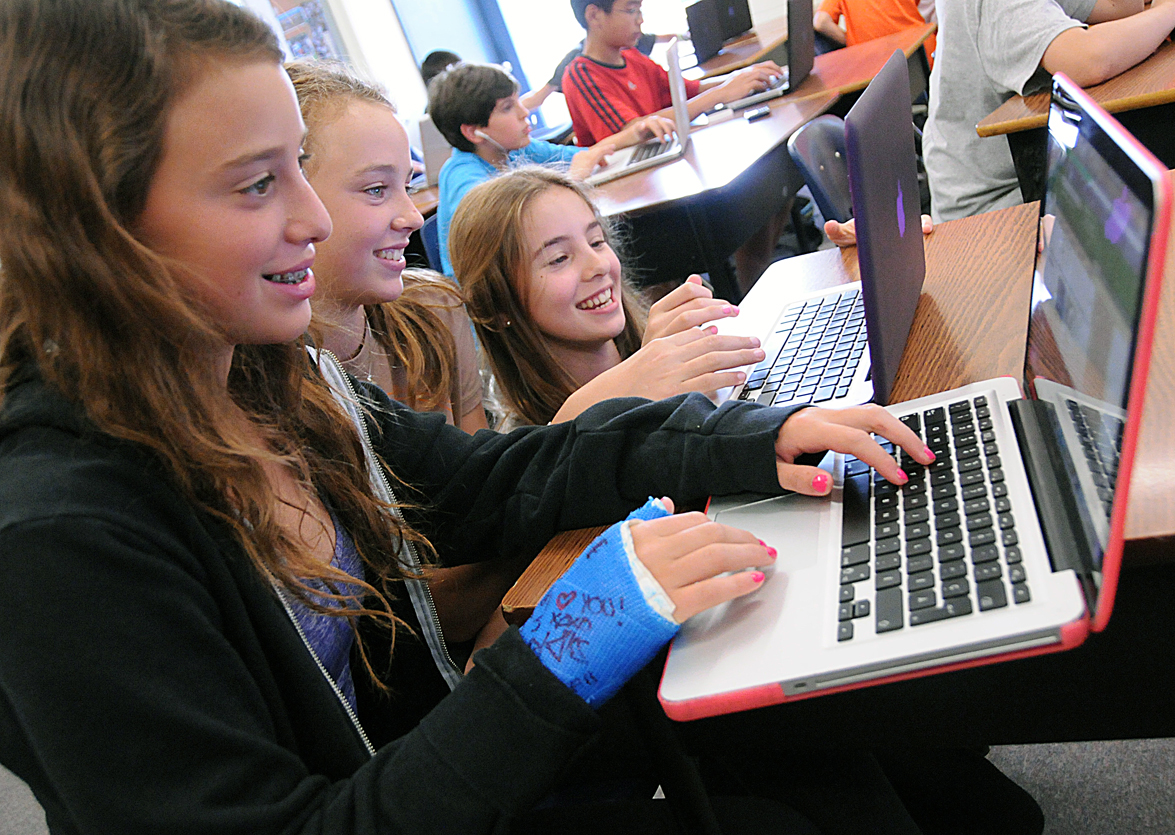
gr8_experience_girls_workingThe grade 8 students started the school year with an interesting project! During the first two full days at school, we worked on public service announcements (or PSAs) in groups of two or three. Each group’s video was to be presented at the end of the day on Friday, so you can imagine the rush we were in! On Thursday, each advisory headed to a different place. Some of the places include the Concordia Greenhouse, the NDG Eco-quartier, and the Animal Rescue network. Upon our arrival, we were assigned different tasks. My advisory visited the Concordia Greenhouse, and we did various jobs related to gardening: Harvesting and drying teas, thinning out the carrots, etc. Once we returned to school and ate lunch, we began our projects. Although the project didn’t have to tie in to the place our advisory visited, it would be to our advantage if we did so. We would have known more about the topic and possibly have obtained the necessary photographic material. Using the media we had gained from our trips or through the Internet, we began our hurried attempts to squeeze out the best work we possibly could in the short span of two days. The PSA had to fulfill many requirements, and my group’s goal was to make it as emotional as possible. The most difficult part was that a new concept was introduced to us: Only using the Creative Commons (or similar sites) for media, unless it was produced by us.  We weren’t allowed to just search for any picture; it had to be licensed for re-usage! Thankfully, our group was spared this process since we provided all the media. By mid-morning on Friday, our video was finished. All in all, it was a lot of fun to work on this project that informed everyone on our chosen subject, and it was cool to watch what everyone else had produced!—Holly Faria ’15