When Do We Take Action? NOW!

(Lakefield Ontario Young Round Square Conference: April 22-April 27 2012)

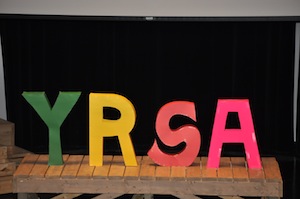
Last week, we had the privilege of attending the Young Round Square of the Americas’ annual conference, held at Lakefield College School in Lakefield, Ontario. Our French teacher, Monsieur Maurice, accompanied us. We both agree that this was by far the greatest experience we have ever had.

Nous ne savions pas à quoi nous attendre. Est-ce que nous allions écouter des conférenciers parler pendant une semaine? Nous étions excités de voir ce qui allait se passer.

We made long-lasting memories with our billeting families: Zack’s time consisted of activities such as bowling, while Holly enjoyed a succulent culinary experience every night, which was a great start to the week’s events. We were truly saddened when it was time to leave, yet happy to have had such a great time.

The conference was quite an adventure. People came from all over the world: From Canada and the United States to Bermuda and Peru! But the farthest travellers by far were from Tokyo, Japan. We met many people at the opening ceremonies, where we listened to what was to become our inspiration for the rest of the week. On the first day of the conference, it became clear to us that this experience would forever change our attitudes towards making a difference in this world. The first presentation was from a 15-year-old motivational speaker who impressed us to no end. Bilaal Rajan, UNICEF’s youngest ambassador, has raised over $5 million since he began his quest at the age of four, selling clementines. He is also in grade 11 at Lakefield College School, our conference’s host school. The main message he was trying to convey to us was: “When do we take action? NOW!” That was when it hit us, the eye opener to the potential we all had. It was at that point when we truly realized why we were, at that moment, sitting in that room, listening to Bilaal. The theme of the conference was immediately clear: “Find your passion, take action!” We too began to hope to make a difference in our world. But the question was how would we go about it in just one short week?

Puis, nous sommes allés au Camp Kawartha. Il a fallu affronter plusieurs défis qui nous ont appris à combattre nos peurs! On nous a dit qu’en essayant des choses qui nous font peur, cela élargirait notre zone de confort. Et nous pouvons vous dire que c’est complètement vrai.

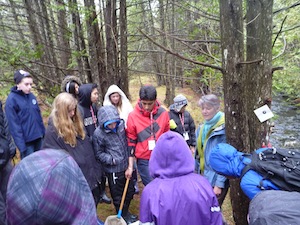
Nous avons aussi visité le centre écologique de Kawartha où nous avons discuté d’enjeux et d’inquiétudes en relation avec l’environnement partout dans le monde. Nous avons surtout aimé le jeu de « Guess that Watt? ». Plusieurs appareils électroniques étaient branchés dans un appareil qui nous disait combien de watts étaient utilisés pour leur fonctionnement. Saviez-vous qu’un grille-pain consomme dix fois plus d’énergie qu’un ventilateur?

After an amazing two days in Lakefield, we departed for the Me to We Facility in Bethany, Ontario, where we spent the last three days of our trip. We were greeted after an hour’s drive by an amazing lunch for our famished stomachs. The food was fantastic! There was an ongoing competition in which we had to answer questions or partake in silly challenges before getting our food. Now, when do you think we ate?

Le groupe était séparé en quatre équipes aves lesquelles nous avons fait de nombreuses activités en rapport avec le travail en équipe et la communication. Souvent, nos yeux étaient bandés, et nous devions travailler ensemble sans parler! Nos solutions étaient toujours créatives. Nous avons aussi appris quel type de dirigeant nous sommes, et ce qu’on pouvait faire pour s’améliorer. Par exemple, nous devions créer une tour avec nos souliers qui étaient encore à nos pieds!

Of course, it wasn’t just all work and no play! We had our fair share of fun time, including many inside and outside games, campfires and two dances on the last night! First, some aboriginal dancers came in and had us certified in aboriginal singing and dancing 101. We competed for the title of best singers and made up our own dances. Then it was time for the “must have” social dance, where DJs mixed popular tunes to end the night.

On the last morning, we worked together with Monsieur Maurice on proving a formula that would lead us to make changes in our school. Passion + issue = change. We made a list of ideas and initiatives, which we intend to introduce at LCC.

Durant la cérémonie de fermeture, les directeurs nous ont demandé de réfléchir sur notre semaine. Plusieurs d’entres nous ont dit qu’elle était amusante. Ce n’était pas encore évident de voir comment nous pourrions faire une différence dans le monde. Mais, la réponse est venue comme un éclair : le travail en équipe et la communication. Il faudra surmonter tous les obstacles, prendre des décisions critiques, analyser nos problèmes et les résoudre. Avec tout ce que nous avons appris cette semaine, nous pourrons faire une différence. Nous avons seulement besoin de notre passion pour agir.

Over the course of the weeklong conference, we were given many tools and tips to help us figure out how to make a difference. We met new people and bettered our communication skills. This experience truly taught us how to communicate with others, and showed us what goes on outside of our little bubbles that we call our world. We made many new friends, and some were even teary-eyed as they waved goodbye to their friends’ buses.

This was a great opportunity for us and we are grateful to Monsieur Maurice for accompanying us, and to LCC for allowing us to participate in this eye opening experience. More than 25 schools and 85 delegates attended this conference, but LCC was the only school from Montreal. Round Square really had a great impact on us, and we are itching to put what we learned into action. We encourage anyone and everyone who has ever wanted to “be the change they wish to see” in their community to put Round Square philosophy in practice. – Holly Faria ’15 and Zachary Shine ’15
Duke of Ed Peru Gold Trip: The Pleasure of the Unexpected

To be honest, I don’t think any of us knew what to expect when we stepped off the plane in Lima on day 1 of our adventure, not even the returning students. No two trips are ever alike, and the Duke of Ed Gold Trip to Peru was probably the most eye opening experience any of us ever had.

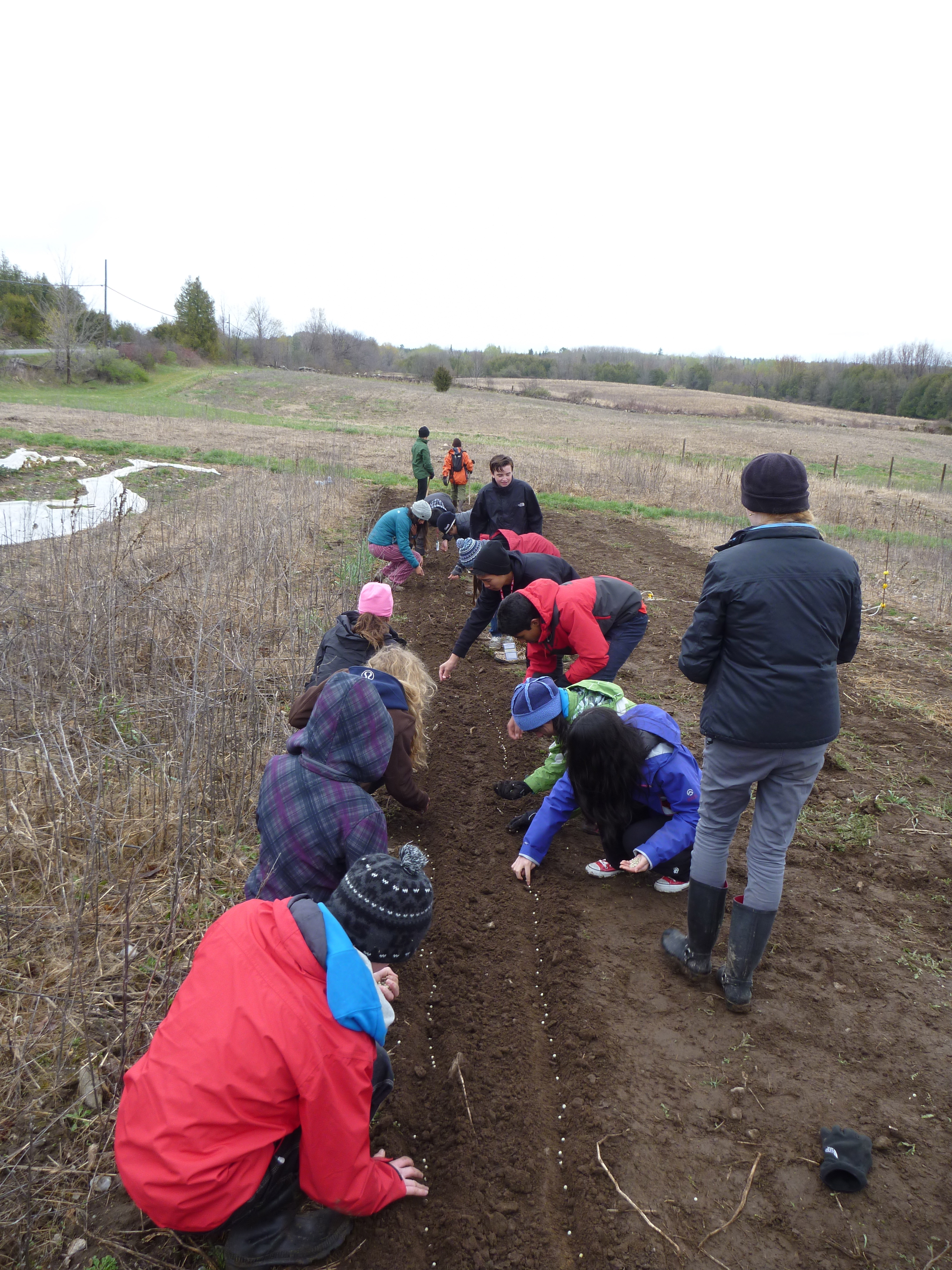
What started off as a 4-day community service project in the shantytown of Las Palmas, ended up being the most fulfilling and selfless event any of us ever did. From making cement from scratch to adding it to the first floor of a roof on a small building and everything in between, the 30 hours of service we did created lasting memories and unimaginable experiences.

From there we traveled to the city of Cuzco, the ancient capital of the Incan empire. Guided by Trans Andes co-workers—Alex, Olivier and Greco—our 4 day, 3 night hike proved to be a lot more then just 30 hours of walking over 75 km. The surreal scenery in the midst of a magical mountain range known as the Andes tired us all out, but made real trekkers out of us.

Needless to say only three people didn’t get sick at least once throughout the entire trip, the problem was never missing a bed to get better in, but rather always missing the day’s activities.

If there’s one thing I learned from this trip, poverty does indeed exist and is very real. But even in the saddest of conditions, Peruvians find a way to always smile and work from dawn to dusk to make their lives more accommodating to their community and to ours.

Nighttime was never without lack of activity. From long walks in the cool air through Lima, to dancing Salsa and swimming at Markham College, to playing soccer with locals before bed in a small village during our trek, the diesiocho LCC students and four teachers on this trip were really shown the true bright colours that Peru has to offer.

Folkloric dancing, insane water parks, high altitudes and positive attitudes kept us busy for 14 days, but what kept us going was the encouragement and willingness to aid others. This trip will no doubt stay in the minds of everyone on that trip forever, the only question remains, when will we be back? — Jacob-Ray Falutz ’12

Enviro-Man #1: Composting

Even though we have compost bins all around the school, they are not very popular. Julia and I decided to make a video explaining what to compost and why. We used, as the main character, an eco-based super hero named Enviro-Man and an irresponsible teenager who has never composted.

Dans la vidéo, Enviro-man explique à Sally que le compostage aide la Terre d’une excellente façon et que c’est tout aussi facile que de mettre les choses à la poubelle. Ils font un course l’un contre l’autre pour voir qui peut composter la plupart des aliments et des articles compostables en premier.–Joseph Wiltzer ’15 and Julia Israel ’15

Enviro_Man.cfm

Debating in Halifax

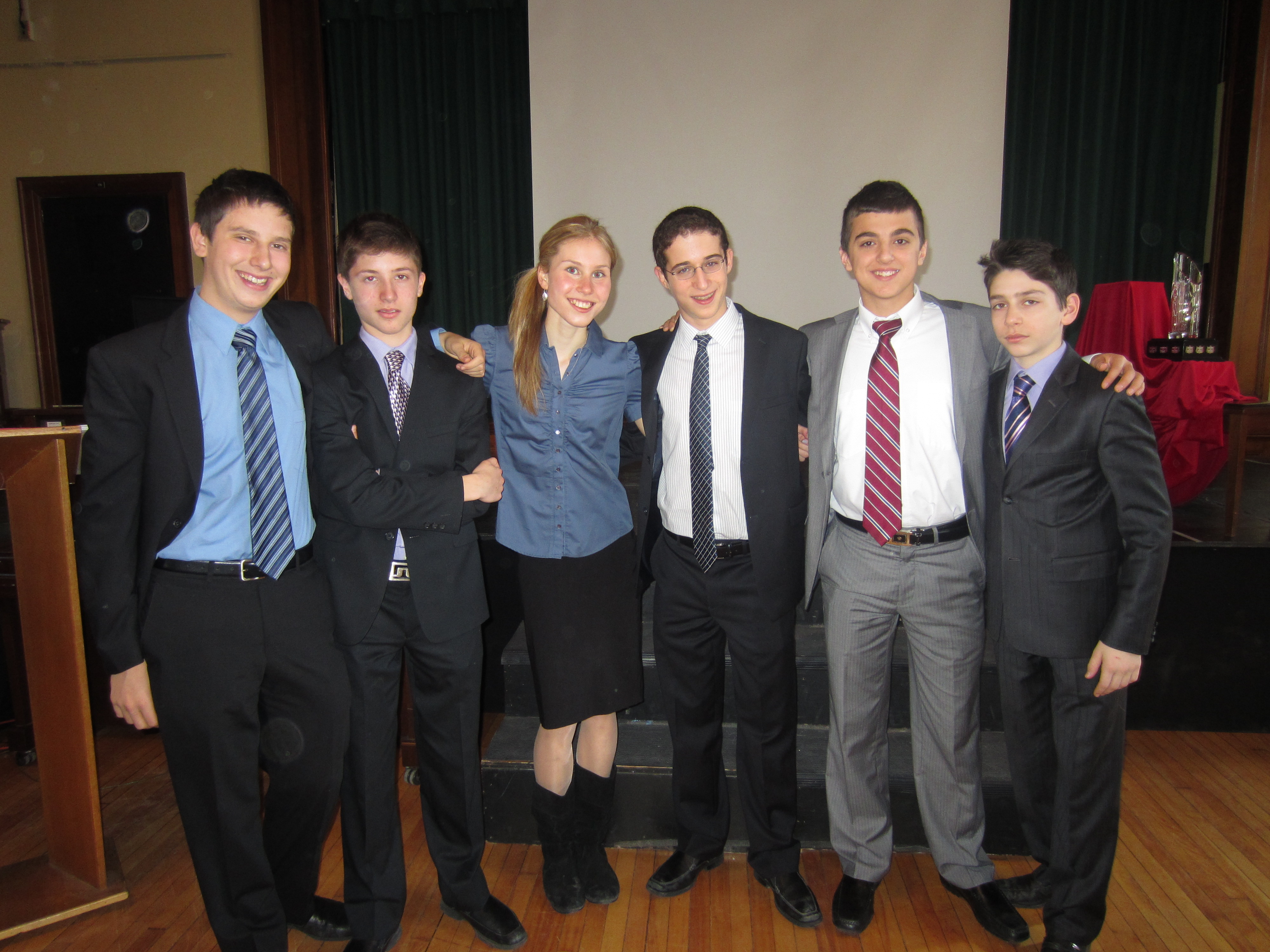
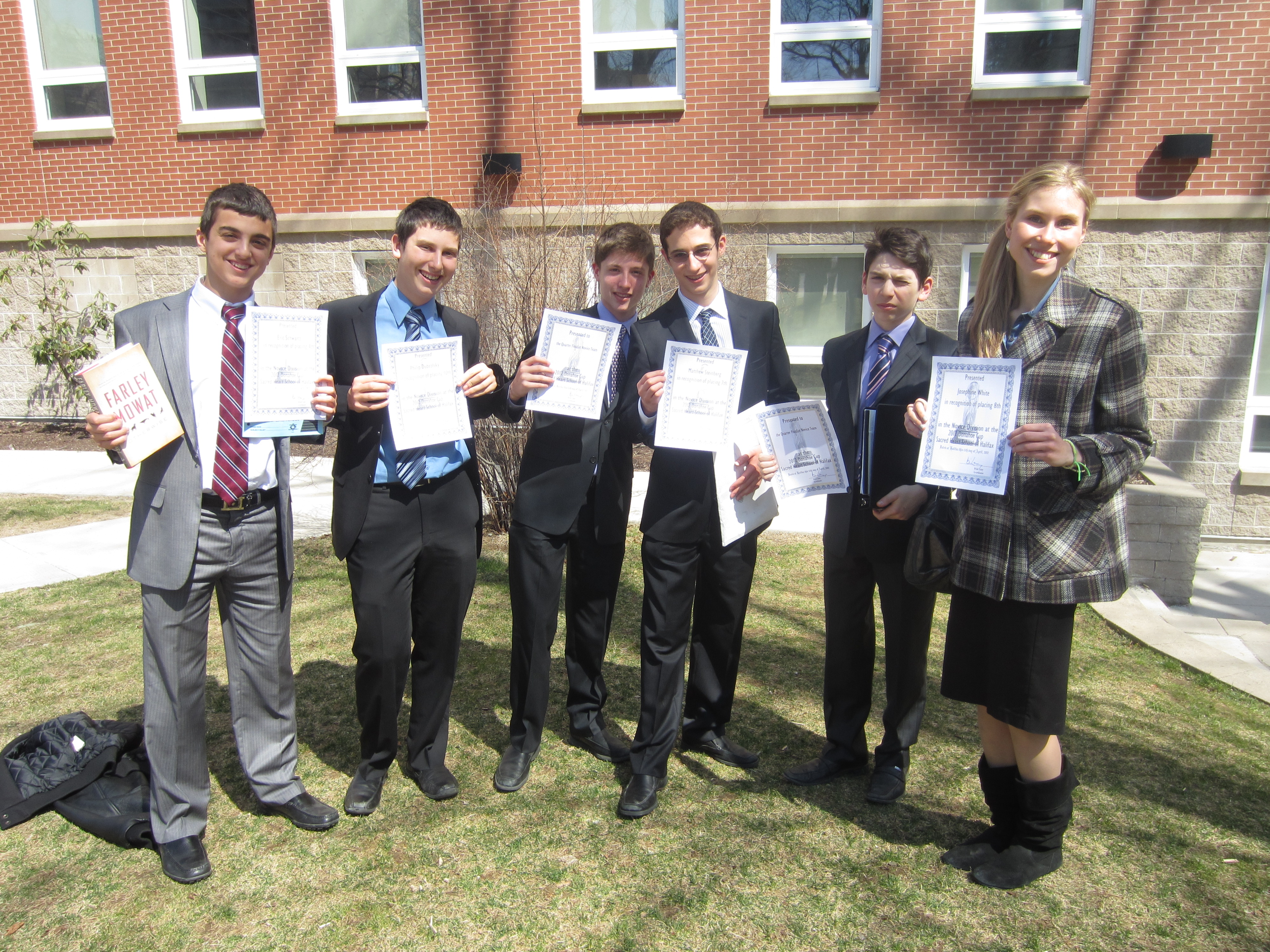
Last weekend, three of LCC’s debating teams, along with Ms. Wall, took off for Halifax, Nova Scotia, to participate in the annual Donahoe Cup debating tournament at Sacred Heart School of Halifax. We arrived in Halifax late Friday afternoon and headed straight to the Lord Nelson Hotel to drop off our bags and catch our breath. Shortly thereafter we took a walk by the water where we all had lot’s of fun climbing up on a giant statue of a wave and then sliding down it. After eating our first delicious dinner in Halifax that night, we all went back to our rooms to get some rest and prepare for the upcoming debates.

The next morning we arrived at Sacred Heart School of Halifax, ready for the four rounds of debating that would be coming our way throughout the day. The topics up for debate were very interesting, and had strong connections to the world around us. For example, the notion of recovering artifacts from the Titanic wreckage site was brought up in one of the debates, and the fact that we debated this on the 100th anniversary of the day that the Titanic sank made it all the more relevant. After the long day of debating, we made our way back to the hotel to get some much needed sleep.

Our third and final day in Halifax started off very well, with two of the three LCC teams making it to the quarterfinals of the tournament, each of them finishing among the top eight teams. Unfortunately, none of our teams made it past that point in the tournament, however I can confidently say that the entire weekend was all-in-all a success, with two of LCC’s teams making the quarterfinals, and four out of ten individual speaking awards being given to students from our school. I think it’s very safe to say that we all enjoyed every second of our time in Halifax, and that we’re pleased with the outcome of the weekend.– Matthew Steinberg ’14

Having the Courage to Act

During the March break I attended two alumni receptions in the UK: one in London with LCC grads ranging from 1943 to 2007, and another with a group alumni from the Class of ‘57, celebrating their 55th reunion at one of our graduates’ homes in the town of Canterbury. Although now in their 70s, each LCC grad was sure to remind me that they are still proudly grounded in the experiences, foundations and traditions they shared while at LCC.

Before the reunions I took the opportunity to accept an invitation to visit Gordonstoun School in the north of Scotland; a school founded in the mid 1930s by Mr. Kurt Hahn, the educator whose ideas led to the creation of the Round Square international association of schools—today about 100 schools strong.  We have now been a member of this organization for five years.

Round Square has the following mission:

“To empower students to become the leaders and guardians of tomorrow’s world.”

Kurt Hahn stated: “Education must enable young people to effect what they have recognized to be right, despite hardships, despite dangers, despite inner skepticism, despite mockery from the world…”

In thinking about the establishment of the Round Square as a global association of schools—which occurred in the mid 1960s—knowing Hahn’s background as a man and educator is important.

Hahn was different than traditional educators of his era.  Like most, he did believe in the importance of hard work and skill development in the classroom.  However, in some ways he was radically different than other independent school principals. He saw the greatest challenge for schools as existing outside of the traditional classroom.  He stressed the importance of developing students’ moral character and leadership skills, as well as developing personal conviction and courage.  Interestingly, he himself displayed an extraordinary amount of courage, which is directly linked to the founding of Gordonstoun in 1934.

Hahn was a German Jew whose first school was Salem, a school in Germany, which opened its doors immediately after WWI in 1920.  In January 1933, Adolph Hitler came to power with openly racist policies and violent visions of territorial expansion across Europe.

As Hitler and the Nazi party gained influence and public support, Hahn found himself increasingly philosophically opposed to the German fascist regime, particularly after five Nazi soldiers trampled a young Communist to death while his mother looked on. What’s striking is that after Hitler came out in support of the soldiers, Hahn reacted by sending a public letter to all Salem school alumni saying:

“This is a crisis that goes beyond politics. Germany is at stake, her Christian civilization, her good name, her soldiers’ honour. Salem cannot remain neutral. I ask the members of the Salem  (Alumni) Union who are active in the S. A. or S. S. to break with Salem or break with Hitler.”

“It was,” said a British teacher who was teaching at Salem at the time, “the bravest deed in cold blood that I have witnessed.”

Not surprisingly, Hahn became a marked man. In a series of mass arrests one month after Hitler came to power, Hahn was jailed in February 1933. The shock waves swiftly reached Britain where his friends took up his cause. When British Prime Minister Ramsay MacDonald made official representation, Hahn was release and in July 1933 he left Germany for England as a political refugee.

Unable to return to his German homeland, the following year, 1934, Kurt Hahn established Gordonstoun School near the blustery North Sea coast of Scotland.

Hahn made it his life’s mission to promote peace through education, remaining as headmaster at Gordonstoun until 1954. From 1920 until 1954, Hahn focused on the importance of service learning, outdoor education and experiential/adventure education, founding the Outward Bound Movement in 1941—itself largely a response to a war dilemma (low survival rate of British merchant seaman in the Battle of the Atlantic).

Hahn was not idle in retirement.  In 1962, at the age of 76, Hahn established The Atlantic College in Wales. The Atlantic College was the first of 10 United World Colleges—still a popular group of schools designed to bridge the international gap between secondary education and university level study by offering a universally recognized degree—the IB International Baccalaureate. The students at these colleges come from many different countries and the educational program stressed the importance of outdoor activities and of service to the community. One of the World Colleges is located in Canada (Pearson College in British Columbia).

Wrote British Admiral D. J. Hoare:

It was always Hahn’s view that education was a means of reducing national barriers and fostering international cooperation. When two people of action meet and find themselves of common mind, things happen…The United World College has a distinctively Hahnian component, referred to as its “humanitarian curriculum.”

Clearly, Kurt Hahn had an outstanding career. After 13 years at Salem he stood tall against Hitler and the Nazis and established service, adventure and international education as important pillars during 20+ years at Gordonstoun in Scotland.

So back to my visit to the UK in March. It was impressive to see the old buildings on the Gordonstoun campus and to consider the inclusion of rescue skills as part of that school’s curriculum at sea, and firefighting and disaster relief training on land.  I reflected on the courage required by Hahn to challenge Hitler.

I believe we need to put the Hahn’s educational theories into a modern context.  This begs the following questions for LCC students:

  1. Have you integrated service in some meaningful way into your life?
  2. Are you finding a way to engage with the principle challenges of our times, locally and internationally?
  3. Are you proactive in seeking outdoor opportunities in the natural world, and thus have you gained an appreciation for the importance and fragility of our natural environment and the global ecosystem?

Hahn wanted all young people in independent schools to throw off “the shackles of their privilege” and develop tenacity, fitness, enterprise and compassion.  I invite you to consider if you are trying to explore developing these important qualities.

We have ample opportunities at LCC.  Challenge yourself and through experience you will likely surprise yourself with your own potential and what lies dormant within you now.  Like Hahn, I urge you to have the courage to act. – Chris Shannon, Headmaster