Student Exchange: Settling Into Life in Tasmania

TasmaniFlag_AustraliaAnother fantastic week in Tasmania!  There must be some unspoken Tasmanian rule about being hospitable: my host family and schoolmates have helped me feel quite settled and comfortable in a short period of time. At school I am starting to make some really good friends, which makes the days even more enjoyable.

I started my new schedule (separate from my exchange) at school this week.I am attending some really interesting classes—some with grade 10 others with grade 11 students—such as textiles, cooking, photo media and advertisement. In fact, Thursday, I had a cooking class where we made rice pudding and “toad in the hole,” a Tasmanian dish that consists of a sausage with a sort of salty pancake around it (kind of like pigs in a blanket). I am taking French here, too, which has been entertaining, and actually helpful.  Since we are learning the basics, it’s kind of like a review. All the classes have been great and I love having the chance to experience some different courses than those I take at home.

One of my extra-curricular activities is basketball. Playing on an exchange school basketball team is proving to be another great experience. This is not only a sport I really enjoy; I am also happy to have the opportunity to become friends with the girls on my team. We even won our first game on Thursday, 42-4!

This week I participated in the school’s swimming carnival, where students from each house (there are four) compete by age and category. I swam in the under 16, 25-meter breaststroke, backstroke and freestyle. Other people also did 50-meter and 100-meter races. Everybody wore their house colors and cheered on their teammates.

Overall, this past school week was amazing and, I am looking forward to the exciting activities we have planned for this weekend.—Leah Salzman ’15

Sleep Walking Nation

Blog_Sleeping_19Feb2013So how did you sleep last night? When the alarm went off this morning, was it pretty easy to hop out of bed or were you “dead to the world?” Is getting up and out during the school week a constant struggle for you and your family? Maybe it’s actually a bigger issue for parents who are trying to drag dozy students to the car or bus, semi-clothed, to ensure that they make it to school on time.

This scene has been acted out for generations because teenagers’ hormonal changes make most of them what researchers call “owls.” With pronounced chemical changes in their bodies–in particular, the late-evening release of melatonin–it’s sometimes difficult for teens to get to sleep early, even if they want to. And by the way, health guidelines dictate that teens should be sleeping 9 to10 hours per night, but the majority probably struggles to get seven hours. That’s a problem, and current research indicates that it’s not just an issue for teens, but for North American society at large.

Let’s consider some of the issues associated with sleep deprivation and its impact. More and more, modern life explicitly or implicitly sends messages to all of us that minimal sleep is okay, or perhaps even cool. Last week in a large survey of over 100,000 high school students in the Toronto District School Board, it became apparent that a host of factors are imposing themselves on sleep time.  They include the need to complete school work, involvement in a broad spectrum of co-curriculars and community activities, social media dynamics, and of course, the pressure and temptation of late-night texting and digital chatter between friends. Three-quarters of the students in the Toronto study admitted to not getting enough sleep on a regular basis. Ultimately, students arrive in class the next day expecting to learn when their brains crave rest. Clearly, this is not the best arrangement.

Quality of sleep is also an important factor. If we do not sleep long enough, we don’t get enough REM sleep. That’s the deep-sleep that actually embeds all the little branches of learning from a school day into the brain so that it becomes knowledge and understanding and consolidating memory. During a recent sleep study conducted by Brock University, researchers found that sleepy subjects found it very difficult to notice errors or absorb new material effectively. In the words of the study’s leader, psychologist Dr. Kimberly Coté, when sleep-deprived, “you are effectively blunted to do anything inspirational or active; you don’t really care about anything.”  So if many, if not the majority of teens are sleep-deprived, this presents interesting issues for schools and helping students be actively engaged and meet their potential as learners.

But it’s not just about kids. Adults are guilty of cutting corners on the sleep front as well. Sleep deprivation increases stress and reduces productivity. Behaviorial scientists and brain researchers at Harvard have studied this phenomenon and recently declared that America is facing a national crisis. There is no reason to believe that Canadians are any different. In the USA it is estimated that chronic sleep deprivation is currently costing American companies $63-billion per year because of sleepy and ineffective employees who are not really on task. That’s a staggering figure and a significant cost to society.

When we consider personal health, the discussion usually focuses on diet and exercise. Both are very important. But adults’ poor habits are setting bad examples for children and teens. Dr. Reut Gruber, a clinical psychologist at McGill University, is leading a national committee of Canadian psychologists, pediatricians and researchers who want to develop a new national Public health conversation that gives sleep the same weight as diet and exercisetogether forming the three critical pillars for personal health throughout life. Sleep simply needs to be a much greater part of the popular dialogue around key health priorities.

I know that our students have heard about the importance of sleep before—and we will continue to remind them. But the evidence is actually mounting about how important rest is to students’ capacity for engagement and effective learning. Indeed, the inability to fall asleep is a question in itself. It seems that armies of young Canadians in high school, colleges and universities continue to sleep very little and are trying to adapt during the day by drinking so-called “energy drinks.” This is not deemed to be an effective practice for anyone and it is potentially quite damaging for teens in a host of ways, including negative impact on oral health, never mind the caffeine crash that comes shortly after consuming one of these drinks.

So the simplest thing is for young people to do is to control what they can control.  They should do their utmost to get to bed early as frequently as possible during the school week – and that simple change could very well be the best favour they could do for themselves this year. As a result, performance in school and the capacity to enjoy all activities will all likely improve. Our teens should each conduct a little test. They should get to bed early tonight and for the next few nights and see if they feel more energized.

Sweet dreams, my friends!! –Christopher Shannon, Headmaster

Student Exchange: Appetizing Tasmania!

I have now been in Australia for one week and three days. My experience has been incredible and has exceeded my expectations. I landed in Hobart, Tasmania on the 7th of February where I was greeted by Ashley (my exchange) and her mom. We then drove two hours to Launceston (after 33 hours of traveling, I fell asleep about ten minutes into the car ride!). Once we arrived in Launceston, I met the other members of the wonderful family:  Craig the dad, Taylor who is 12 and Payton who is 5. The Brown family was (and is) so welcoming and kind; from the very beginning they made me feel at home. Well, not exactly … the sun was ridiculously strong and seeping through the windows, which, wasn’t exactly like home, neither was the huge garden with endless vegetables, fruits and herbs. Oh, and the homemade pizza we had for dinner; that was nothing like my usual Domino’s!

The next day, I started off with a nutritious breakfast of Milo and Tim Tams (chocolate and more chocolate!!), and a relaxing day, which was followed by an amazing weekend. When Saturday came, the first stop was the farmer’s market, an outdoor market that consists of roughly 50 stands where people were selling fresh foods. I tried new and delicious vegetables and fruits, homemade raspberry ice cream and cheeses. The fruit here is unbelievable and we always have tons in the house (e.g., nectarines, apples, peaches, cherries, strawberries and apricots). During the afternoon Ashley and I went into town and browsed some of the local shops. Sunday was yet another beautiful day spent outside in the sun. We went to the ‘Festivalie;’ a three-day festival that occurs once a year in Launceston. Food stores from all over Tasmania set up stands to sell their provisions while people enjoy entertainment, such as dancing, singing, acting and more. Not only did I get to watch tons of performances but I also tried some great local Tasmanian food such as sausage, chocolate-covered raspberries, pancakes with ice cream, and ginger beer. To end the weekend, Sunday night while we were sitting on the porch, believe it or not, there were wallabies and kangaroos sitting and hopping in the backyard!

Finally Monday came and it was time for me to go to school. I was nervous, excited and hot in my LCC uniform. School has been nothing but fantastic from the people to the classes and the environment to the activities.  For the first few days I joined Ashley in all of her classes. Their timetable is very different than ours. They have double periods (two of the same periods, back-to-back) for a total of 90 minutes, and therefore, they only have three subjects per day. In addition, the senior school alone (there are different campuses for middle and senior school) has seven buildings, each containing different classrooms.  Therefore, we are fortunate enough to walk outside to get to all of our classes. Also, for lunch, we can eat wherever we want with whomever we want! I have eaten lunch outside everyday so far which I really do appreciate. I am looking forward to what next week will bring and I can easily say I am having heaps of fun! –Leah Salzman ’15

Melbourne Exchange: A New Routine

January 30, 2013
After a very long flight I arrived in Melbourne. Only fifteen minutes after my exchange, Patrick Quay and his family returned from their holiday in Japan. For the rest of the day I stayed home getting to know the family, house and environment.

January 31, 2013
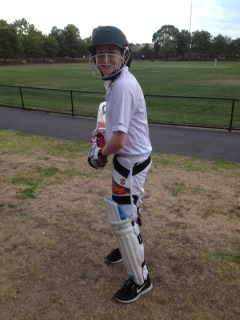
In the morning I had time to sleep in. Later in the morning, I went to the local park to the cricket nets and learned how to bat, bowl and field with Paddy and two of his friends. We spent about three hours teaching me to play. After cricket training we went to rowing. It was my first time rowing and I did not go on the water and just practiced on the rowing machines. That night Pat’s grandparents came over for dinner and to meet me.

February 1, 2013
Today was the “first” day of school. It was just orientation and during the day we mostly helped the new grade 7s with everything they needed to know. After school I had my first cricket game and luckily didn’t have to bowl or bat, only field.

February 2, 2013
In the morning, there was a rowing regatta. Because I was not rowing in the races, I helped the team assemble the boat and then got a bike to ride along with the boats and the coach. After the races we went back to the training facilities for more rowing and got home at around 5 pm. We were really hot and jumped in the pool. That night we went to Paddy’s cousins’ house for dinner.

February 3, 2013
This morning it was family day at the local farm so Paddy and I went down and helped out. We cooked sausages on the barbeque and got to give them to all sorts of people there including a famous NRL player Bill Slater. When that was all over we went home and relaxed.

February 4, 2013
Today was the second day of school and there were actual classes. I met a lot of people and had trouble remembering everybody’s names. After school there was rowing and I went out on the water for the first time.

February 5, 2013
Today there was nothing special. There was school in the morning and nothing afterwards.

February 6, 2013
Today was the same as Monday’s schedule, school then rowing.

February 7, 2013
Today there was a huge swimming competition at school with years 7, 8, and 9 all swimming. There were individual and relay events and our house came 6th out of 10. After a long day of swimming we had cricket practice.

February 8, 2013
Today there was school followed by a cricket game where I got to bat. I got a run but on my 3rd ball, I was out stumped because no one had told me to stay in the crease after I hit.

February 9, 2013
Early this morning we got up and biked to rowing. We were there for four hours and while there we saw Paddy’s grandfather and had lunch with him. We got home, went swimming and relaxed.

February 10, 2013
This morning we got up late and since it was a bit cooler we decided to go to the movies with some friends. After the movies we went to go see a cricket game; Australia against the West Indies. Australia ended up winning. When we got home from the game Paddy had cousins over and we had dinner with them.

February 11, 2013
Today we had school and rowing. Other than that there was nothing special today.

February 12, 2013
Today there was school and nothing afterwards.

February 13, 2013
Today was a fairly relaxed day with school and then rowing afterwards.

–Alexander Dimitrakopoulos ’15

Truth be Told

Blog_Lance_Armstrong_Tour_de_Gruene_2008-11-01Remember the story of Pinocchio: the little boy whose nose grew longer whenever he lied?  Or the antics of Jim Carey in the ‘90s classic film “Liar Liar,” where he plays Fletcher Reede, a fast-talking lawyer who has built his career on a bed of lies? After Reede’s son makes a birthday wish that his dad stop lying, Jim Carey is suddenly only able to tell the truth and his world is turned upside down.  Or perhaps you’re a fan of the current hit TV Drama,  “Suits?”  Acknowledged for its fashion flair, it focuses on the legal partnership between flashy lawyer Harvey—and and his legal assistant Mike—who professes to be a Harvard law grad but never even attended any law school. Mike’s just really smart.  So the two tolerate the “big lie” for convenience sake.

Another film focused on the drama around lies is “Autumn in New York” starring Wynonna Ryder and Richard Gere. Ryder’s character has an uncanny ability to sense when someone’s lying (sort of like parents and teachers).  For them it’s not magic, it comes with practice. My mother used to say she saw it in our eyes and all over our faces whenever any of the five boys in our family even tried to stretch the truth, never mind offer up an outlandish false tale. I’m sure our students have similar relationships with parents at home.

I mention this today because no matter what our students are studying in school, each is essentially always seeking the truth, for in truth there is deeper understanding.   What’s the correct answer to a problem?  What’s the right thing to do, morally?  In schools we are driven by the pursuit of truth.

Unfortunately, in our quest for the truth, we all lie. The world demands that we lie to sometimes to protect a friend–and probably most often to protect ourselves.

However, growing up it is natural for children to be “offside” and learn from it.  So little white lies are common to avoid getting caught after breaking a minor rule. Kids are experts at making situations murky and testing boundaries.  It’s a time-tested strategy of generations of children and teenagers.

Philosophers have long-debated the notion of the so-called “just lie.” For example, consider all the brave souls who hid Jews from the Nazi Storm Troopers during the Holocaust of the 1930’s. These are serious situations of compassion or personal safety in the face of evil that require dishonesty to achieve a truly just goal.

Sometimes we all tell little “white lies” or we bend the truth.  A close friend shows up in a truly unfortunate new outfit declaring how much she loves it. You may likely quietly agree, not wanting to hurt her feelings. This kind of thing is not considered sinful or outrageous by anyone.

But how about clear omissions or blatant concealment to cover oneself or boost personal image or reputation? How far can the truth be bent before it’s too far? If children or teens get away with it, do they repeat it?  Do they start to believe your own lies?

Unfortunately, we actually have a lot of examples of straight out lying presented to us in society on a regular basis.

The Quebec Charbonneau Commission looking into corruption and payoffs in Montreal has unearthed some very unseemly practices regarding contracts for work in our city—and there has been lots of media coverage about this deceit since the fall.

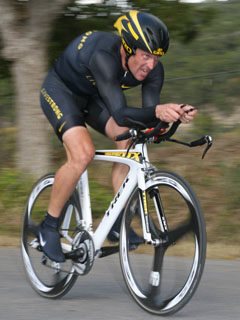
Also, the sad story of Lance Armstrong is a classic current example of a once-respected role model who has fallen from grace for lying and cheating. I was a big Armstrong fan years ago. I loved his book Not About the Bike, about overcoming cancer and the resiliency of the human spirit. However, just a few weeks ago he was exposed for his years of doping while on the cycling circuit. Even when he appeared on TV with Oprah to fess up publically, he succumbed to blaming others. His rationale that “everyone else was doing it” was a lame excuse. But it’s simply not an acceptable excuse. As a result of his lies, Armstrong has lost all of his seven Tour de France championship titles, along with millions of dollars in lucrative endorsements. Moreover, Armstrong’s  “Live Strong Foundation” for cancer research has taken quite a knock. Most notably though, his situation is not primarily about the money. Armstrong has lost his integrity.  Until his final breath and beyond, he will forever be labeled a deceitful liar.

Writer Eric Hoffer reminds us “when we lie, we lie loudest to ourselves” – about everything from what we spend and eat, to rationalizing our actions, however unattractive or unacceptable to others. For anyone who gets caught in that cycle, how many of your own lies do they start to believe?

The fact is that honesty and trust are the bedrock of strong relationships, whether in one’s family, here at school, among friends, the workplace, and the larger community.

We all depend on trust and honesty to build a sense of integrity over time. Without integrity and trust, the laws of the jungle would dominate.

To Lance Armstrong, to corrupt public officials on the take at city hall, and to students of LCC, I send a reminder: corruption and dishonesty corrodes. Like rust itself, corrosion destroys institutions, people and human relationships.

Yes, sometimes the untruth – the “white lie” – is morally acceptable.  But don’t forget that it is honesty and integrity that binds us together. All human relations depend on the expectation that as a rule, we tell the truth and can have confidence in this as a constant When it comes to the so-called “big lie,” it will always corrode and destroy in a big way.

Let’s do our utmost to set examples by doing our best to seek the truth and defend honesty and integrity as core values at LCC.  – Christopher Shannon, Headmaster