
Pride Matters

Blog_HMO_01Oct2013We talk a lot about pride at LCC – essentially because pride matters.  It really matters. This is embodied in a book titled When Pride Still Mattered – the story of one of America’s most fabled and successful modern personalities, Vince Lombardi. He was the head coach of the Green Bay Packers football team in the 1960’s and winner of the Super Bowl in 1966 & 1967.

The son of an immigrant Italian butcher, Lombardi rose to the top in his field in America. He inspired his players by believing in them and convincing them to believe in their own promise, both as individuals and when working as a group. Lombardi was famous for a traditional value system and look – even on the football field: fedora, trench coat, big black glasses and strong focus on pride as a precondition to achieving anything difficult & meaningful.

David Maranniss, author of  When Pride Still Mattered, notes that Lombardi has become a mythic character in America and his legend now transcends sport, almost five full decades since he was active. Many now turn to Lombardi in search of characteristics that they fear have been diminished or lost today –  more traditional virtues such as discipline, respect, loyalty, character, and teamwork.

As Lombardi used to profess, before anyone can truly feel and show pride, you have to truly believe in yourself and your goals.  Essentially, that means having a positive mindset and remembering that achievement begins with being hopeful. As a speaker told our teachers earlier this past August, “kids who think they can usually do.”

But a positive and hopeful attitude is usually not enough to get you where you want to go. There is a lot of discussion these days in education circles about a host of important attributes that our students need in their daily toolboxes, especially resilience and grit. Yes, grit and perseverance are essential to success, not just in the classroom, but in life in developing relationships with one’s peers and friends – and as citizens in broader society.

Each student at LCC needs to build foundations or roots, but they also need wings – skills and attitudes that will help them to fly independently.  Stability and “stick-with-itness” are essential, especially when kids feel disappointed, frustrated or upset. This includes development of a lot of emotional factors: self-regulation, an ability to wait (delayed gratification), emotional control, and self- awareness that can diminish emotional outbursts.

We know that students who are poor at self-regulation also start to shy away from challenging opportunities – even if they don’t admit it to themselves.

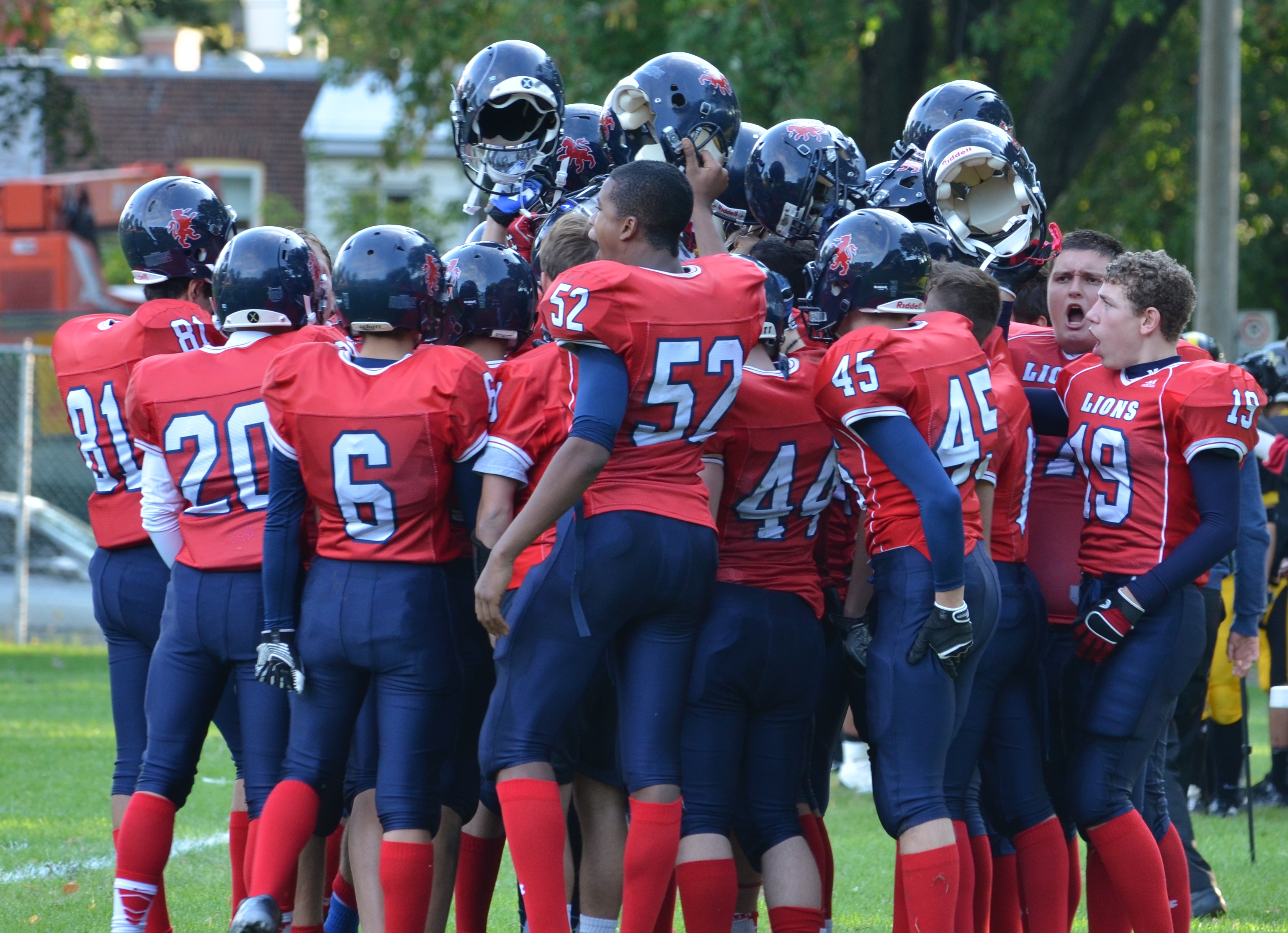
I saw grit in action last week in a couple of cases: two Senior School soccer teams were shutout on the scoreboard – but our student-athletes took it all in stride, knowing tomorrow would be better. And our Senior Boys Football team played a very gritty game against a talented top-ranked team with probably about twice as many players as us. I was proud of our boys’ performance under difficult conditions.

Pride was also very much on display last week, especially at our two open houses.  Our student ambassadors were the difference-makers for visitors to our school. You can’t fake pride; that never works.  Parent and student visitors complimented our guides’ engagement, politeness, and breadth of knowledge about life at LCC.  That is pride on display and yes, pride matters.

As Vince Lombardi used to say, “excellence is a habit.”  So I ask our students to be proud of doing their best and showing their pride to the world; it does matter! – Christopher Shannon, Headmaster


La Classe Rouge 2013 – Jour 2

IMG_4276Mon animateur s’appelle Peter Pan, mais moi, je l’appelle Pan. Il porte toujours un chapeau. Ses vêtements sont souvent noirs. Il est très gentil et toujours drôle. Quand Pan est là, je me sens comme si j’étais dans un autre monde!

L’activité que j’ai préférée le plus est celle de l’hébertisme. Nous avons marché dans la forêt et on a eu la chance de se baigner dans un gros trou rempli de boue! J’avais de la boue jusqu’à mon cou! C’était trop cool!

À Jouvence, la nourriture est DÉLICIEUSE! Mon repas préféré était les Tortellinis avec du bon pain frais. Chaque jour, il y avait quelque chose de bon à manger!

La Classe Rouge était un voyage fantastique! –Heidi Sinyor ’20

Digital Citizenship – Digital Profile

CameraPhoneThe same week we started school this year the word “selfie” was added to the Oxford Online Dictionary. Yes, a digital self-portrait. By the end of that week, Pope Francis took a few “selfies” in the Vatican with some Italian teenagers.  That event caused a major international stir, given that most popes throughout history have remained somewhat distant and surrounded by an air of formality.  But earlier in the spring this pope also opened a Twitter account – and he now tweets daily about everyday things – and offers his millions of followers spiritual direction and advice. So on the heels of generations of conservative practices, even the Pope is fostering an image as cool, contemporary and more in keeping with our times – largely through developing a broad social media platform.

If I were to guess, I’d say that at least 90% of LCC high school students have also taken a few “selfies” and sent them out over the web – and most of them also have some form of social media presence. This is a topic that requires more thought than most teens have already given it. It’s important to remember that despite our technical capacity to do so, we can’t simply do anything anywhere and not expect to face consequences – sometimes unexpected.

On that front, I read recently about some teens who this summer visited an important Holocaust memorial at which a small group of them took silly “selfies” and fired them off to their friends and posted them to their Facebook accounts. Before they knew it, all sorts of people they didn’t know accused them of insensitivity.  The Holocaust memorial is a place of remembrance, reverence and respect where many feel that silly photos simply don’t have a place.  Whether or not a “selfie” is appropriate at memorials or other cultural monuments, it is fair to ask if the kids in question even reflected on where they were and what the monument symbolized. Did they consider the Holocaust and those who suffered? Or when kids arrive at any important monument or site these days, is it simply reflex to take a group “selfie” and move on without reflection? Most kids live in the moment and unfortunately often think after they act.

Another example of social media in the news last week was the case of three Toronto firefighters. They were fired for making allegedly sexist statements on their private Twitter accounts. The comments had nothing to do with their work or relationships with colleagues. Yet, the city of Toronto deemed the comments distasteful and out of step with the city’s core value of gender equity. It was reason enough to dismiss the firefighters. You may agree with that decision or you might fall into the camp that states that personal digital space is indeed entirely personal and should have no bearing on one’s profession. There is certainly ample room for debate here.

I believe we will be having lots of digital debates well into the future. Regardless of one’s position on the right to tweet and its intersection with free speech or the “selfie” phenomenon that is now employed even by the Pope, one thing is clear:  lines regarding digital communications are blurred and we are living in a time of significant transition.  We all possess tools with the capacity to create a broad public profile. Young people’s digital profiles matter – and whether they like it or not, people will judge them by it and perhaps well into the future.

A recent study by digital security experts McAfee indicates that about 50% of Canadians aged 18-34 are quite concerned about colleagues or bosses seeing their personal online materials and 16% know someone who has been fired after embarrassing content was found online.

There are no simple answers about how to act online, but I advise our students to slow down a little and think more before taking a “selfie,” posting an image or comment, or pressing send.  Students should avoid falling victim to impulse, the egging on of their peers, or the temptation to do something they think might make them appear cool or confident. There’s nothing wrong with having fun or fooling around a little bit.  But how will others interpret our kids’ digital statements?  They should try to let an ethos of respect be their guiding light. This includes a simple litmus test: could grandma read it or would she be offended?

Teens shouldn’t cower or stop being involved with social media. They just need to slow down, think and evaluate first. Teens need to protect their personal digital profiles and their reputations. It matters – today and well into the future. – Christopher Shannon, Headmaster
 

PS:  Last year, several LCC students participated with a McGill University research team investigating issues and trends in digital citizenship. The group called “Define the Line” will be holding a student digital summit in late November and we will participate. I look forward to the feedback.

Classe Rouge: Mes premières impressions de Jouvence

Lorsque je suis arrivée à Jouvence, ma première impression était de surprise, car cette place est magnifique! Je me suis dit qu’on allait surement beaucoup s’amuser!

Les couleurs de ma chambre sont le jaune, le blanc, le vert et le turquoise foncé. C’est une très belle chambre qui est grande. Il y a des lits à deux étages et je dors sur celui du haut. Dans ma chambre, il y a mes bonnes amies. C’est un bon début! – Sonia Yip ’20 (Classe de français accéléré)

More photos


Thailand Exchange: Entering a Different World

I finally arrived in Thailand at midnight on August 23 after a 24-hour flight. I knew Thailand would be hot but I never realized how hot it actually was; the heat struck me as soon as I disembarked the plane. I had never been in a country that had such a sweltering climate.

As I spotted The Regent’s School Pattaya sign ahead, where I would board for the next six weeks, I somehow knew that this exchange would be an adventure. I was half way across the globe in a country that I didn’t know and with people I didn’t know.

As I left the airport with the exchange coordinator, I finally entered Thailand. We drove for about one hour from the airport to the school, the entire time I looked out the window realizing how different Thailand was. The streets were filled with motor bikes not carrying only one or two people but rather many, the infrastructure was so different from what I was use too; everything was different. It was as if I had just entered a different world.

After being wonderfully hosted by the exchange coordinator and her two children for two days, I finally entered Elizabeth’s Girls Boarding House. The boarding house was quite spacious. There were two sides, one for primary and the other for secondary. The boarding staff was very nice and showed much hospitality. They did everything to make me feel at home. The girls were also very nice; many showed me around campus and introduced me to the other boarders.

Regent’s is an international school with a huge campus! It is composed of many buildings, each a different size and form. Boarders and students came from all over the world from Russia, Korea, Australia, England, Japan, Taiwan and many more! The first two days were rather quiet, boarders were arriving from different countries and everyone including me were just settling in. The night before school I was quite nervous and excited, I didn’t know what to expect. I didn’t know anyone from school and I hardly knew where I was going.

Altogether theses first few days of my exchange have been fantastic, I am so glad to have chosen Regents School Pattaya and can’t wait for the weeks ahead. – Kamy Roberge-Carrington ’16