Student Exchange: Aussie Wildlife

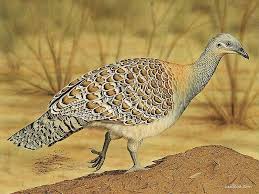
malleefowl

Over the weekend, Brandon took me to his farm near Pinnaroo, a small town right on the South Australia/Victoria Border. On the first night, we ate at a nice little pub. The following day, we drove to a town called Loxton, which was about an hour away, where we met up with some of the Blacksell’s family friends on the Murray River. We spent the entire day wake boarding, waterskiing, tubing, and just relaxing by the water. Overall, it was a perfect day! After devouring a few Australian style pizzas, we headed back to the farm.


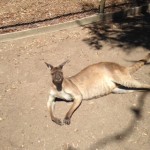
On the way home, before even being able to finish my sentence about how I was disappointed that I still haven’t seen any traditional Aussie wildlife, we saw a young kangaroo bounding across the road! I found this really impressive, but even more so when about ten seconds later I saw the rare Malleefowl, a ground-dwelling bird about the size of a chicken. It all happened so fast, but I realized that I had just experienced traditional Aussie wildlife within the span of 15 seconds!


That night, I stayed up watching with pride as Canada beat Sweden in the men’s hockey finals. The next day, we headed back for Adelaide, but took a detour in order for Mr. Blacksell to show me a dairy farm. It was interesting but challenging to be at a place where you’re knee deep in cow manure while being attacked by thousands of flies who make it their life-long mission to find a way to get up your nostrils.


I was happy to have had that experience, as I know I will never be a dairy farmer. I guess I’m just too much of a “city boy”! – Charlie Joy ’14

Student Exchange Australia: Challenging Experiences

The first two weeks in Australia have been amazing and I am already enjoying myself. After a long 20-hour flight via Vancouver, I was really excited to finally arrive in Australia. The weather has been amazing; it has been sunny every single day. Everyone was very welcoming when I got here and they all tried to make me feel included. I have made some new friends that are very nice and caring.


The family I am staying with is one of the nicest and funniest families I have ever met. Dinner is something I look forward to during the day because I know it will be filled with laughter and enjoyment. My exchange partner Clare, has a little brother Angus, who is 11 years old and is very energetic and has a passion for the Olympics, so he has been keeping me updated on how Canada is doing and I even watch some of it with him. Clare also has an older brother named Jack who is very kind and intelligent. Both parents are extremely nice and welcoming.


My exchange family lives in Ballarat, Victoria that is a small town about an hour and half from Melbourne. Every day we pack our own lunch and either bike to school or Clare’s mom drives us. It’s about a 3-minute drive and an 8-minute bike ride. Right in front of Clare’s house, across the street, is a beautiful lake. There is a nice pathway that goes all around the lake that is about six-kilometres long. I sometimes take this route to get to school.


My first weekend in Victoria, we drove down to Clare’s beach house in Anglesea. The beach was beautiful and different from any other beach I have been to. Her house was a street away from Great Ocean Road, a famous road along the coast of Southern Australia, which has a beautiful view of all the different beaches. We spent the first day at the beach relaxing, tanning, swimming and boogie boarding. On Sunday, we had a surfing lesson in the morning, which was a blast. Even though I was probably the worst in the group I still had tons of fun. It was a tough and challenging experience especially since everyone was better than me and it was sometimes embarrassing but you will never succeed if you don’t try new things and I can’t wait to go surfing next weekend!


This past weekend we went to the Ballarat Wildlife Park. I saw so many different animals I such as kangaroos, koalas, Tasmanian devils, wombats, echidnas and emus. It was so cool to see all these different animals. On Sunday, we went to Sovereign Hill, which is an open-air museum and a historical park. We travelled in a small train underground into a mine and learned how the miners back in the day worked. There is a street with many small stores, which makes you feel as if you have just stepped into the 1850s. It was very interesting and fun to learn about Australian history.


My first few weeks here have been great and I am looking forward to spending the next couple of weeks in this wonderful place. – Clara MacIntosh ’14 (LCC Exchange Student @ Ballarat Grammar in Melbourne, Australia)

Student Exchange Australia: Memories That Will Last a Lifetime

For the last few weeks, I have been attending Carey Baptist Grammar School. Carey is a co-ed private school located in the suburb of Kew. The school runs through prep (k) to grade 12 and there are about 200 students in each grade. The girls’ summer uniform is a yellow dress.


School here isn’t much different from LCC, they use laptops and have projector screens but one big difference is that our lockers and corridors are outside and the campus is huge. It took me over a week to find my way around because there are so many buildings but everyone was really nice by helping me find my classes. Something I love about Carey is that they have heaps of electives from total sports to CSI; it’s easy to find a class that suits your interests.


Melbourne is about the size of our downtown with the Yarra River running straight through it. The city center is where all of the big buildings and shops are located, with many suburbs surrounding the city.


Over the past couple of weeks, I’ve gone to loads of shops and had the wonderful opportunity to try pizza in a cone made out of dough! I’ve also visited a beautiful beach called Inverloch, which is about an hour away from the suburb I’m staying in called Canterbury. I have visited the Queen Victoria Market, the Eureka sky deck and the relaxing hot springs.


Time has flown by, tomorrow is Friday when yesterday only felt like Sunday. I’m having an amazing time and making tons of new friends and I can’t imagine ever leaving this place. I’m super excited to continue exploring the different experiences Melbourne has to offer in my last few weeks because these are memories that will last a lifetime. – Aiyana Kaplan ’16

Mission Matters

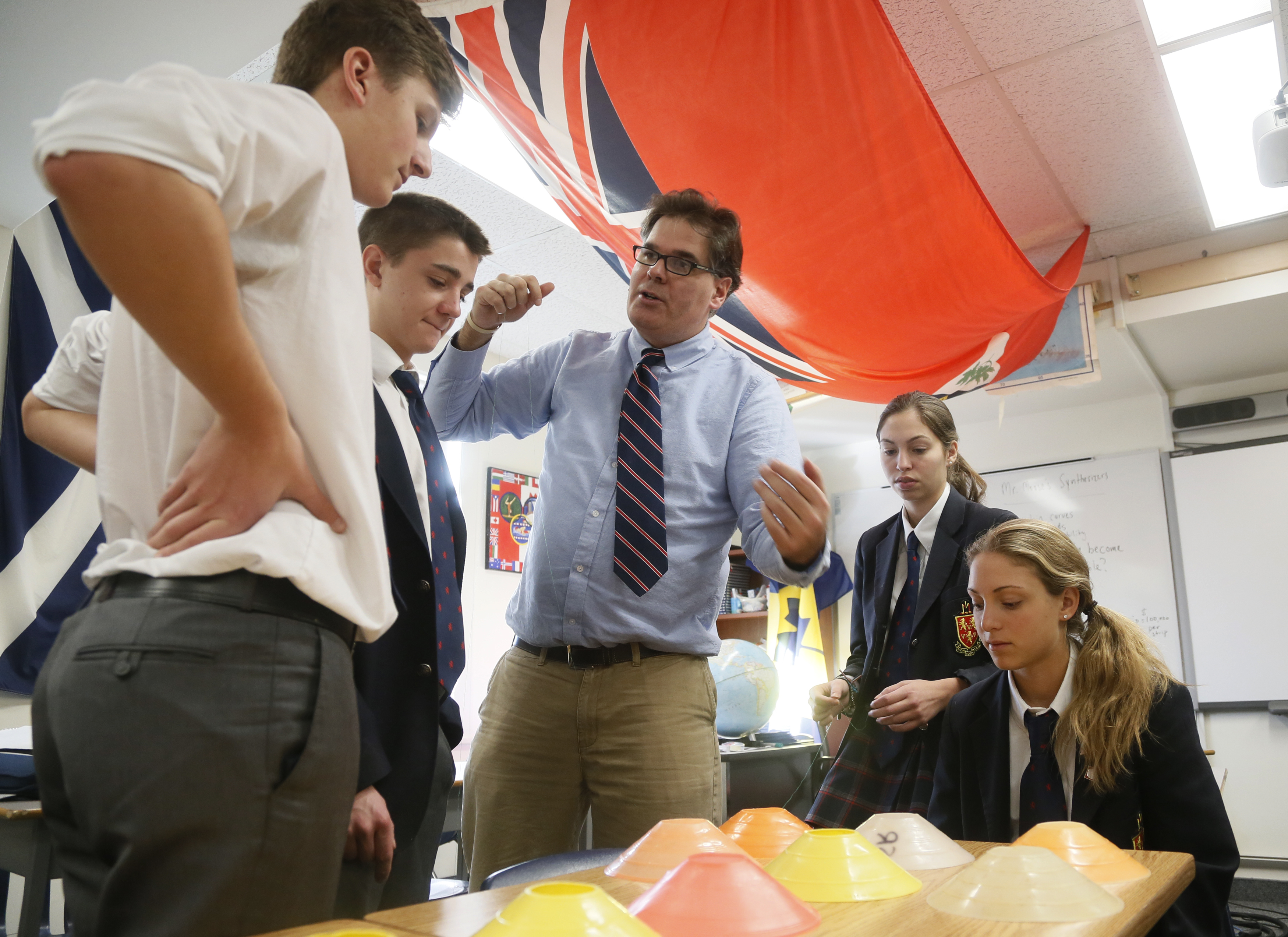
2013_14_SS_SocialScience_002     

 Leading by example, we are committed to the fullest development of students in mind, body and heart, preparing them for success and leadership in a sustainable global society.
LCC Mission Statement

It is this mission statement that guides our daily activities at LCC. Our core mission asks a lot. We don’t solely focus on academics in the classroom; we stress development of students’ bodies and hearts. We support the inherent importance of physical activity, the arts, as well as character and leadership development of each student. We also have a focus on sustainability and being global in our orientation.

There’s a lot to discuss in this statement. But let me focus on the simple introductory phrase in our mission statement, “leading by example.” I love that part of the statement, because it is a call to action for all of us on our campus to literally “lead by example.” It is a reminder to teachers, staff, parents, alumni, and of course, to all students to try their hardest and simply do their best. It doesn’t ask us to pretend we are perfect or excellent all the time, but to commit to try hard most of the time.  And let’s face it, that’s difficult, because life is hard – and we all constantly face challenges. But I believe deeply that we become a better community by trying, putting forth consistent effort, accepting challenges and living by a simple rule: respect yourself and all others as you do yourself.

In a community or group setting, aiming for high standards and norms is very important. So as each student tries to learn, improve and grow, it is the fact that they can do so in a culture of respect that is probably most important at LCC. No student should ever be mocked, bothered or harassed when they take a risk or stand apart from their peers. They all deserve that.

There is a great deal of discussion in society at large about bullying and its consequences.  I attended a conference on this topic just over a week ago with experts from across Canada and the USA. They presented data and identified interesting trends. The researchers reinforced an important point: the value of EQ or emotional intelligence vs. IQ, academic intelligence. Studies show that it is EQ that is more closely associated with long-term success in life: compassion, empathy, resilience, and capacity to work with people in groups. These are key EQ skills young people will need to develop over time to help them grow, mature and develop a strong character.

Despite grave anxiety by many parents about students’ online lives, current research shows that the vast majority of students use the Internet for the right reasons: to complete homework, connect with their friends and check out the latest funny videos.  Do they need some instruction and guidance on managing their digital lives? Yes, but it us affirming to know from the researchers that most teens are respectful digital citizens most of the time.

If and when there are issues of significance with peer relationships in our school, it has been our experience in recent years that when necessary, LCC students usually find an adult to speak to, to help work things out (e.g., teacher, advisor, coach, counsellor).  And when serious issues occur off-site, between our students or students from other schools, we always make it our business to investigate and demonstrate care for the welfare of our students, because it is the right thing to do.

In essence, “leading by example” is what all of our students do most of the time at LCC, and I commend them for that. I urge them to continue to respect themselves and their peers and care about the culture and tone of our school. Regardless of the rulebook, it is how all of our students act on a day-to-day basis and occasionally when under duress that defines our collective culture.  Stand tall for respect, empathy and the right to be different.  When challenged, students need to find a way to always stand up for the quiet victim. That is at the very foundation of who we are as a community. –Chris Shannon, Headmaster

Duke of Edinburgh: A Unique Journey

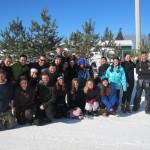
Last weekend, eighteen Grade 11 students travelled to Northern Ontario with Mr. Weiland and Mrs. Owen to complete the Adventurous Journey component of their Duke of Edinburgh Gold Award. The trip aimed to “Cultivate a spirit of adventure, discovery, self-reliance, and environmental conservation while undertaking a wilderness or adventure experience.” The journey revolved mainly around dog sledding. Students worked closely with Chocpaw, a dog sledding organization that has been planning expeditions for the past 30 years. Most students had never experienced dog sledding before, which made us both eager to set off on the journey and unsure of what to expect.


Upon our arrival at Algonquin Park, we put on our snowshoes and heavy backpacks containing all our material for the entire journey and set off on a hike. We travelled through trails and across a lake covered with only ten inches of ice. The hike proved to be a challenge, as it put many students’ fitness to the test. However, beautiful scenery made the hike very enjoyable. After a tiring five hours, we arrived at a camp not only breathless from the hike, but also from the sheer beauty of nature that surrounded us.


Arriving at the camp meant chores. Tasks were delegated: some students were in charge of felling wood, which would later be used in the stoves to heat the tents. Our guide instructed us how to do so, and we learned which types of wood were useful in which conditions. Others were responsible for collecting water by making a hole through the ice in the lake, which would later be boiled and used for drinking water and to heat our dinner. As for our meal, small grills were present in the tents and a few students were assigned kitchen duty.


These tasks took a fair amount of time to complete. We worked well after sunset, pausing for aerobic sessions to warm up. We ate a warm and rewarding supper, enjoying each other’s presence and bonding as a group. The communal effort provided was gratifying. We settled into our warm, heated tents and slept throughout the night. However, the fluctuation of the temperature inside the tent as the fire died out and was stoked kept some of us awake.


The next day, we gathered all our equipment and hiked back to our original starting point to obtain our team of dogs. Arriving at the kennel was overwhelming: 387 enthusiastic dogs were barking, eager to start running and pulling our sleds. We packed our sleds with our bags, attaching them with tarp and rope. In teams of two, we were assigned to a team of six Alaskan huskies, which are a mix between Siberian huskies and another breed, usually a German shepherd.


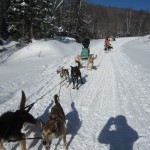
At this point, the chaotic process of hooking up the dogs to our sled began. Each student had to retrieve a dog, remembering its name, harness size and position on the dog sled. We learned how to attach the dogs properly and how to keep them calm and tamed. The sleds themselves had to be duly attached to a nearby tree, for the dogs would otherwise run off as soon as they were harnessed. We then set off on our dog sledding adventure, with one student as passenger and another as the driver. The latter was in charge of breaking and calling out the appropriate commands to steer the dogs. Sledding was not a passive experience; on the contrary, we were up and running most of the time, encouraging the dogs to run and pushing the sled uphill.


We sledded all day, stopping at night at camps. The dogs were tied to chains, fed and given straw for the night. The process of chores was repeated over the course of the next three days. We were outside all day, sledding, taking care of the dogs and doing chores. It was quite a change of routine to have to complete chores that were essential to our survival. Also, the trip enabled us to learn how to stay warm in the coldest of conditions.


The trip was truly an exhilarating and unique experience. I never would have had this opportunity if it were not for the Duke of Edinburgh Award programme. Working in such close proximity to the dogs was amazing. I can say without a shadow of a doubt that the trip exceeded all of our expectations. Bonding with both the dogs and our classmates was awesome. I am so grateful I was given the chance to go on this journey.

Tatjana Dimock ’14

Photos