Student Exchange: Colegio Anglo Colombiano

I can’t find the perfect way to describe how amazing my student exchange has been. Not once have I regretted my decision to travel to Colombia, nor to extend my stay an extra two weeks. After only a day, I felt like I was a part of Gabriela’s family and that I belonged in the school. I was welcomed with open arms and have made so many lifelong friends and met so many interesting and kind people. The bonds that I have created here are irreplaceable and truly incredible.


This experience has  broadened my horizons because I had the opportunity to learn from teachers from a different culture, with different teaching styles. I also had the opportunity to interact with and make new friends from all around Colombia since I had the chance to travel around the country.


The process of applying to go on an exchange abroad can be a little scary, especially for someone like me who hasn’t really been away from my family for long periods of time, but once I stepped off the plane all my nervousness turned to excitement.


The eight weeks I spent in Colombia were packed with activities. I went to school for the first three weeks at Colegio Anglo Colombiano, which is an international school located in Bogotá, Colombia. Bogotá is the capital of Colombia and in my opinion it is the city that never sleeps. On the weekends there are parties both Friday and Saturday and they dance until morning. There is an abundance of people, cars, places and things to visit. The school is beautiful; when the students aren’t in the classrooms they’re outside. All the hallways which connect the classes  are outdoors.


After my first three weeks, Gabriela, her family and I traveled to Mesa de Yeguas, Barranquilla and Cartagena for Gabriela’s spring break. These were all beautiful tropical destinations that I was privileged to be able to visit. To anyone considering doing a student exchange, I strongly encourage it. This has been an incredible experience that I will never forget. – Mikaela Ludwick ’16

La jolie France – Semaine 3: Notre amitié pour la vie

Capture d¹écran 2014-04-01 à 20.06.59Après deux semaines, je suis vraiment à l’aise dans la famille de Marie. Je suis aussi vraiment habituée à la vie française. Tous les amis de Marie sont très gentils, et presque tout le monde au Lycée m’aide à trouver des classes sans hésitation. Marie, et quelques-uns de ses amis me prennent pour déjeuner à Senlis trois fois par semaine. C’est dans cette ville-là que se situe le Lycée St Vincent. Il y a deux restaurants qu’ils aiment beaucoup. Un de ces restaurants s’appelle Kebab, ou tu peux manger des sandwichs à la viande, et une petite crêperie que j’ai bien aimée. Avec la famille de Marie, j’ai découvert la nourriture traditionnelle de la France. Ils m’ont fait gouter des fromages, une variété des pains, et, bien sûr, beaucoup des desserts.


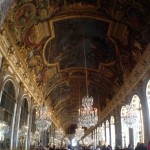
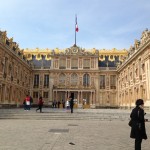
Cette semaine, avec le lycée, je suis allée au Château de Versailles avec les correspondants espagnols. Ils étaient très sociables et gentils. On a visité toutes les pièces magnifiques du château et le jardin. Le château était magnifique, toutes les pièces étaient construites avec différentes couleurs des marbres qui brillent au soleil qui passe par les fenêtres. Le jardin entoure le château, et ça lui donne du caractère. Quand j’ai marché dans le jardin, j’ai observé tous les arbres qui sont parfaitement coupés et les fleurs qui poussent. Il y avait plusieurs de canaux dans le jardin où il y avait des canards qui nagent calmement. Il y avait des petits restaurants entre les arbres. J’ai acheté une crème glacée et j’ai marché dans le jardin pour admirer sa beauté.


À la fin de la semaine, Marie et son père m’ont amenée à Paris pour voir tous les monuments importants, et pour prendre des photos. On a passé toute la journée dehors. On a marché pendant cinq heures, en posant devant tous les monuments.  Le Pont des Arts était la dernière chose qu’on a visité. C’était la chose la plus importante de tout ce qu’on a vu pendant la journée. On a acheté un cadenas et on a écrit Marie+Ilana et on l’a mis sur le pont pour notre amitié pour la vie. Notre journée à Paris était très amusante, on était des mannequins pour la journée! – Ilana Singer ’16

Exporting Cancer?

OLYMPUS DIGITAL CAMERAHearing from your doctor that “you have cancer” is a shocking and scary experience. That happened to me in 1988 just as my wife and I learned that she was pregnant with our first child.  For every cancer patient, the journey about how to grapple with the diagnosis means one’s life has been altered forever. It is daunting to wrestle with cancer, as it is the great plague of the 20th & now the 21st centuries.

In my case, I was supported by a fantastic medical team and endured minimal intervention and no surgeries. However, it took a full five years before the doctors declared me “cured” and “cancer-free.” Along the way my family endured a great deal emotionally. Because of my illness, I was removed from regular life insurance roles and had to dole out 300% for less insurance coverage for my growing family – after initially being told it would be a 700% increase – a struggle I had to wage on top of adjusting to the ramifications of the serious diagnosis.

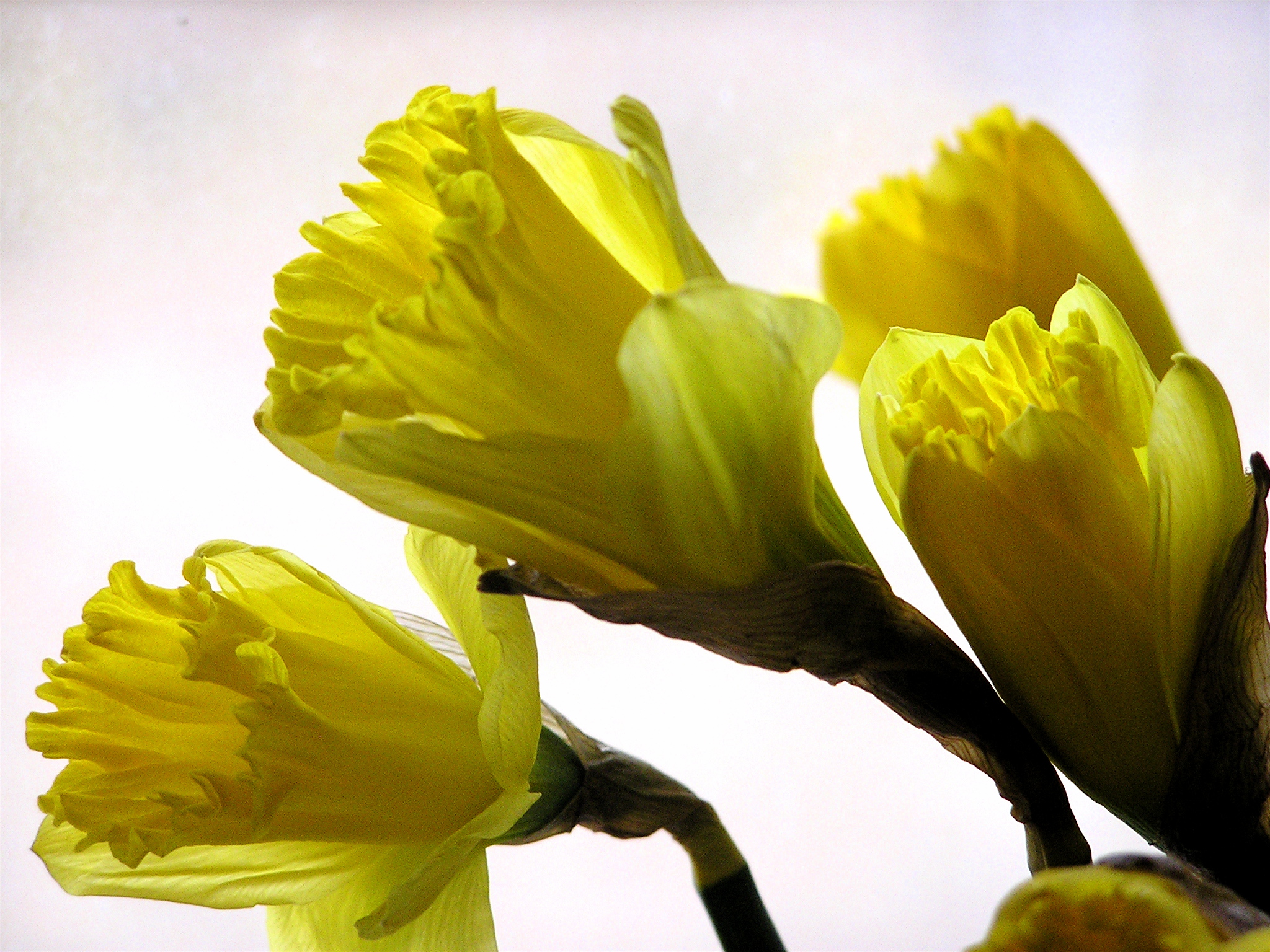
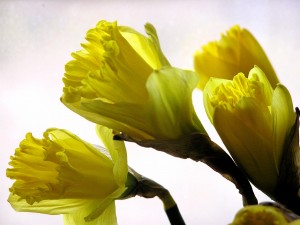
Four years earlier I had lost my father to cancer and then lost my mother as well, 12 years later in 1996. Both my parents died from a different form of cancer, but according to their wishes they each died at home and with the dignity. I assure you, the practical elements of delivering the dignity they deserved was very draining on our extended family.  I came to know cancer much better than I wanted to, but as it is in many domains, life often does not offer us choices. So now on the doorstep of real spring, I see April as cancer month. For me, it is painted yellow because of the national Canadian Cancer Society Daffodil fundraising campaign, and creative expressions of surging hope that emanate from cancer survivors across Canada. They reflect the importance of our collective efforts to all come together to defeat cancer’s scourge.

In the past several years, we have actually done incredibly well on this front. The Canadian Cancer Society reminds us that the billions of dollars that have been raised in recent decades to fund research and develop new treatments have had a positive impact. Happily, with new drug therapies, most cancers are actually in decline in Canada and across North America – and for some cancers, in rather significant ways.  Pamela Fralick, the CEO of the Canadian Cancer Society says we are at “an exciting threshold and there is great optimism for a future where we will no longer have to fear the word cancer.” But note that during the past century, cancer has been a disease, primarily of the wealthy.

In the spirit of our LCC Destiny Quebec (DQ) student leadership conference focused on globalization, allow me to assert that globalization is not just about trade and the proliferation of new digital technologies. It also includes health, and cancer is our primary export. Yes, on the international cancer front, things are changing.  Now more than 60% of new cancer cases in the world are occurring in poor and middle-income countries.  According to the World Health Organization (WHO), by 2025 the share of global deaths in these poor countries is projected to rise to three-quarters – 75%. The numbers are on the rise in poor countries because diagnosis and care tends to be weak.  However, we are also exporting – globalizing our Western lifestyles. This includes more people smoking, overeating, and fewer getting enough exercise.  There seems to be a direct correlation with cancers of the lung, bowel and breast. In 2012, 14.1 million new cancer cases were diagnosed and 8.2 million died from the disease, 11% more than in 2008. By 2025 the number of new cases is expected to reach 19.3 million, a notable 37% increase, and mostly in the world’s poorest nations.

So we surely have more to do to steadily defeat cancer in our society. But let’s be aware that we have indeed arrested the growth of many cancers with new medications and expensive treatments. Yet this won’t work in the developing world. The cancer problem there is only beginning to truly surge and shock, and will shortly become the developing world’s deadliest killer. What will we do to address this form of globalization, this deadly export?  I know that many of our students will have an impact by committing to successful careers in the health care sector.  If that’s too far down the road for some, we can all start by wearing a daffodil pin today to support research and anyone you know who is a survivor or living with cancer today. Then consider “what else can I do?” –Christopher Shannon, Headmaster

Student Exchange Australia: Accents, Animals and Aussies

I arrived Down Under on March 1, and have lived and tanned with a group of extraordinary people I will never forget! The day after I arrived, I went to the beach, and I saw my first typically Australian scene: bright blue skies, turquoise waters and golden-white sand that your feet sank into.

On Monday, I went to school, and it is going really well. My classes and teachers at Bunbury Cathedral Grammar School are great, and I’ve been able to take part in the school band, which has been really fun.

If I had to compare BCGS to LCC, the first thought to come to mind would be the campus: BCGS is really spread out, and walking from one end to the other takes more than ten minutes…

I am staying in boarding, and really enjoying that as well: I have been able to connect with a whole group of students outside of my grade that I would never have met otherwise.

Although my entire time here so far has been memorable, my favourite part so far has been my visit to the local wildlife park, where I was able to pet and feed a group of kangaroos. I had no idea that they actually hopped, nor did I realize quite how small they are… kangaroos still have to be some of the coolest animals around either way.

Although I miss my family, I am looking forward to my next few weeks here, and I really hope that they don’t pass by as quickly as my first few! – Michael Hamilton ’16

La jolie France – Semaine 2: Les nouvelles découvertes

IMG_3775

Tout le monde me parle en français, et je comprends tout. Ils étaient surpris que je parle si bien et ils pensent que je n’ai pas l’air d’être Québécoise.


Quand j’ai commencé l’école au Lycée St-Vincent, j’ai senti qu’il y avait une atmosphère très différente qu’à LCC. Les classes sont très différentes; quand on sort de nos classes, on se retrouve dehors. Personne n’a d’ordinateur, car il n’y a pas de Wi-Fi. Nous sommes très chanceux d’avoir l’avantage d’utiliser les ordinateurs en classe et nous devrions plus apprécier le fait de travailler avec des MacBook. Chaque matin pour arriver au lycée, on prend l’autobus qui dure à peu près vingt minutes.


Cette semaine, j’avais l’opportunité de rencontrer les correspondants qui viennent d’Angleterre, d’Espagne, et de Toronto avant qu’ils repartent. Les Anglais et les Espagnols restent pour seulement une semaine, et la correspondante de Toronto reste trois semaines. Avec le lycée, chaque jeudi, tous les correspondants font des sorties à Paris.


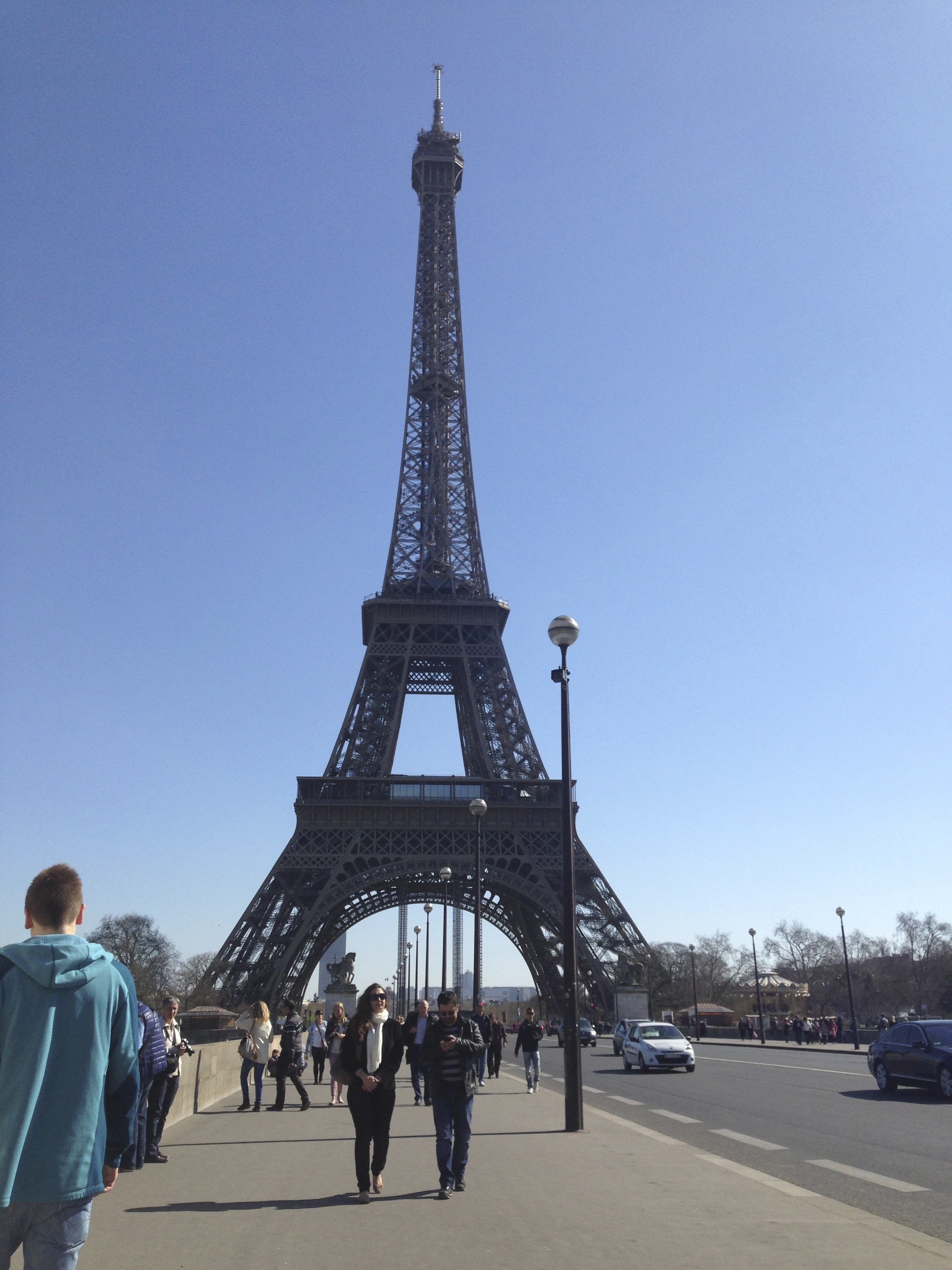
Ce jeudi-là, on a visité la Tour Eiffel, L’Arc de triomphe et le Musée D’Orsay. On a pris beaucoup de photos quand nous avons marché autour de Paris et on a découvert beaucoup de nouvelles choses intéressantes! C’était magnifique de visiter Paris, finalement, car mes rêves ont commencé à se réaliser. – Ilana Singer ’16