First Edition of The LCC Tree: Treetober!

TreesHello Lions! Welcome to the first post of The LCC Tree, a blog that discusses one environmental topic once a month. This blog will also include really easy tips on what you can do as a person to help, and will also contain initiatives that the SS Green Team will be organizing so you know what you can do to help out at LCC. Finally, to keep things interesting, at the end of each blog, there will be a variety of media links, including informational sites, fact sheets and other web blogs, you can look into if you want to know more.

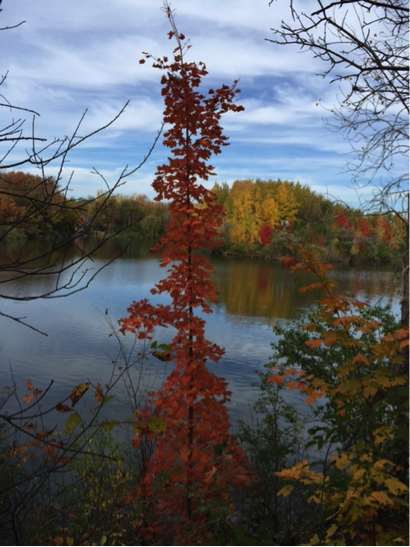
As our trees are just finishing their spectacular firework of the different tones of red, yellow and orange, what better topic is there to discuss this month other than those very things: trees.

Trees are a catalyst for life in many aspects. Obviously, their most important role is to consume carbon dioxide from the atmosphere and return the precious oxygen that all life forms on earth require, however, did you know there are over a dozen other ways that trees can contribute to our overall life quality?

Let’s start with a few other oftentimes-unseen uses. First of all, trees provide a basis for life for many animal species and foster ecosystems necessary for the survival of many individuals. In fact, coming from the World Wild Life organization, 80% of all land biodiversity exists in and depends on forests and wooded areas. This means that without trees, most of the animals and plants we have come to know and love will never be able to exist.

Not to mention, we ourselves also depend on forests in our lives. Wood is used in many of our buildings (just look at our LCC dining room!) as well as the making of many commodities. What is a pencil made of? What type of material is your desk, in school and in your home, made from? Where did we get the paper in our notebooks, and in our annual LCC Reads, The Alchemist? Furthermore, I should mention that trees contribute about $24 billion dollars to our economy in Canada, generates more than 190 000 jobs in the forest industry and is the reason why Canada is the primary newsprint producer. So you can see here how we as humans depend on this resource.

Trees also take part in improving our mood as they add color and vigour to our regular, and sometimes repetitive, lives, especially during the fall season. Every morning, when you arrive to school by bus, car, bike or other means, if you have stopped for a moment and looked at our LCC campus or the trees planted along Monkland, you will know what I mean. The vibrant and picturesque colours of those trees have a certain calming effect on the street and our campus.

Sadly, because 80% of all land biodiversity depends on wooded areas, this makes deforestation a pretty effective method of exterminating life on our planet. However, what can we as the population do?

Ways you can help

The easiest and most efficient of all methods is probably to reuse paper and recycle it properly. Reusing paper will not only save you money but lets you make the most of each tree which was put into the composition of the paper. Got a used piece of paper that’s still blank on one side? Keep it in a separate box as scrap paper, so whenever you want to write calculations for a math assignment or plan out an outline for an english essay, you can reuse the paper. Teachers also keep a special box for scrap paper as well, so if you have any paper that’s still blank on one side during class, don’t be afraid to give it to your teacher as spare paper!

If it’s not possible to do the above, you can also opt to recycle the paper. Recycling is a great alternative, albeit not as good as reusing before recycling. When recycling, however, be conscious about other things you are putting into the recycling bin. Paper can be recycled with other paper products so long as it doesnt have any sort of paint or glue on the paper. This is because the process of recycling paper uses a lot of water, so paint or glue will affect the final outcome after recycling. Moreover, if a paper recycling bin contains something else that’s not a paper product, that entire bin cannot be recycled unless that object is removed, so if you are recycling, you must be careful with what you put into your recycling bin.

IMPORTANT!

As a reminder, LCC’s green, plastic recycling boxes only recycle clean products. This means if you plan to recycle carton, plastic, paper, juice boxes or others, be sure they don’t have anything inside or on the product. For paper, watch for paint and glue as they disrupt their recycling process. For juice boxes and other fluid containers, be sure that they don’t have any juice, milk, etc. in them before putting them in the recycling bins. This goes for the metallic recycling bins as well.

Finally, if you would like to extend your support again at LCC, you can always participate in the SS Green Team’s Treetober Campaign. Starting from October 22 until Halloween, during the advisory periods, we will be accepting donations for the organization we are supporting: One Tree Planted. If you make a donation of $15 or more, you will also be given a free Tree Hugger t-shirt!

For all of Senior School, there will also be a bake sale during the lunch period on October 22. Last but not least, there will also be t-shirt raffles happening in the house office and in and around locker rooms for a chance to win another free Tree Hugger t-shirt! One ticket costs $2 but three tickets will cost $5, and along with the purchase of each ticket, you will also obtain some candy along with it. – Andrew Zhang ’17

Media Archives

Learn more about the organization supported by Treetober! http://onetreeplanted.org/

If you would like to support One Tree Planted and its cause via online donations, you may also donate here.

Another way you can help the environment: https://www.youtube.com/watch?v=3iIkOi3srLo

Know how to properly recycle not only paper, metal and plastic, but also books, old computers, bottle caps, old furniture, and more. In short, visiting this site basically makes you a recycling master: http://www.earth911.com

If you’re interested in reading some more, here’s another blog about the environment written by Hannah Alper, a young person passionate about the environment: http://www.callmehannah.ca/

Round Square: A Trip of Realizations

photo 2[2]In a week full of unimaginable highlights, our trip to Petra might have been the greatest highlight of all. After Shobak Castle, we traveled two thousand years back in time to Petra. I’m trying really hard not to feel uncharitably smug thinking of my siblings who are, at this very moment, getting ready to go to school. I am failing, because I know how lucky I am. Petra has got to be one of the places one must see before dying.

We are dazed by sleep, still dazzled by last night, when we had dinner at the Bedouin camp. The legendary Bedouin hospitality is not exaggerated. We ate traditional Bedouin fare and danced to Arab music in a setting straight out of the Aladdin of my childhood. All around us were mountains of sandy rock in which caves were nestled. A few of the caves were adorned with lights. In the light of dawn, it feels as if last night was a dream.

Today is Friday and our alarm clock is the call to prayers. The voices raised in unison to call Allah make us shiver with excitement. It is a call that has been heard for centuries, and in this particular setting it is thrilling.

Petra lies in a valley that runs from the Dead Sea to the Gulf of Aqaba, and its geographical location alone sounds like an Arabian poem. Petra is a rose colored archeological city, surrounded by mountains. I say “rose coloured”, but it is not an accurate description. It is in turn orange and red and pink. It is, and really, this is not an hyperbole – spectacular. Petra was, over two thousand years ago a sprawling city with an enviable water supply system. It attracted caravans of rich merchants on camels from Egypt and Arabia. Two thousand years later, we are the one flocking to Petra, awed by the tombs and temples carved directly into the red stone. I have to say it: this is so cool.

It is impossible, when climbing 900 stairs to quiet the flutter in my stomach. This feels like the greatest of adventures. We enter a square, in a burst of sunlight. It is dazzling, both literally and figuratively. I must have seen the picture of Petra’s Treasury a thousand times before today, but it is now in front of me, for real, and the effect is surprisingly stunning. There are dozens of facades, kilometers of baths and temples and tombs, partly built, partly carved into the stone. We visit a monastery.

It is all fascinating, but it is the image of the dozens of children who hustle, desperately trying to make a few dollars from the over privileged tourists that I will take away with me to LCC. I will not forget them. This is a trip of realizations that will spur us to action. I will also take with me the image of Spencer, Maxim, Nora and Sabrina riding away on camels and donkeys. The rest of us tamely take the 900 stairs back down to reality. – David Elbaz ’15 –  Round Square International Conference, King’s Academy, Jordan

PHOTOS

Round Square International Conference: Inspirational Encounter

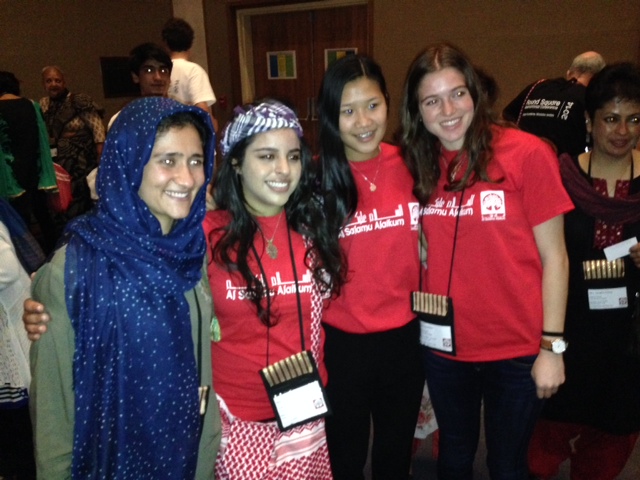
2014_15_RS_Founder_1st_Girls_School_AfghanistanOn the first day of our Round Square International Conference at King’s Academy in Jordan, we were fortunate enough to hear the story of Shabana Basij-Rasikh. At the young age of 23, she has already founded both an organization called HELA, as well as a boarding school for Afghani girls, SOLA: School of Leadership Afghanistan.

Born in Afghanistan, the Taliban regime took over when she was only six years old. Coming from a family who valued education, she was dressed as a boy in order to be an escort for her older sister as they attended a secret school for girls. Her family knew the consequences of attending school and hiding her identity would be punishable by death. Luckily, she and her sister survived the Taliban reign and she attended her first public school in 2002.

Shabana was extremely angered that she was denied a proper education and was inspired to give the girls of Afghanistan the opportunity to go to school. During her time at Middlebury College, while studying international development and women’s studies, she co-founded the first tuition free all girls’ boarding school for young Afghani students. The first year they opened the school, there were four attendees and now there’s a total of 42. Their goal is to have at least one student from each of the 34 Afghani provinces.

The school is also involved in many initiatives such as a mentorship program. The students are paired with a mentor from a foreign country with whom they Skype and look up to as role models and consider friends. The school also takes part in a virtual classroom program in which the classes at SOLA Skype with a classroom of a foreign school.

The work that Shabana has done has inspired all of us, her selflessness and motivation to give Afghanistan girls an education is incredible. We plan to continue her efforts to raise awareness and funds for SOLA and motivate the LCC students to get involved.

Jessica Lackstein ’15 and Sabrina Chan ’15 – Round Square International Conference, King’s Academy, Jordan

Ties That Bind

Alumni game sept 20, 2014Alumni game sept 20, 2014DSC_0761Last weekend was a wonderful display of the strength of community at LCC. We hosted dinner for more than 200 alumni on Friday evening, followed by an upbeat open house Saturday morning for prospective students. Faculty, staff, students and parent volunteers showed off our facilities and programmes throughout the morning. In the afternoon, alumni played soccer and members of the 50th Reunion class toured new facilities, reminisced and shared lunch on campus. Essentially, all of our key school constituents gathered and collaborated with pride to present our school to visitors.

Every September we host our alumni LIONfest evening with a focus on reunion classes from 10 to 50 years.  All alumni were welcome – and we were particularly excited to have two gentlemen here for their 72nd class reunion. Regardless of age, our graduates affirmed that their LCC experience has provided them with important foundations and friendships that have remained meaningful long after graduation. Each class has a mix of people living in Montreal and elsewhere. However, it is amazing how strong the bonds remain, despite time, distance, and shifting dynamics brought on by marriages, families and careers.

For our older alumni, their school is still at 4090 Royal–the same address as when they attended. However, with our newer facilities, especially those built since 2000, many felt today’s LCC was quite unrecognizable The alumni were very impressed with facility and programme development and openly encouraged us to continue to improve, while holding true to timeless values and high standards.

So if the alumni experience was about reconnecting, reflection and reminiscing, our open houses on Saturday morning, and again on Tuesday, were the opposite.  They were about the future, about possibility, potential and the promise of tomorrow.

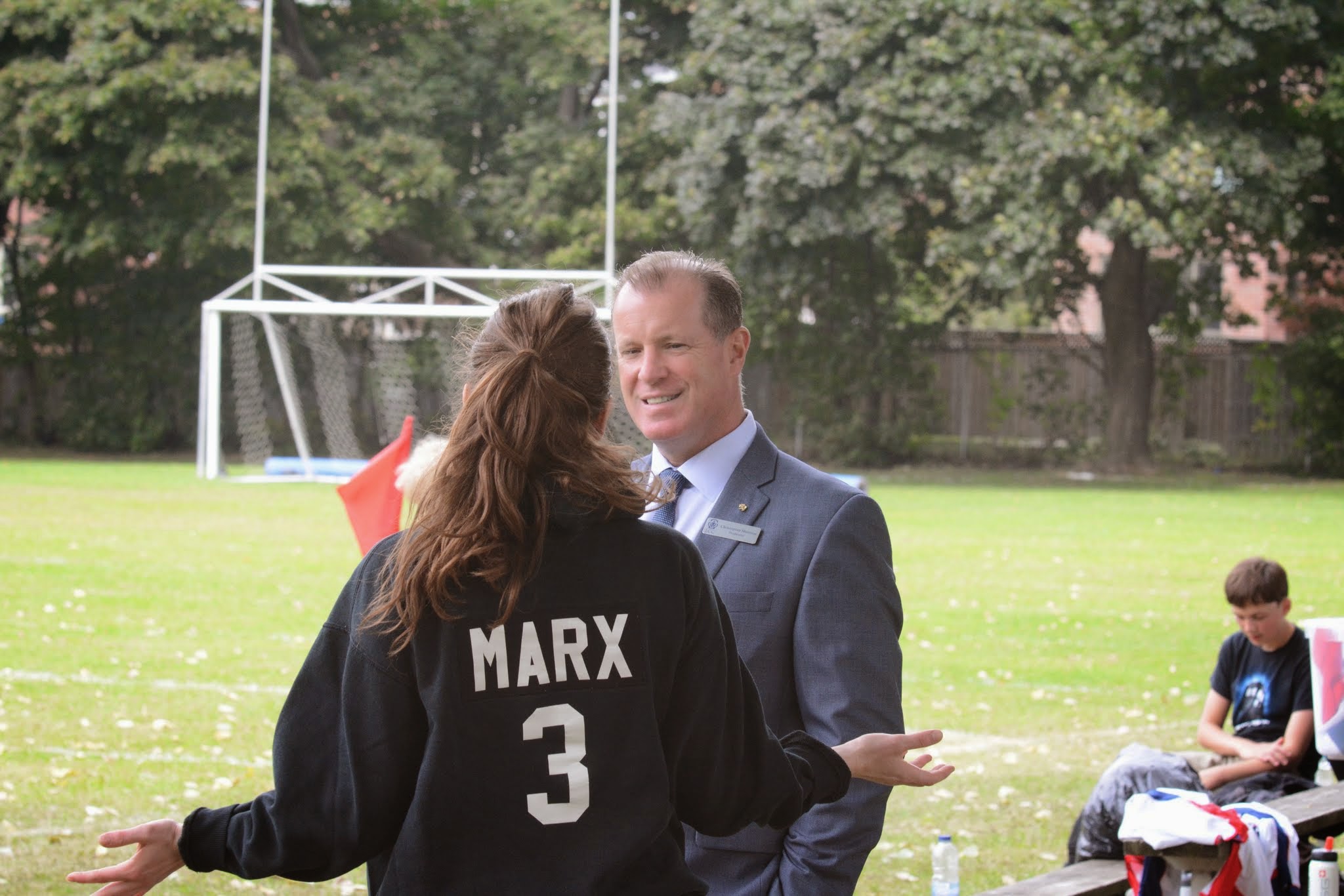
We hosted hundreds of visitors and the school looked great. My thanks to faculty and staff who were here to describe programmes and answer endless questions. However a special thank you goes to all of our student “Ambassadors”. They were proud hosts who provided a warm welcome to our many guests and prospective LCC families. No matter how much preparation we adults make as teachers, staff and administrators, it is actually the students who leave the greatest impression on visitors. It is evident in their tone, level of enthusiasm, and knowledge of different school programmes and history. It is their sense of humour and keen involvement in a wide variety of school activities that leave a lasting impression. They are the difference-makers in telling the LCC story.

The common element last weekend at all our special events was the importance of people connecting with people. It’s the benefit of a strong community where standards, effort, and involvement matter. Indeed, taking pride makes LCC a very special place. — Chris Shannon, Headmaster

The Importance of Movement

2013_14_Terry_Fox_Run_036An interesting message landed in my in-box last week from a national educational list-serve. A headline declared that new research shows that kids should definitely move more. Movement brings more blood flow to the brain, making us more alert, engaged and focused on learning.

To be honest, I was a little stunned. I wondered why this was actually a headline as I considered it simply a statement of the obvious.  For generations our school has focused on the old adage that “a healthy body leads to a healthy mind”. In fact, it’s in our school’s mission statement, “…the fullest development of students in mind, body, and heart…” But when I thought about it for a moment, I realized that we don’t always see the obvious. Sometimes we stare right past important information. We all need reminders about how to do better as well as practical tips about how to chip away at diminishing bad habits.

Our teachers received some great reminders along these lines during a workshop the week before school started. We all heard from acclaimed molecular biologist, researcher and brain expert, Dr. John Medina. He has written an influential book emanating from his recent research, called Brain Rules. He offers 12 important brain rules: practices that enhance brainpower and function. According to him, brain rule number one is the importance of exercise. Not only is exercise good for the body, but the current research is irrefutable – physical movement also significantly and directly enhances brain function.

On his website, Dr. Medina states, “exercise zaps harmful stress chemicals, it boosts problem-solving, planning and attention”. Medina reminds us that the brain evolved under conditions of nearly constant motion. We have been designed to function, think and complete tasks more effectively after exercise. The increased oxygen flow to the brain simply leads to better mental sharpness.

This current research has made us ask a lot of questions at LCC. We include PE and athletics in our programmes, but should we also adapt our academic programmes and schedules to include more movement for students? This is a question we will review during the coming school year.

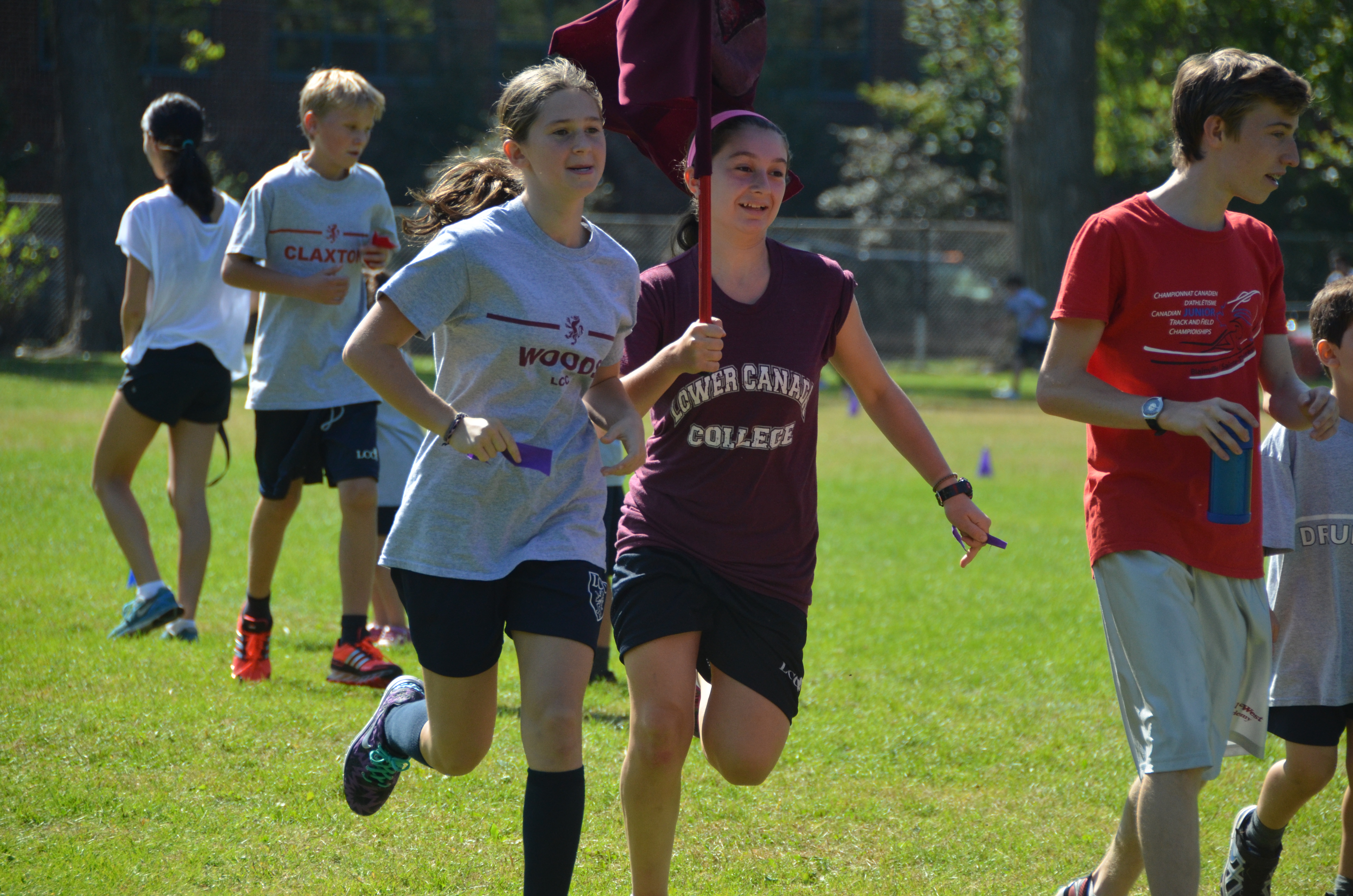
This week I urged our Middle and Senior School students to move more during recess in the morning and after lunch. If they actually want the latter half of their day to go well, it’s a good idea is to go outside regularly and run around during their breaks. For many teens it’s time to rediscover the sheer fun of play and exercise – nothing organized by teachers – just running around for fun. And yes, the likelihood is that this will actually help them do better in class. In the process, many will say goodbye to that awkward post-lunch nap on their classroom desks. Less zoning out and more zoning in!  — Chris Shannon, Headmaster