Melbourne Exchange: A New Routine

January 30, 2013
After a very long flight I arrived in Melbourne. Only fifteen minutes after my exchange, Patrick Quay and his family returned from their holiday in Japan. For the rest of the day I stayed home getting to know the family, house and environment.

January 31, 2013
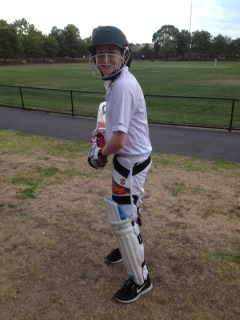
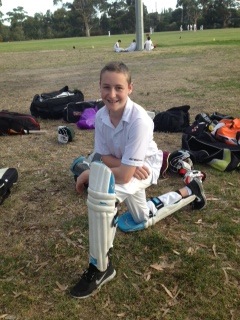
In the morning I had time to sleep in. Later in the morning, I went to the local park to the cricket nets and learned how to bat, bowl and field with Paddy and two of his friends. We spent about three hours teaching me to play. After cricket training we went to rowing. It was my first time rowing and I did not go on the water and just practiced on the rowing machines. That night Pat’s grandparents came over for dinner and to meet me.

February 1, 2013
Today was the “first” day of school. It was just orientation and during the day we mostly helped the new grade 7s with everything they needed to know. After school I had my first cricket game and luckily didn’t have to bowl or bat, only field.

February 2, 2013
In the morning, there was a rowing regatta. Because I was not rowing in the races, I helped the team assemble the boat and then got a bike to ride along with the boats and the coach. After the races we went back to the training facilities for more rowing and got home at around 5 pm. We were really hot and jumped in the pool. That night we went to Paddy’s cousins’ house for dinner.

February 3, 2013
This morning it was family day at the local farm so Paddy and I went down and helped out. We cooked sausages on the barbeque and got to give them to all sorts of people there including a famous NRL player Bill Slater. When that was all over we went home and relaxed.

February 4, 2013
Today was the second day of school and there were actual classes. I met a lot of people and had trouble remembering everybody’s names. After school there was rowing and I went out on the water for the first time.

February 5, 2013
Today there was nothing special. There was school in the morning and nothing afterwards.

February 6, 2013
Today was the same as Monday’s schedule, school then rowing.

February 7, 2013
Today there was a huge swimming competition at school with years 7, 8, and 9 all swimming. There were individual and relay events and our house came 6th out of 10. After a long day of swimming we had cricket practice.

February 8, 2013
Today there was school followed by a cricket game where I got to bat. I got a run but on my 3rd ball, I was out stumped because no one had told me to stay in the crease after I hit.

February 9, 2013
Early this morning we got up and biked to rowing. We were there for four hours and while there we saw Paddy’s grandfather and had lunch with him. We got home, went swimming and relaxed.

February 10, 2013
This morning we got up late and since it was a bit cooler we decided to go to the movies with some friends. After the movies we went to go see a cricket game; Australia against the West Indies. Australia ended up winning. When we got home from the game Paddy had cousins over and we had dinner with them.

February 11, 2013
Today we had school and rowing. Other than that there was nothing special today.

February 12, 2013
Today there was school and nothing afterwards.

February 13, 2013
Today was a fairly relaxed day with school and then rowing afterwards.

–Alexander Dimitrakopoulos ’15
South Africa: Subtle Differences

Grade 9 student Andrea Naday ’15 is on a student exchange in South Africa, attending St. Stithians Girls School. Here are some reflections on her experience to date:

————————————————————

120px-2randsI find it very interesting how South Africans speak the same language as us but use different terms and expressions. For example, if a person was annoyed by someone, they’d say “she’s such a rash.” They also say “shame” a lot. If I said someone was sad, they’d say “shame.” They also have an accent similar to someone British. But, South Africans don’t think they sound British at all. When I was talking to Carmen about it, she realized how she was speaking, and how some things they say don’t make sense. For example, South Africans say “tomato” as someone British would say it, but “potato” as we say it (i.e., they pronounce the “a” differently).

Another major difference I noticed was the currency. South African currency is called Rand, but about 8.5 Rand would equal $1. So, you can’t  buy much with R10. Basically, anytime you would go out you spend around R150-R1000. It is weird to be spending R350 on some souvenirs: 350 sounds like a big number! So I always have to divide everything by 8 to figure out the approximate value in dollars! But, I have been able to adjust.

Cars are different too. The driver is on the right side of the car, and South Africans drive on the left side of the road. At first, I thought it was very weird, but I have gotten used to it.

South Africa Exchange: Experiences & Perspectives

I made the U-15 St Stithians’ basketball team, which means that I can spend my afternoons playing basketball in the sun. There are really worse ways to spend one’s afternoons.

On Saturday, January 26, I play my first basketball game for St Stithians, against St. Peters. Saints win. Later on that day, Dirk, Rickus, Jessica, and I go camping and 4x4ing. It is amazing!  We set up camp in a gorgeous site, and then, South African-style, I am handed a pellet gun, a .22, a shotgun, and a 234 hunting gun. We shoot cans, targets, and clay pigeons, known to us as clay disks. The Canadian in me cannot help but think of NRA debates. I am forced to reflect on the dangers of giving a gun to any boy. It is heady stuff, and I shamefully admit that it is regretfully easy to forget all my previous reservations about holding real guns when I hit my first clay pigeon with my first shot.  If, as I suspect, my career in basketball is cut short, I’m going to the Olympics for shooting discs.

Later that night, we make a campfire and barbecue for supper. It is so cool. I cannot believe I’m on this exchange. The next day, we go to the stream and swim.

And then tomorrow back to school. –David Elbaz ’15

Parging: Worth the Hard Work

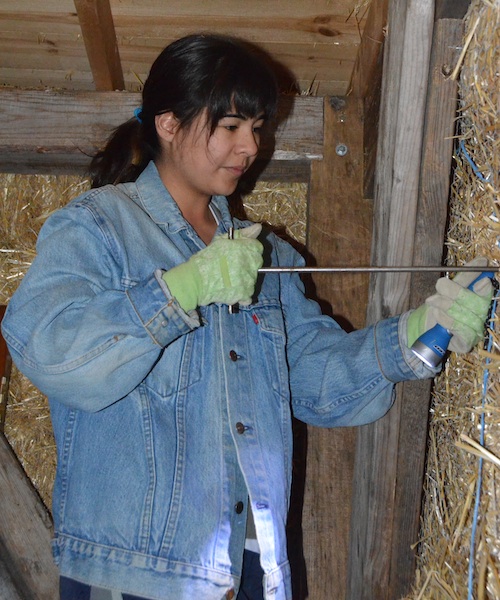
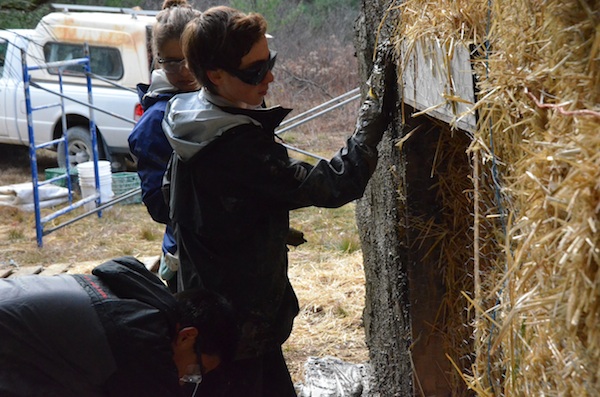
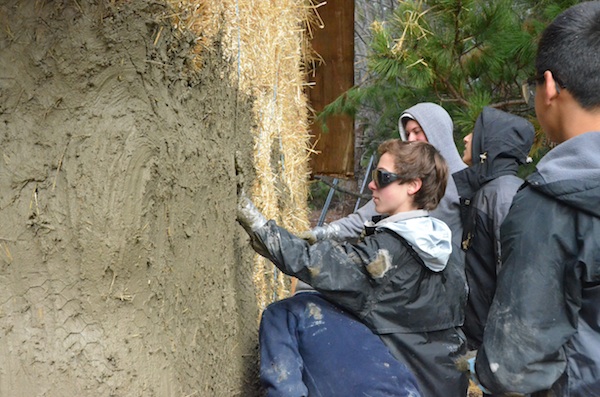
Blog_Faria_Solisterra_13Nov2012From November 1 to 3, math-loving grade 9 and 10 students departed for Kazabazua, a small town three hours north of Montreal, to help build a straw bale structure. We stayed at Solisterra, an eco-friendly community of straw bale buildings built by Frank Dutton and Dominique Tonetti. The boys stayed in Rosa, the main house, whereas the three girls (plus Ms. Saunders) stayed in Pinea across the lake. The group worked on a straw bale shed designed to house tools and solar panels, which provide energy for the buildings in Solisterra. Our job consisted of adding and preparing the straw bales for the shed, as well as parging the finished walls; this included placing and modifying bales, stapling chicken wire, and even sewing the bales! Our group was very productive, and by 5 pm Saturday, we had finished parging all but the second floor interior and one main level wall! This job required a tremendous amount of physical labour, but we had plenty of sustenance thanks to the delicious meals and snacks provided by our chef, Deb. After all of our hard work, we were rewarded with a trip to the town’s harvest dinner before the long drive back home.

This was my second trip to Solisterra, and I had a fantastic time once again. It was nice to be working with straw this time instead of wood, as I finally got the experience of putting together a straw bale structure. My favourite part of the construction process was sewing the bales together, which involved communication and teamwork. I want to congratulate everyone for putting in their best effort, and I highly encourage anyone offered to take the opportunity to travel to Kazabazua, and better yet, participate in building a straw bale structure. – Holly Faria ’15

Solisterra Take Two: The Art of Parging

Three weeks ago, the grade 9 and 10 enriched math classes were invited to go on a community service trip to the town of Kazabazua in Quebec. The moment this was presented to me, I knew I wanted to go. Three hours later, my form was already handed in. I could not wait to go back to Kazabazua for the second year in a row.

There we slept in a straw bale house at the Solisterra Eco-Cottages. We were going to stay for two nights and work for two days. Our task was to build a straw bale shed that would create solar energy by using solar panels and be used as a storage room. Straw bales were going to have to be modified and sewed together to make the walls. The entire shed was going to have to be chicken wired. And finally, the walls of the shed were going to have to be parged with a mixture of cement, sand and water. So much to do!

The highlight of my trip was learning the art of parging under the guidance of Andrew the expert. Saturday consisted of applying the first layer of parging on the walls of the straw bale shed. Making the parging was a lot of fun. We got to observe how adding different ingredients changed the texture and stickiness of the parging. Covering the straw bale walls was my favourite part of the process, as I applied this gooey playdough-like substance with my hands. Needless to say, I got very dirty.

During our two days, we got the chance to learn and work with unbelievable people. We learned about our natural environment, about the importance of trees, solar energy and the art of parging. We spent two full days in the cold, working nine hours a day to complete our project. We are happy to say that the shed was successfully built with no complications. What a wonderful experience!—Zack Shine ’15