Happy Reading!

Lower Canada CollegeNow that the excitement of the holidays has abated and we settle back into our normal routines, we have an opportunity to re-establish the daily reading practices we might have cast aside during the pressure-packed social season.

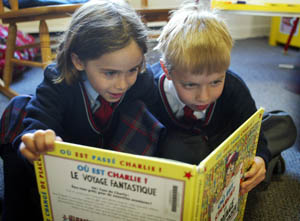
Parents ask me about creating a reading climate in the home—an invaluable asset for personal and intellectual growth. Although there is not one tried and true approach, I can offer some suggestions that will assist you in fostering and, in some cases, re-kindling (pardon the pun) your child’s interest in reading.

I have mentioned in previous posts that it is imperative to begin by focusing on your child’s passions. If your son or daughter is an avid hockey fan, for example, you can start with the Sports section of The Gazette. You can share with your child articles that you find interesting, whether they be Red Fisher’s “Red Line” on Saturdays or Stephanie Myles’ daily column that gleans entertaining items from other sources. You may want to give your child a subscription to Sports Illustrated for Kids, Sports Illustrated or Hockey News. Sports biographies and autobiographies are also excellent resources for stimulating young fans’ interest in reading. Of course, I am referring only to the world of hockey. However, you can find print material and online resources for any hobby or activity your child finds fascinating.

To adapt Ernest Hemingway’s famous phrase, all one needs is a “clean, well-lighted place” to cozy up with a good book, magazine, newspaper or e-reader. In fact, you don’t even need light if you have an Apple iPad. Create attractive spaces in your home away from the television where you and your children can read either alone or together. As reading is usually a private act, reading nooks tend to be the most desirable areas for snuggling up on a cold winter’s evening to enjoy the pleasures of an alluring story. In any event, a comfortable chair or sofa and light are the bare necessities.

As e-readers become more popular, books and bookshelves may eventually disappear. Although this reality makes me sad, as I am an avowed bibliophile with a personal library of about two thousand books, I realize that technologies change. After all, we are no longer reading papyrus scrolls. However, creating a home library over time is a wonderful way to foster reading. Not only is a wall of books attractive, but it also contains millions of words and ideas that may be absorbed by your family. A library is a sanctuary, a physical space that cannot be replaced by an electronic screen.

Finally, show your children that reading is a worthwhile activity. Once they are beyond the age of bedtime stories, continue to model good reading habits. Read on a daily basis. Talk about the books you are reading. Leave good books lying around for your children to pick up in a casual way. Take your children to the local library and bookstore. Above all, show them that reading is a positive, fun activity. Readers tend not to be bored or lonely, as they can always find stimulation and companionship in the printed word. In the immortal words of Groucho Marx, “Outside of a dog, a book is man’s best friend. Inside of a dog it’s too dark to read.” — Brian Moore, Department Head: English Language Arts, Communications Studies and Literacy Programs

Holiday Observations

HeadBlog_13Jan2011Happy New Year and welcome to the second decade of the 21st Century. The lengthy and restful holiday period has provided inspiration for this entry and, as we prepare for the year ahead, I have three observations to share.

First, the Christmas and Hanukah season is a period of great celebration including the luxury of quality time with family and friends. But it’s also a season of excess: too much food, drink, sweets, and late nights. By the time we awake on January 1st, most of us are begging for a couple of quiet days and nights – a chance for our feet to come down to earth and really relax after exams, weeks of preparations and seasonal parties.

This was not the case for 43 year-old Donna Simpson from New Jersey who currently weighs about 600 lbs. – and has a goal of becoming the world’s heftiest woman, hoping to eventually reach 1,000 lbs! She has a website where people pay to watch her eat, consuming over 12,000 calories per day. She’s a poster girl for North American excess! All by herself, here’s what Mrs. Simpson ate on Christmas Day – an unbelievable 30,000 calorie gluttonous holiday feast:

• two 25 lb turkeys
• two maple-glazed hams
• 15 lbs. potatoes
• 5 loves bread
• 5 lbs turkey stuffing
• 4 pints gravy
• 4 pints cranberry sauce
• 20 lbs. vegetables

Unbelievable – one person. Mrs. Simpson definitely wins the gold star for excess in this age of excess.

A second observation over the holiday relates to all the end-of- year lists that are so popular during the week between Christmas and January 1st. You know what I mean: the year’s top songs, news events and so forth. Did you know that at the end of the year researchers told us that Canadians spend more time online than people in any other nation? We’re particularly fond of YouTube. According to a new international study, the average Canadian spends 42 hours online every month, including the viewing of 147 short videos/month. This is 50% more than any other country. So, as a nation we’re probably pleased that Time Magazine’s Person of the Year for 2010 was Mark Zuckerberg, the 20-something multi-billionaire creator of Facebook – an idea/tool that seems to have had more impact on Canadians than any other nationality in the world.

My third and final observation came on a short 5-day visit to Cuba. Cuba remains a communist country with very different standards for foreign tourists and locals. Beyond the hotels, beaches and comfort reserved for foreign visitors is the dilapidated Cuban infrastructure and a broken economy. I found out that virtually all basic foodstuffs are rationed and, for the past several weeks, milk has not been available to Cubans. However, as a foreigner I could by milk at a very inflated price – 25 times what Cubans pay. So the day that I visited Old Havana and hoped to buy a piece of Cuban art work, things turned out differently. While walking in the old city, I met a young father and several mothers who were desperate to find milk for their babies. I offered to buy some milk, but that still required two hours of walking and searching in Old Havana, as there was no milk to be found in the first 10 stores we visited. Finally we found the milk and thankfully, five families were happy. I didn’t find the Cuban painting I hoped to buy, but I did manage to do something in keeping with the spirit of giving that underpins the season, and I do feel better for it.

Excess, Canadians on the Internet, and alleviating some of the suffering of neighbours in one of the world’s last communist states. I learned a lot while on my break. I hope you did too.–Christopher Shannon, Headmaster

LCC and Our Global Classroom Initiative

LCC jerseys_LadakhI have been fortunate to have visited India three times in my life, including visits to the bustling cities of Mumbai and New Delhi as well as a journey to the top of the world—to the Himalayan mountain state of Kashmir.

I am pleased that through the Round Square LCC will send two students on exchange to India for the first time later this year. It will surely be an exceptional and eye-opening opportunity for them. When they return we all look forward to hearing about India through students’ eyes.

During each of my visits to that country I have been dazzled by the colour and diversity of Indian culture. It is an ancient society currently progressing at an incredible pace. The city of Bangalore—India’s Silicon Valley—is a leading centre of high tech creativity and a symbol of India’s commitment to innovation.

With a population of well over one billion people—about thirty times greater than Canada’s on a landmass about one-third size of Canada’s—India is a country challenged by its need for resources and the provision of education and health care to its huge population.

In recent years, LCC has partnered with Health Inc., a small non-profit organization committed to bringing literacy, health care and community-building activities to India’s most remote villages—on the top of the world in the northern state of Ladakh in the Himalayan mountains.

Our newest venture is The Global Classroom Initiative; a special partnership between LCC and Health Inc. We are currently hosting Health Inc.’s founder Cynthia Hunt and three young Ladakhi leaders-in-training on a special educational exchange that will continue until mid-December.

In addition to following some of our daily routines in classes and on the hockey rink, this group is focusing on learning IT skills so they can be proficient at making videos. They will then be able to teach other Ladakhi students to tell video stories to us and to the world.

We intend to send LCC staff to Ladakh to help set up a satellite supported classroom so that we can use dependable technology to bring us closer together. We have already sent some young LCC alumni to Ladakh and some day we hope to send students. If you are interested in our Global Classroom project, check out this video and feel free to contact us directly if you want further information. —Chris Shannon, Headmaster

Getting to Know Ourselves Through Others

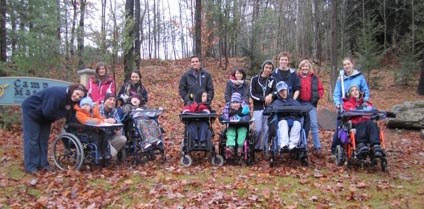
Mackay2010On November 8, 9 and 10, seven students from Lower Canada College were given the privilege of travelling to Camp Massawippi with six severely disabled children from the Mackay Centre. It turned out to be an unforgettable experience for everyone concerned.

We had previously spent two mornings at the Mackay Centre getting to know the children who would be coming with us on the trip. However, as we boarded the bus bright and early on the morning of our departure for the camp, we were excited, but also not too sure of what to expect. One thing we certainly had not expected was that the bus would break down about an hour outside of Montreal! Unfortunately, we found ourselves stranded at Tim Horton’s for an hour as we waited for a replacement bus. One hundred and twenty (120) Timbits and 20 chicken nuggets later, we were once again on the road to Camp Massawippi.

Because the weather did not lend itself to outdoor activities on the first day, we had fun painting pumpkins with the kids, and playing a game of Monsters Inc. After a great spaghetti dinner we had open mic night. By the end of the evening, everyone was feeling much more comfortable in the new surroundings, and we headed off to our bunks for a good night’s sleep.

The next morning we woke up and had breakfast, then went out for a hike in the woods. The rain made it hard to push the wheelchairs up the hills, but it didn’t dampen our spirits. We managed to come back to the camp with a Christmas tree for the classroom back at the Mackay Centre. We had lunch and then started an arts activity, which consisted of painting a mural to be hung up back in the Mackay classroom. We used leaves gathered on the hike to decorate the painting. We had an amazing roast beef dinner, followed by a talent show during which we sang a song that we had composed the night before about each of the Mackay students we were with. Once the song was finished we gathered at the campfire on the shore where we enjoyed smores, chocolate-filled bananas and attempted to sing campfire songs.

On the last morning, we made a huge brunch for everyone. It was comprised of 40 pieces of bacon (which wasn’t enough), 35 eggs and home-fried potatoes. We had a face-painting session and then before we knew it, we had to leave.

This was truly an amazing experience, and one that we will never forget. Each of us learned so much, not only about what it means to have a disability, but about ourselves and the importance of appreciating everything we have.

Noah Schouela ’11
Thalia Nghiem ’11
Isabelle Thibeault ’11
Jennifer Motter ’11
Alix Faraggi ’12
Sam Ergina ’12
Kevin Fraser ’12

Resilience Matters

U15Soccer_2010We often speak in school about the importance of the traditional 3 R’s, Reading, wRiting and aRithmetic—core elements of every student’s curriculum. Last year I spoke to our students about a fourth “R,” Respect. This reflects the need for people to live core values that are inclusive and welcoming to all, especially in a multilingual, multicultural world. Although these four R’s are all important, as we progress well into the 21st century, I believe we now need to add a fifth “R,” Resilience.

What is resilience? The Webster dictionary defines it as the capacity to “spring back or to rebound.” I openly ask students to consider how they react to disappointment, hardship, and frustrating situations. Difficult days are an inevitable part of life. We simply never always get what we want.

Why is resilience crucial? Because life is tough, challenging and, at times, boldly unfair. As educators we must be encouraging and optimistic. But we also need to be realistic and remind students that they need to be able to adapt to all situations— both good and bad—and always find a way to emerge from tough situations with self-respect and their heads held high.

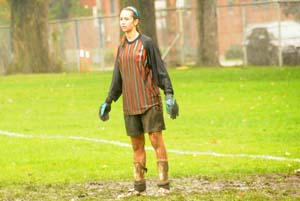
Consider a couple of situations: Last Thursday we hosted close to 300 girls from 16 schools across Canada for the national independent School U-15 Soccer tournament. Unfortunately, the rain was falling so hard it could peal paint. But our team, coached by Ms. Horobjowsky, played many games for three days under difficult conditions and persisted, despite the tough conditions. They emerged as impressive semi-finalists on Saturday. Congratulations, girls!

At the season-opener for our Senior Boys Football team, I noted that a lineman for the opposing school was a virtual giant—about 6’6” and over 250 pounds. Several of our players lined up opposite this formidable opponent and found a way to handle the physical challenge. That’s resilience!

In the classroom, there isn’t a student who hasn’t had a difficult course where they have had to use adaptive skills, persistence and patience to get through and understand the material. Again, resilience in action.

On a more personal level, whether it is a friendship lost, a romantic disappointment, or God-forbid, the loss of a family member or close family friend, we are all tested in this life in one way or another. So beyond Reading, wRiting, aRithmetic, and Respect, one of the most important attributes for success for young people to develop today is Resilience—the “capacity to spring back or rebound.”

My advice to students is keep working at becoming more flexible and adaptive. Resilience is hard to master, but it’s one of the most important qualities in coping with the curriculum of life. —Chris Shannon, Headmaster