A State of Flow

BeepTest2010_BlogI often reflect on the importance of balance in life. Regardless of age, we all revel in the opportunity to do what we like best and simply play. Play is not just the exclusive domain of children. Whether it’s involvement in athletics, hobbies, or the arts, adults love play as well. When we play, we detach somewhat from day-to-day worries and transcend into a wonderful state-of-mind that psychologists refer to as “flow.”

Researchers describe “flow” as “the state of optimal experience.” It’s the state when people report deep concentration accompanied by deep enjoyment—complete absorption in an activity. Experts remind us that when we are in a state of flow we feel strong, alert, and activity seems effortless: we’re at the peak of our abilities.

With regards to learning and education, flow is also important. It comes from the satisfaction derived from self-directed discovery, supported by a strong and natural sense of curiosity and inquiry. If you want to see flow in action, just drop by our Kindergarten playground during any recess. Watch how young children become absorbed in the freedom and magic of creative play. As we grow older, reaching a true state of flow becomes harder to achieve.

However, last Wednesday LCC was in a kind of state of institutional flow as the stars in the LCC galaxy seemed perfectly aligned. On that morning 450 students from grades 7-11 gathered on our beautiful fields for our school’s first attempt at a Guinness World Record. This was a large-scale fitness display, with hundreds completing a timed running initiative, affectionately known as the “Beep Test.” Hats off to our students as 324 were successful at meeting the fitness standard—and it looks like we’ve set a new global record. Congratulations, LCC!

That very afternoon, with the sun shining and the day warm, we enjoyed our season-ending PeeWee Football Jamboree. It was a perfect finale to the season with many parents gathered on the sidelines to watch multiple games and complete the season.

Inside our Main Building, our Junior School was elated over its costume day and a lively celebration of Halloween. The noon-hour parade of costumes was a colourful and energetic display of creativity and imagination. Middle and Senior School students also impressed with costumes later in the week.

It was fulfilling to see the LCC community in a genuine state of flow last week. Our students worked hard and showed balance in their lives. Always seeking balance, I hope to see our school reach such a visible state of flow more frequently. —Chris Shannon, Headmaster
The Wonder of Mr. Machai Viravaidya

mechai_bioI recently attended the annual Round Square international conference in Thailand along with six LCC student-delegates. This international association of 80 schools from across the globe continues to focus on key values and IDEALS we promote regularly in our school (Internationalism, Democracy, Environmentalism, Adventure, Leadership, Service). Active learning experiences such as the annual international conference connect students, teachers and administrators and open eyes to major issues and challenges far from home. In addition to a host of excellent keynote speakers, discussion groups and cultural activities, I had the opportunity to participate in two separate service days, including a memorable day connecting with young children and babies at a Thai orphanage run by the Catholic church.

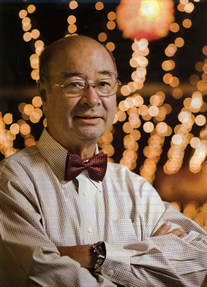
Although there is much to reflect on from this eye-opening experience, I will share my impressions of a single speaker. Mr. Machai Viravaidya is an impressive and humorous Thai man who has led an incredibly accomplished life of service and initiative, mostly dedicated to improving public health at the broadest level in Thailand. Known as Thailand’s “Condom King,” Mr. Viravaidya has spent decades distributing condoms across the country—years before it was being done widely in most countries. This was a big deal in Thailand as it is a very conservative and traditional country. He made the topic of family planning fun, distributing free board games which educated people, giving taxi drivers and police thousands of condoms to distribute to the general public and holding an annual condom blowing championship. He also started a chain of restaurants called “Cabbages and Condoms,” hoping that condoms would some day be as common as cabbages. He joked with student delegates at our conference to remember that condoms aren’t dangerous, they are what he calls useful “weapons of mass protection.”

As the founder of PDA, Thailand’s largest non-profit development association, Machai Viravaidya has played a key role in developing Thailand’s immensely successful family planning initiatives. This has led to one of the fastest reductions in birth rate anywhere in the world—falling from an annual increase of over 3% in the mid 1970’s to merely half of one percent today. During that time the average number of births per woman in Thailand fell from seven babies to less than two.

Mr. Viravaidya has also been instrumental in building Thailand’s comprehensive national HIV/AIDS prevention policies, radically reducing new HIV infections. In 2005 the World Bank estimates that these prevention measures helped save nearly 8 million lives and saved the Thai government over $18 billion in treatment costs alone. Amazing achievements resulting from one man’s vision and determination!
For his service toward improving Thailand’s public health, Mr Viravaidya has received many major awards, including the United Nations Gold Peace Medal and was acclaimed by Time Magazine as one of “Asia’s modern heroes.” Most recently he was recipient of the Bill & Melinda Gates Global Health Award and a prize called the Skoll Award for Social Entrepreneurship, with each prize having a value of $ 1 million—significant funds that he immediately put back to work fighting public health issues in Thailand.

Despite this success in family planning and fighting the spread of HIV, Mr. Viravaidya has not taken time to rest. Now he has turned to education, poverty reduction, and the promotion of creative solutions to complex problems in his country. He sees education as the key to success and has started a school called the “Mechai Pattana Bamboo School” which boasts the world’s largest geodesic bamboo dome (30 meters across), a climate change centre, a design and innovation centre, a democracy education centre, and what he calls a “Barefoot MBA and Philanthropy Academy” dedicated to teaching young Thai villagers how to make money and how to give it away. The students designed their own uniform, they sit on hiring committees for the selection of teachers, and there are no textbooks, just the Internet.

It was impressive to meet Mr. Machai Viravaidya personally and hear him speak. He is a global leader, an innovator and someone whose life motto could very well be “Non Nobis Solum.” His final message to his audience in Thailand was simple yet profound….. “If the educated and the wealthy don’t help with the world’s many problems, then who’s going to help? Go out and do something decent.” That’s a mantra we all should follow.

Check out his organization’s web site at: www.mechaifoundation.org –Chris Shannon, Headmaster

Resilience Matters

U15Soccer_2010We often speak in school about the importance of the traditional 3 R’s, Reading, wRiting and aRithmetic—core elements of every student’s curriculum. Last year I spoke to our students about a fourth “R,” Respect. This reflects the need for people to live core values that are inclusive and welcoming to all, especially in a multilingual, multicultural world. Although these four R’s are all important, as we progress well into the 21st century, I believe we now need to add a fifth “R,” Resilience.

What is resilience? The Webster dictionary defines it as the capacity to “spring back or to rebound.” I openly ask students to consider how they react to disappointment, hardship, and frustrating situations. Difficult days are an inevitable part of life. We simply never always get what we want.

Why is resilience crucial? Because life is tough, challenging and, at times, boldly unfair. As educators we must be encouraging and optimistic. But we also need to be realistic and remind students that they need to be able to adapt to all situations— both good and bad—and always find a way to emerge from tough situations with self-respect and their heads held high.

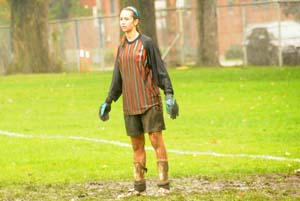
Consider a couple of situations: Last Thursday we hosted close to 300 girls from 16 schools across Canada for the national independent School U-15 Soccer tournament. Unfortunately, the rain was falling so hard it could peal paint. But our team, coached by Ms. Horobjowsky, played many games for three days under difficult conditions and persisted, despite the tough conditions. They emerged as impressive semi-finalists on Saturday. Congratulations, girls!

At the season-opener for our Senior Boys Football team, I noted that a lineman for the opposing school was a virtual giant—about 6’6” and over 250 pounds. Several of our players lined up opposite this formidable opponent and found a way to handle the physical challenge. That’s resilience!

In the classroom, there isn’t a student who hasn’t had a difficult course where they have had to use adaptive skills, persistence and patience to get through and understand the material. Again, resilience in action.

On a more personal level, whether it is a friendship lost, a romantic disappointment, or God-forbid, the loss of a family member or close family friend, we are all tested in this life in one way or another. So beyond Reading, wRiting, aRithmetic, and Respect, one of the most important attributes for success for young people to develop today is Resilience—the “capacity to spring back or rebound.”

My advice to students is keep working at becoming more flexible and adaptive. Resilience is hard to master, but it’s one of the most important qualities in coping with the curriculum of life. —Chris Shannon, Headmaster

Pay it Forward with Family Dinners

imagesI don’t know if you are aware, but at our daily lunches in the Junior School there is a significant new focus on etiquette and bringing manners back to the table. In fact, we’re so serious about this initiative, that we have sent letters to Junior School parents explaining our dining focus. Essentially, on a weekly basis, a basic element of mealtime manners will be discussed and reinforced. What a great idea!

Manners, civility and what constitutes good behaviour at the dinner table are valuable tools for all students, regardless of age. In addition to the importance of good manners, did you know that family meals are actually critical for the healthy development of all children?

With easy access to fast food, the explosion of school and community activities, and very busy parents, we are now a more fractured society than 20 years ago. In most Canadian families, both parents work, and for obvious reasons, the quick fix at suppertime makes practical sense.

However, despite the challenges of busy evening schedules, research has shown that one of the best practices for any family is to find ways to eat together on a regular basis. In fact, regular family dining is actually one of the best indicators of family unity and the development of strong parent-child bonds. In terms of teenage development, the regular family meal is one of the best routines that to be enforced in any household. Why is it so important? Mealtime is when family members share, compromise, “confess,” and learn to listen. Family legends are passed down, jokes are told, and the wider world is examined through the lens of each family’s core values. In essence, the mealtime reinforces that citizenship in a family includes certain standards and expectations beyond individual whims of children.

The most extensive and probing study on family eating patterns was published a few years ago at Columbia University in New York and was reinforced with new data this week. In both studies the results were significant. Researchers found that the more families eat together, the more the investment of time together pays dividends. In fact, with regular family meals, teenagers are less likely to smoke, drink, experiment with drugs, suffer from depression or develop eating disorders. Students who eat regularly at family dinners also do better in school, are less stressed, have better vocabularies, eat a more balanced diet, and yes, they have good table manners. In short, there are some pretty significant advantages…. all from simply breaking bread together as a family!

Note that in a world where too often we seek complex solutions to problems, the family dinner is sort of like a magic blanket. So the next time your family sits together for a meal, lose the TV and cell phones, pull up a chair, take off the ball caps, sit up straight and engage in something called conversation. It’s amazing what everyone might share and learn. Let the magic of family dining do its work!
—Chris Shannon, Headmaster

Connecting for Life

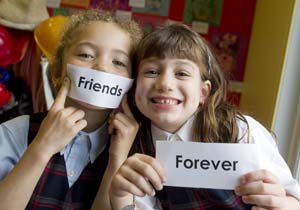
FriendsFriendships and feeling connected: among the most important aspects of the school experience and children rely heavily on their close friends during these formative years. In fact, sociologists note that the influence of peers can be even stronger than family during the teen years.

We understand the importance of students developing close relationships. It’s very normal for them to depend on friends for fun, guidance, advice, and even inspiration.

I am amazed by how LCC friendships tend to grow, blossom and carry on. In fact, endurance tends to be a notable quality of LCC friendships. They begin with sharing classroom experiences and a host of activities. Our students enjoy countless hours of social time together and share incredible stories about competitions, tournaments, and memorable field trips.

What we witness in our graduates—“young,” “old” and somewhere “in between”—is that experiences as teenagers at LCC are more than formative; they often define core friendships that last a lifetime.

This coming weekend we host our annual LCC homecoming event, LIONfest with more that 250 graduates returning to campus for dinner and festivities. At LIONfest we focus on the graduates celebrating anniversary years—10, 20, 25, 30, 40, 50 years—and they will come in large numbers, and many will travel great distances to return “home.”

In fact, our two oldest living graduates are going out of their way to attend this event as they both feel a strong connection to LCC. Both 96 years of age and from the Class of 1932, they are excited about returning to campus, to see “their school.” One is even travelling from as far away as Vancouver with his son, who is also an alumnus.

This takes the significance of friendship and connection to school to a completely different level. In addition to providing an excellent academic foundation, LCC helps students form relationships that will last a lifetime. What a great privilege for us all! —Chris Shannon, Headmaster (Pre-U ’76)