 I firmly believe that we are on the cusp of an incredible paradigm shift in education – the results of which may not be fully appreciated for decades. In the past 20 years I have witnessed incredible changes in the ways that students acquire and retain information. Technology has radically changed the ability to access and communicate ideas. It has probably also changed the way that our brains retain information and may actually impact the way that we think. I recently read an article about McMaster University and their concerns about incoming mathematics students. The university is conducting a study to find out the impact of multi-tasking on a student’s ability to focus on a problem for sufficient time to come up with a solution. At the same time, we are seeing students take far more control over their learning and produce work of an unprecedented quality.
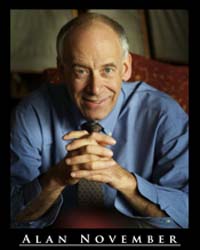
Alan November has been studying the implications of technology for years. He is an engaging speaker who can show many examples of the best uses of technology in the classroom to enhance a myriad of skills. He can also address some issues that may be raised through the use of technology in the classroom and beyond.
We are hosting a presentation by Alan November, followed by a panel discussion involving educators from across Canada, on November 12th. You may be well advised to come by and see what is happening in the modern classroom so that you can decide for yourself what the future has in store.
–Patrick Peotto, LCC Assistant Head of Academics
 Day One
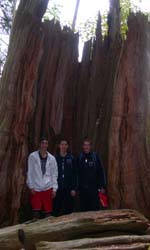
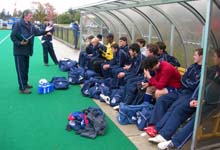
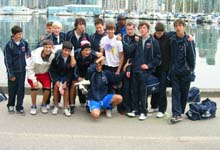 We woke to rain showers and dressed for the worst. By the time we got the the lobby it had subsided. Our first game, played on field turf at the impressive UBC sports complex versus Hillfield-Strathallan College, went very well. Approaching the game with a new alignment, we were able to make some space for our captain, Ryan Lehman, and he distributed the ball well; striker Francesco Capretti netting two goals and narrowly missing his hat trick. The final score was 4-1.
 Have you ever been randomly chosen from a circle of adults to create a monologue on the spot? Have you ever had to convey the text of a Greek myth without saying a word? Or maybe, you have been asked to create a documentary drama in two hours with a group of strangers? That was the nature of the “Power of Leadership” theatre conference that I attended in Anaheim, California, recently. Hosted by the Educational Theatre Association of America (EDTA), this professional development opportunity offered hands-on workshops ranging from commedia dell’ arte, how to create a documentary drama, Disney costuming secrets, to even a master’s class in the Michael Chekhov psychological gesture technique.
 This week in Vancouver, British Columbia, the Canadian Association of Independent Schools (CAIS) National Senior Boys Soccer Tournament takes place, hosted by St. Georges School. This is a premiere sports event for Canadian independent schools, having taken place for almost 30 years. Twenty teams from Canada’s east to west coast will be in Vancouver, host of the coming Winter Olympics, for the event.
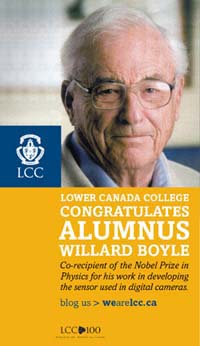 Many schools can boast producing Rhodes Scholars or Olympic athletes. But it is not often that a school has the distinction of including a Nobel laureate among the ranks of its alumni.