Mobilization of LCC Community Raises >$15K for Haiti!

logo_redcross0206On January 20, the LCC community demonstrated a deep and meaningful commitment to the Haiti crisis relief effort by raising funds for the Red Cross. While the students enjoyed a day of free dress, it also reminded everyone of our good fortune and the importance of helping others.

Collectively, the students, staff and parents raised an amazing total that exceeds $15,000! Thank you to the 10 LCC families who matched the donations raised by their children’s classes. An additional $3,300 was donated through the generosity of the parent matching initiative.

The students certainly rose to the occasion as LCC stories have emerged of touching generosity. One grade 5 boy physically broke open his piggy bank to donate what he could on a very personal level. Student driven fundraising initiatives will continue and we will keep you posted of these efforts.

We extend our deepest sympathy, support and greatest hope to the people of Haiti.

Non Nobis Solum

— Christopher Shannon, Headmaster

The 21st Century and Brain Development

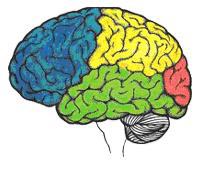
BrainDevelopmentIt is easy to denigrate traditional teaching techniques in our high tech world where all of the talk is focused on the global economy and 21st century learning skills. When we can set up video conferences with students from the other side of the world, people wonder why we would spend our time on multiplication tables or on reading novels written decades ago. We make the assumption that some of the vestiges of our schooling memories will not cut it in the 21st century classroom where skills such as critical thinking, problem solving, cooperative learning and the ability to empathize with different cultures and people, are stressed. While education must change to adjust to the new demands of our changing world, some skills are timeless and excellent educators have been stressing them for years. Current research is also showing that some mundane practices, such as rudimentary math calculations, may engage more of the brain than complex video games. It is also showing that sustained concentration on a difficult task allows us the ability to focus and problem solve better than does flittering from task-to-task.

The brain is still a largely undiscovered country. Scientists are only beginning to unlock the secrets of how our brains function and develop. Recent research is showing, however, that certain activities can stimulate the brain to grow and prosper, very much like exercise can help our muscles to develop. We are also learning that sustained reading, solving math equations and stimulating conversation can be much more effective for the development of brain “fitness” than other 21st century activities.

The implications for educators are interesting. We must be certain to use the traditional, somewhat more mundane practices when they will help to develop the brain and mental fitness. This might not always be a popular or entertaining choice, but it is one that will benefit the student in the long run. We must also interject the 21st century applications to stimulate higher order thinking and problem solving skills.

My high school history teacher liked to remind us that the only constant in history is change. The trick for educators is embracing the changes that are beneficial because not all change is for the better. We also need to maintain those practices, no matter how difficult they may seem, that develop the fundamental skills needed to allow higher order thought and expression. This is not an easy task. At Lower Canada College professional development, the sharing of ideas and discussions about current research are key elements of our culture. It is only through life-long learning that we can assure that we are keeping the intellectual needs of our students at the forefront. —Patrick Peotto, Assistant Head – Academics

Hardships Make You Realize Your Good Fortune

15-480x349The drama of the real world came crashing into our living rooms this past week with the earthquake that occurred in Haiti. The human calamity we have all witnessed on our TV’s as people have desperately tried to cope with the aftermath of such a devastating natural disaster hardly seems believable.

The scenes of devastation have moved Canadians, and citizens of the world are responding to what is both an infrastructure and human crisis. It’s almost impossible to fully appreciate the breadth of the challenges that poor, small island nation is currently facing.

My personal connection to, and appreciation for, large scale human tragedy came in the winter of 1980. As a young university graduate I travelled to Southeast Asia a few years after the end of the Vietnam War. After that terrible conflict, a civil war erupted in Cambodia.

In the late 1970s a vicious dictator by the name of Pol Pot initiated a holocaust against all educated Cambodians with a bizarre quest to erase all western influences and return to year zero (i.e., a return to a completely agricultural society). A civil war erupted and some two million Cambodians perished in one of the worst holocausts of the 20th century. Unfortunately, Pol Pot intentionally and systematically tried to eliminate anyone with education or who represented imported western or European values.

I was amazed by what I had read and travelled with a friend to see the aftermath of this with my own eyes. In a massive UN refugee camp on the Thailand/Cambodia border, I saw tens of thousands of displaced people—teachers, artists, scientists, engineers, children—all seeking sanctuary and safety. What a shock and a challenge for a young Canadian who had only known a life of safety, opportunity and order.

I will never forget the extraordinary deprivation those people faced. There were thousands living under plastic tarps, seeking shelter from the burning mid-day sun. They had nowhere to go and were powerless. In fact, I have kept a photo of a special feeding centre for new mothers from the camp in my office for the past 25 years—a concrete reminder of coming face-to-face with disaster for the first time.

But it was the hope, optimism and creativity in the Cambodian refugees that surprised me and impressed me the most. Picture this: a number of dancers from the Royal Cambodian ballet had survived the Pol Pot holocaust. To fend off crushing boredom, they practiced their skills every day in the UN refugee camp.

I ended up there under the guise of being a young Canadian journalist. The dancers insisted that my friend and I watch them perform. They simply wanted an audience… so they got us—two young Canadians wondering how we could ease their frustration.

As we watched them perform I have never felt more humble. It taught me about the power of talent, community and hope displayed by all the Cambodians, even in the face of desperation. As I left the camp I reflected on the many privileges we all share as Canadians.

Today again I am again reminded that Canadians are some of the most fortunate people in the world. It’s time to look to our brothers and sisters in Haiti and share our compassion and generosity. Reach out and help today. People are desperate and you have the power to help. Don’t miss the opportunity. — Headmaster Chris Shannon
Decade Dialectics

Every January I struggle with the change of year—and in a very practical way. It takes me a while to adapt to the change from the previous year. I have already made a lot of mistakes and wasted a lot of cheques and have written “2009” on several notepads and documents wherever I needed the date. This year has been especially difficult for me as we have not simply jumped another digit, but moved to 2010—the end of the decade.

blogEnd of decades bring on some curious developments. Think about it, music is constantly referred to by the decade. There are entire stations on satellite and local radio dedicated to 60s, 70s, 80s, and 90s classics. Social trends are also attributed to specific decades. We like to classify things this way; hippies and the rise of feminism during the 60s is a perfect example of this tendency. A decade reflects a neat and tidy period, and analysts like to compartmentalize specific trends, developments and orientations.

textingThis past weekend I read about a conference of language experts in the USA who gathered to determine the most important new words from the past decade. The sponsoring organization is called the American Dialect Society and is composed of leading linguists, writers and independent scholars. Yes, language does evolve and change. In fact through teenagers’ current addiction to texting at an extraordinary rate, young people are actually influencing the English language more dramatically and more rapidly than at any time in history, especially when it comes to the use of new abbreviations for words.

Consider for a moment the conference on new words. Can you think of what some of the most popular new words were from the past ten years that crept into common use? Finalists included words we have all incorporated into our vocabularies, but actually didn’t exist a decade ago. They include: “green” – in terms of the green movement for protecting our environment and the greening of buildings, institutions and companies. The terms “9/11” and “War on Terror” became common after the attacks on the twin towers in New York in 2001. Two others referred to popular activities driven by technology: to “blog,” and to “text.” Amazingly, no one did it only a decade ago, so those words were finalists. The big winner was the verb “To google”……with millions of searches on that particular search engine reflecting the biggest societal change from a decade ago.

So America’s foremost language experts have reminded us that three main developments in the past decade are particularly notable: (1) the growth of the environmental movement; (2) the aftermath of 9/11 and the birth of a new extremism (especially since the end of the Cold War between the USA & the USSR); and (3) the impact of rapidly-changing technology in the information age.

To google is to find answers almost instantly on virtually any topic. It’s fantastic, really, but I offer two warnings. Is googling making us lazy and impatient? In many ways I think so. We are so used to instant responses to our searches, what’s the impact on the other areas of our lives where the answers aren’t as instant, where we need to invest time, be thoughtful and show patience. I think the rush is a problem and we need to admit it and take steps to counter what could be the decade of impatience in the next ten years. Second, don’t be duped by the first answers you receive when you search online. The best information may be layers below the top pages of a Google search – those that rise to the top often pay for that privilege. It’s how Google makes such an obscene profit every year. It may not always be the best information for your purposes.

So what will be the new words that define new trends and developments a decade from today? If neither you nor I are here, just text me to offer your selections….. if text still exists. I doubt it will. Ten years from now it will probably be seen as ancient technology —so passé, so yesterday! —Christopher Shannon, Headmaster

Starting the New Year on the Right Foot

new-years-resolution-appleIt’s a new year, a new decade and the beginning of LCC’s second century.

The past year was notable for a number of developments: the capacity of a Canadian minority government to maintain power, our ongoing war with insurgents in Afghanistan, the election of Obama in the USA, the global economic recession, the threat of the H1N1 flu, the 20th anniversary of the collapse of the Berlin Wall, the effort to address climate change at the Copenhagen Conference in December, and the sudden death of celebrities like Michael Jackson.

We also all smiled when we first saw the YouTube video of the talented, but modest, British singer Susan Boyle on the British Idol show, and the Royal Bank of Canada just revealed that Canadians recently surveyed are also smiling and hopeful about the economy and life in general in 2010. Likewise, south of the border three out of four Americans surveyed have similar views for the coming year.

How about life at LCC? We have wrapped up a full century of achievement. We have matured into a modern coed school where young men and women work together and collaborate in a respectful manner. Students benefit from committed teachers and outstanding facilities and resources. We all have much to be thankful for.

But as a teenager, the adults at LCC understand not everything is easy, the pathway is not always self-evident or without hurdles. Nonetheless, it is important for our students to get involved, try new things, take risks, be creative, and evolve as young leaders. They should reach beyond their personal comfort zones, for in the process, they will grow, mature, learn and discover their hidden potential in all areas of school life.

Case in point: I commend our House Heads and all LCC students for embracing the spirit of Non Nobis Solum in December when they more than tripled the number of boxes of food gathered for the needy in Montreal compared to last year at this time – collecting an impressive 70 boxes. Great work – I am very proud of this initiative and the empathy demonstrated for others less fortunate than us. Bottle that same spirit, and let’s use it to feed the appetite of student initiatives for the balance of the school year.

The start of a new calendar year is a good time to be honest with yourself. Are you fully engaged? Can you do better in some courses? What new activity can you try? 2010 offers a host of possibilities for every student. Do your best – set reasonable goals, seek the help of the ample support available at LCC, be engaged, strive to improve, and 2010 will surely be memorable and productive. — Headmaster Christopher Shannon