Into the Light of Day

MediaExpo2010_WebLast Saturday morning a bright light pierced through dark rain clouds that hovered over Royal Avenue. It was the light of creativity and innovation beaming from one of LCC’s “lighthouse programs”—applied digital media. We held our first Digital Media Expo, an event for the general public and our own extended community.

In recent years, LCC has developed a strong integrated approach to information technology. This begins in our primary years and continues with a well-supported laptop program in the Middle and Senior Schools. The focus is not on equipment and hardware, but how these tools can be applied to unlock the creative energy of our students.

I was very impressed by the work of our students on Saturday morning, which included: video production, green screen applications, integration of special effects, and useful musical software for sound production and refinement of instrumental skills. Our students were proud, energetic and completely engaged.

It may have been a dark and dreary day outside. However, there was a powerful and positive buzz inside the Webster Learning Centre on Royal Avenue. It is exciting to know that this energy begins with LCC teachers in our classrooms and is inspiring students to reach new heights using wonderful facilities and modern tools—the advantages of 21st century learning. — Chris Shannon, Headmaster

Conférence sur le bilinguisme

imagesVoici des commentaires d’élèves qui ont participé à la conférence sur le bilinguisme dans les écoles du QAIS, le 29 avril, 2010.

J’ai aimé la conférence sur le bilinguisme car c’était intéressant d’entendre les histoires des anciens étudiants. Ils ont dit que c’est très important de continuer le français après l’école secondaire car les langues aident tout le monde à communiquer et à s’exprimer avec plusieurs personnes du monde entier. Je suis d’accord avec ce message et je vais continuer de parler le français pour le restant de ma vie! —Alexandra Bélanger, 10e programme accéléré

Je crois que la conférence était d’une importance capitale pour ma perception de la coexistence des langues française et anglaise au Québec. Je sais maintenant qu’il est primordial de savoir et de maîtriser les deux langues et de ne pas passer trop de temps sans pratiquer l’une des deux. Aussi, j’ai découvert qu’être bilingue n’est pas si exceptionnel qu’on pourrait le croire. —Benjamin Dawson, 10e programme accéléré

Je suis très heureuse d’avoir eu la chance d’aller à la conférence sur le bilinguisme. Je pense que cette expérience m’a vraiment aidée à réaliser que maîtriser plusieurs langues est très important dans la vie. —Gabrielle Gendron, 10e programme accéléré

Bilingualism to Multilingualism

multilingualismLast week, the downtown QAIS schools (Quebec Association of Independent Schools) held a special conference entitled “Le Fait Français,” a celebration the high quality of French taught in our independent school system. It was an impressive collection of speakers: experienced teachers, alumni, community members and the former Premier of Quebec, Pierre-Marc Johnston.

All presenters spoke about the critical importance of French fluency in Quebec. It is an essential for day-to-day life and success in professional careers. We were reminded that outside Quebec there are some 65 countries around the world who are members of “La Francophonie,” so French competence also has its use well beyond the borders of our own province.

What resonated most with me were the comments from an LCC graduate. Amrick Bansal ’98 is a young lawyer who practices in Montreal. He recounted how he was in Advanced French at LCC and felt pretty confident about his language skills when he graduated. After college and university education in English in Montreal, he felt that his French skills had declined somewhat. He decided to remedy this by attending law school in French at l’Université de Montréal. The nuances of language made this a challenging, yet satisfying, experience. Mr. Bansal solidified his French skills by spending a full year of legal studies at a university in France. Proud with his achievement at refining his French fluency, Mr. Bansal then spent a year at university in Holland, completing a graduate certificate in international law. However, upon arrival he noted that that most of his classmates from Europe and around the world arrived with the capacity to confidently speak four or five languages.

The important message here is that bilingualism is essential for all of us in Montreal. However, in an interconnected world with the domination of global forces, the knowledge of multiple languages is what most young people should strive for to gain a competitive edge. Bilingualism is a necessity, but multilingualism is what we all should aim for. I hope you have already begun to broaden your linguistic fluency.—Chris Shannon, Headmaster

Student Exchange SA: Exploring Cape Town

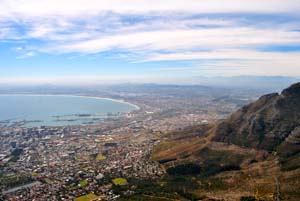
Capetown1After a short two-hour flight, we arrived in Cape Town where we would spend five days touring the city and its surroundings.

The first day, we took the cable car up Table Mountain and had the chance to see amazing views of the city. From the lookout, we were able to see Robben Island, where Nelson Mandela was imprisoned, the Cape of Good Hope, the southernmost point of Africa and even the new soccer stadium that is being used for the upcoming FIFA World Cup Tournament.

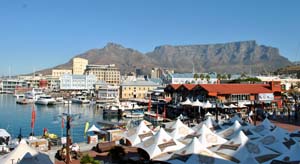
The following day, we drove along the coast of the Cape and stopped at the Victoria and Alfred Waterfront, one of the main working harbors of Cape Town, and wandered through the many shops and historic streets.

Capetown2Next, we drove to Stellenbosch, the second oldest European settlement in the province after Cape Town. While we were there, we saw many vineyards, as Stellenbosch is the center of the South African wine industry and even the site of the first school in South Africa that accepted girls!

The next few days were spent exploring the rest of the city and parts of the Western Cape. —Emily Black

Celebrating our Planet Earth

EarthWeekAnother year has passed since our last Earth Day and Environment Week at LCC. Unfortunately, on the global scale it’s easy to feel gloomy about the general state of the environment. Climate change is a huge topic, and while politicians around the world debate the issues—as they did at the Copenhagen Conference last December and only implement minimal change—we all ask, what is really being achieved?

I believe that at the grassroots level, people are more aware that the environment matters. Individuals, not governments are making a difference. People are more responsible and accountable, not because they have to, but because they want to.

How about within our own school community? Have we made progress by reducing our footprint and becoming greener? Are we building a more sustainable school?

I am proud that we have made a number of advances. Yet, I will be the first to assert that we have yet to develop broad universal “buy-in” and consciousness. For too many people in our school community, environmental changes remain only skin deep. More effort is still required to embed sustainable practices into our daily lives.

We have made achievements and some notable progress. Consider the following:
 We have made the environment and sustainability one of the seven pillars of our school’s current strategic plan.

 We have significantly reduced our energy consumption at the school in recent years thanks to some initiatives we implemented three years ago.

 Under the leadership of Ms. Scattolin and Mr. Olive, the LCC Green Team and a host of students have made notable changes including implementing a composting program.

 Our Sustainability Committee, made up of student, faculty, and Board representatives meet regularly outside of class time to consider new directions for our school.

 We have developed a Sustainability Mission Statement that will soon be endorsed by our Board and will define school practices well into the future.

 Our Board has made a commitment to build a sustainable green “Learning Commons” and we are aiming to construct a gold LEED-standard building.

 The environmental curriculum has been enhanced for students and interesting activities are available beyond the classroom.

 Creative and engaging “environmental video minutes” have been presented at school assemblies.

 Our focus has been on initiative and change, not window-dressing.

Clearly, LCC has made an open commitment to become a greener and sustainable school. The rest is really up to our students. At assembly this week, I was direct and asked students from grades 7 to 11 if they cared. Is environmental progress something they see as important or do they see it as someone else’s responsibility? Will more leaders emerge from our student body, or will students simply accept bad habits that we know we cannot sustain? What is our students’ vision of environmental management, as it will likely be the defining issue of their adult lives?

These are difficult questions. I hope we address them head on in the coming year. In the interim, remember that this is Earth Week and the importance of celebrating all the elements that make up our very fine planet. The other evening I left school following a short, light rain shower that had refreshed our now green fields. The smell of the dirt and the grass was fantastic; a reminder of how quickly the natural world adapts from a barren, Montreal snow-covered winter. Miraculously, our fields develop into the beautiful natural green space our school community enjoys from spring to fall.

This week, I hope you will participate in some of our Earth Week activities. I also hope you will find time to connect with nature and remember how blessed we are in Canada with so much open space and exceptional natural beauty. We all have to accept responsibility for stewarding what native Canadians have always called “Mother Earth.” Let’s all care for her with passion and a true sense of responsibility. —Chris Shannon, Headmaster