Organ Donations

I saw both courage and hope speak passionately before a large audience the other day. One of our graduating students, who was the lucky recipient of a liver transplant in 2009, addressed our assembly of Middle and Senior School students. She explained how fortunate she was to receive a new organ after a difficult 10-month wait. Her surgeon, Dr. Lallier from Hôpital St. Justine, also gave a broad overview of the topic of transplants in Quebec. He reminded us that there are never enough organs available to people in need. In fact the gap is quite striking – only about one in ten patients are able to receive an organ in a timely fashion and, unfortunately, dozens die in Quebec every year while waiting for a final lease on life.

There’s a simple solution to the organ supply problem. More of us should sign an organ donation sticker and place it on the back of our Medicare card. It authorizes medical officials to use our organs at the time of our death. It is a unique way to give life and provide a lasting legacy.
I was inspired by today’s presentation and will definitely be a donor some day. Maybe you should too.

For more information, visit www.quebec-transplant.qc.ca

Non Nobis Solum

—Chris Shannon, Headmaster

Corvée du Mont-Royal

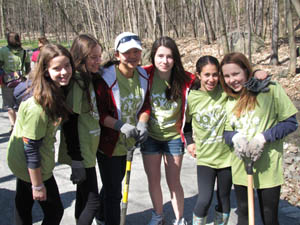
Corvee2011_BlogImageAfin de souligner l’année internationale des forêts, les élèves du Middle School ont décidé de participer à la 20e édition de la corvée du Mont-Royal. À 8h30, tout le monde était au rendez-vous et, pendant toute la matinée, les élèves ont planté, planté, planté…
Photos

    Planter des arbres au Mont-Royal était très amusant, on a travaillé pour le service communautaire et on a passé une bonne journée. Je voudrais faire ce type d’activité encore une fois. Cela a ouvert mes yeux sur le monde et sur les changements que je peux faire pour aider l’environnement.
    —Arielle Shiri ’14

    Mon expérience au Mont-Royal a été une tonne de plaisir. Quand nous sommes arrivés, un groupe de personnes a parlé de l’importance de planter des arbres. Ensuite, en groupes, nous avons eu du matériel et des t-shirts. Nous avons ensuite creusé des trous et planté de jeunes arbres qui deviendront grands. J’ai eu beaucoup de plaisir et j’aimerais le refaire.
    —Samantha Adessky ’14

    Planter des arbres au Mont-Royal était une expérience que je n’oublierai jamais. Maintenant chaque fois que j’irai là-bas, je pourrais dire à mes amis « Voyez-vous cet arbre ici? C’est moi qui l’ai planté ». Rien que ça est assez pour dire que c’était une bonne expérience.
    —Matthew Kaspy ’14

    Planter des arbres pour la fondation “les amis de la montagne” était une expérience que je ne vais pas oublier. Une pelle dans une main et un sceau dans l’autre, nous avons planté toute la matinée.
    —Montana Black ’14

    L’expérience au Mont-Royal était très amusante! Premièrement, j’ai fait beaucoup d’exercices en montant et en descendant la montagne! Je n’avais jamais planté d’arbres de ma vie. Je suis très heureuse d’avoir pu faire une différence dans la communauté et de la rendre plus belle! J’espère qu’il y aura beaucoup d’autres activités comme ça à l’avenir.
    —Kaitlin Markus ’14

    C’était un matin chaud, le soleil brillait, une journée parfaite pour planter des arbres. Quand nous sommes arrivés, la guide nous a montré comment faire. Après, nous nous sommes mis au travail. À la fin, nous étions fiers de notre travail.
    —David Rosenberg ’14

    Pour moi, planter des arbres était une nouvelle chose et je ne pouvais pas être plus heureuse avec ma première expérience. Tout était très bien organisé et que les instructions étaient très claires. Notre guide a été très gentille et elle m’a énormément aidée. Elle m’a donné le goût de planter d’autres arbres.
    —Stephanie Shannon ’14

    J’ai vraiment apprécié planter des arbres. C’était la première fois et ce fut une bonne expérience. C’était une bonne journée pour cette activité. Je suis impatiente de retourner au Mont-Royal pour voir les beaux arbres que nous, en tant que groupe, avons plantés ensemble.
    —Jaclyn Lavy ’14

    Cette expérience m’a fait du bien. C’était ma deuxième visite à la montagne pour travailler au service communautaire et c’était aussi satisfaisant que la première fois. Je sentais que je faisais vraiment quelque chose de bien et qui faisait une différence. Cela m’a permis d’apprécier la nature et l’environnement. Planter juste un arbre était beaucoup de travail mais j’en ai planté 4 avec l’aide de ma partenaire, Julianna. Je le referai encore si j’avais la chance. —Stephany Hwang ’14

    À lire:
    Corvée du Mont-Royal 2011

    À regarder (film et photos):
    Des forêts et des hommes par Goodplanet.org

Toward a Sustainable World

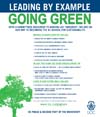
LCC_GoingGreenIt’s Environment/Earth Week at LCC. Although we have taken a lot of steps in recent years to be a more sustainable school, we can always do more. We have diminished our impact on our environment by changing a lot of our buildings’ systems and infrastructure: we installed high efficiency furnaces and new generation fluorescent lighting, upgraded ventilation systems, limited water waste, planted trees and added an urban tree garden. In addition, student learning now has a more pronounced focus on sustainability.

Last fall our Board of Governors published a Sustainability Commitment. Our student Green Team promotes sustainable practices at school and in our homes, and faculty and staff sit on a sustainability committee. This is all in an effort to raise awareness and find ways to make LCC a greener school.
As a large and complex organization, LCC seems to be on solid footing when it comes to diminishing its impact on our precious environment. Perhaps the biggest challenge to changing wasteful and harmful habits is not institutional, but personal. David Suzuki publishes a Top Ten list of ways to make a positive impact on our shared environment. However, expecting people to make ten changes is probably too many. So how about just three? Anyone can do these:

1. Walk, bike or take public transit more often.
2. Manage your trash better and recycle more efficiently.
3. Eat more locally grown foods.

If enough people made just these three changes, our environment would surely benefit.

As they say, ”Rome wasn’t built in a day” and “climbing any mountain begins with a single step.” So however minor, decide what you can really handle. Commit to making some positive changes and before you know it, you will likely want to do more. –Chris Shannon, Headmaster

DQ 2011: Broadening our Montreal Perspectives

DQ_SiglerBlog_18Apr2011The coming of April brings about a shift in the overall mentality of students, and the city as a whole. Snow is melting, sun is shining, the Habs are battling it out in the playoffs, and it’s time to re-discover the wonders of the outside world. The increasingly pleasant weather evokes a dormant passion in us all to explore new ideas, and how better to kick it off than LCC’s 12th annual Destiny Quebec conference: an event for Montreal youth to discuss pertinent issues and current events.

In recent years, our committee has oriented itself towards global and environmental themes such as “A World Without Oil” and the eminent global water crisis. This year however, we chose to go with something a little closer to home. We elected to focus on a most beautiful and cosmopolitan city: Montréal.
Over the course of the one-day conference, which took place on April 12, we sought to explore the various facets of our city’s unique character, and speculate on how it will evolve with increased immigration, globalization, and population. As the city faces challenges and changes in the years to come, our goal was to broaden the delegates’ understanding of, appreciation for, and responsibility to the city that we will one day inherit.

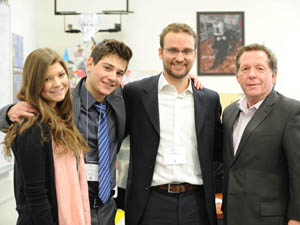
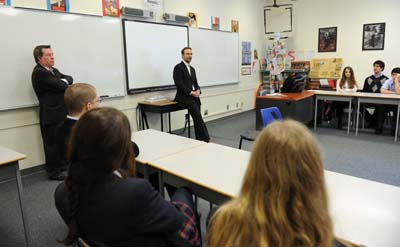
The day began with a small reception hosted by our headmaster, where my co-chair Kasha and I had the pleasure of meeting with several of the seminar speakers before the conference began. Our keynote speaker, Mr. Alexandre Trudeau, kicked things off with our opening assembly, where Senior School students and other delegates gathered. Mr. Trudeau’s remarks were highly engaging as he took us through the history of Montreal and emphasized how the city has always preserved a diverse, accepting, and multi-cultural identity. He concluded by asserting that Montreal will continue to develop and flourish as Canada’s most cosmopolitan city and lead the way towards a progressive and innovative future.

Following the general assembly the delegates broke off into five different seminar sessions led by 10 different thought-provoking speakers, covering a wide array of topics: business/economy, public/social institutions, infrastructure, culture and festivals.

After two hours of discussion in our smaller groups, we gathered in the WLAC (Webster Learning Activity Centre) for a break and to share ideas. It did not take long for us to realize that everyone had been inspired by their seminar discussions. Disagreement on certain political issues sparked an intense debate between Mr. Patrick Cigana, Director of “Projet Montreal,” and Professor Saeed Mirza of McGill University concerning Montreal’s infrastructure problems. The former CEOs of Alcan and Positron, two of Canada’s biggest industries over the last decades, used their acquired wisdom to lead an exceptional “Business” seminar. Messrs. Culver and Weiser had some stiff competition however, as students laughed up a storm with the Just for Laughs Chief Operating Officer, Bruce Hills, and explored Montreal’s arts & music scene with retired teacher and prolific musician, George Doxas, in the “Festivals” seminar.
Other delegates were able to travel through the world of Montreal’s sports with former Expos commentator and journalist Rodger Brulotte, and enhance their perspectives on Montreal’s situation as compared to rest of the world with Mr. Trudeau’s extensive worldly experiences and knowledge in our “Culture” discussion. The remainder of the conference attendees talked about the future of our great city’s academic and social infrastructure, as well as public works projects such as the new MUHC with the Director of Marionopolis College, Len Even, and local urban planner, Mélanie Veilleux.

Refreshed yet stimulated by the break, the delegates broke off into their second block of seminars. Discussions were even more intense than the first set of seminars as the delegates and speakers eased into the rhythm of the conference.

Closing presentations took place at 2 pm in the Chamandy Auditorium where we listened to LCC alumni John Christou ’95 and Alec Mathewson ’95 break down Montreal’s film industry with great enthusiasm. They explained the difference between independent and unionized filmmaking, and elaborated on the process of movie production as a whole. Mostly, they described the challenges and perseverance that their profession requires, and emphasized the diversity in style and concentration of creativity that our city proudly houses.

After their presentation had finished and the closing address was made, delegates said their goodbyes and poured onto Royal Avenue with somewhat different perspectives from when they arrived earlier in the day. They were more sensitive to Montreal’s opportunities, challenges and needs. At the conference end, we encouraged the delegates to make the best of their newly acquired knowledge by embracing their respective roles as citizens of Montreal.
As we look forward, and with the anticipated drop in Montreal’s English population, it is our generation’s duty to preserve Montreal’s cosmopolitan heritage and keep it on course towards a better tomorrow. This DQ conference took a small step in ensuring that today’s youth are on track to do just that (photos). — Greg Sigler ’11, Co-Chair, Destiny Quebec 2011

Pondering the Future of Montreal @ LCC

What’s the future of Montreal? This was the focus of this year’s annual Destiny Quebec student leadership conference held this week at LCC. What an excellent topic for those of us who live in this great city. (view gallery)

DQ2011_28Congratulations to DQ 2011 student Co-Chairs Kasha Bonneville ’11 and Greg Sigler ’11 who guided an enthusiastic committee of student leaders. After months of planning, students investigated this question with visiting experts. This was done through the lens of our aging infrastructure, evolving university and health care institutions, the vibrancy of Montreal’s culture, and emerging areas of economic challenge and leadership in the city.

Keynote speaker Alexandre Trudeau presented a fascinating perspective to all Senior School students and visiting delegates. He noted that in Montreal – and indeed everywhere in the West – we need to be aware of the challenges emerging from new economic superpowers China and India. We need to respond with innovation. In Mr. Trudeau’s words, our future success is dependent on being “flexible, tolerant and imaginative.” I know our students are up to the challenge and will emerge as confident leaders who will steward Montreal into the future with care. –Chris Shannon, Headmaster