
 The evidence is everywhere: a social tsunami is having a major impact all across North America and things will surely never be the same anywhere.
I am talking about the extraordinary impact on the North American workplace since the so-called Harvey Weinstein scandal. Clearly, as an influential Hollywood film producer, Weinstein took advantage of his powerful position to make inappropriate sexual advances toward young actresses trying to get a break in the film industry. Everyone seemed to reluctantly accept this as the way Hollywood worked. However, dozens of courageous women came forward and shone a bright light on Weinstein’s unacceptable behaviour. The evidence mounted to the point that the board of his own film company fired him and, quite appropriately, his reputation has been permanently stained.
Along with Harvey Weinstein’s fall from grace, many other powerful men have been impacted: several senior corporate figures, Matt Lauer, host of the Today Show, Charlie Rose and Bill O’Reilly, once respected TV hosts and interviewers, and several senior American and Canadian public figures and politicians have all been held accountable. Even the American president has been accused of inappropriate behaviour toward women. And whether he likes it or not, no one is above reproach. Men in positions of power are falling from their perches of influence all across North America.
In Canada, women from all walks of life and all sectors of our economy are also coming forward to say no to inappropriate sexual comments, overt sexual harassment and even sexual assault.
The #MeToo movement is truly a tsunami that includes the voices of women who are actresses, politicians, lawyers, waitresses, police officers, teachers and many other professionals. Essentially, women are grabbing the opportunity to come together and be heard all across the continent. According to many writers and social commentators, this seems to be a “watershed moment.”
This was reinforced in December when Time magazine named its person of the year for 2017. Rather than a single person, Time singled out what it calls “the silence-breakers” – women who had the courage to launch a broad social movement. In that article, the Time staff writes:
“This reckoning appears to have sprung up overnight, but has actually been simmering for years, decades, centuries. Women have had it with bosses and co-workers who not only cross boundaries, but don’t even seem to know they exist. They’ve had it with men who use their power. These silence-breakers have started a revolution of refusal.”
So what does this social tsunami mean for our students, especially the teenagers? Well, first they need to be aware of it and come to their own conclusions about its impact on society at large. But in terms of day-to-day life, I believe all this is an important reminder about the need for civility between all people. Despite enormous gains for women in the past fifty years in the workplace, at universities, in professions, it tells us that true and complete equity has still not been forged. For me, it reinforces the significant importance of our coed learning environment that we should never take for granted. This is where our students establish their foundations, values and norms. LCC is quite intentionally a coed school for a coed world with boys and girls working shoulder-to-shoulder, equal in every way. Respect between girls and boys as peers, as equals, is not simply something we talk about. Our students live it; it is fundamental to their daily reality. Establishing an environment of true equity is a critical part of what we do in our learning community.
I am not naïve and do not believe that boys and girls are in agreement all the time any more than different personalities (male or female) are always inclined to agree. However, I believe quite deeply that the two genders supporting, challenging and living together, is the best environment for learning and, during the formative teen years, provides real-world experiences that are meaningful. I assert that true equity and true respect begin with our expectations and daily habits and norms right here and, thankfully, these are reinforced day in and day out by passionate educators. For this reason, there is enormous value in this coed learning environment that our students will carry with them decades beyond life at LCC.
This situation, this social tsunami, has no formal name, but courageous women have given it a voice. Whether it’s #MeToo or #Time’sUp, this movement for greater gender equity and justice is a long overdue phenomenon, one that I’ve openly asked our high school students to discuss in classes, advisories and at our lunch tables. They are the young people who will define and help to build a better LCC and a better Canada. So let’s be proactive and talk about this issue and solidly build on our community’s commitment to a core platform of respect for all.
Think about this and how together we can build an ongoing and meaningful conversation about equity and social justice for girls and boys, women and men, as peers and advocates. What a great New Year’s resolution for 2018! – Christopher Shannon (Pre-U ’76), Headmaster
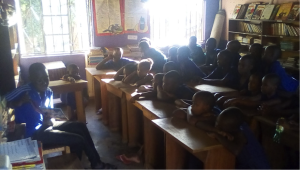 This past summer, I went to Uganda, a country in Africa that is about a 20-hour flight from Canada. While there, I volunteered at my grandmother’s school – Namutebi Nkata Nursery and Primary School – as part of my Duke of Edinburgh service hours.
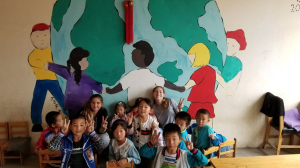 Last summer, I travelled to China on a trip organized by Me to We, a non-governmental organization which helps create sustainable change by transforming local and global communities. J’ai voyagé avec sept autres étudiants autour de mon âge venant de Montréal et New York, ainsi que deux animateurs de Me to We. From my past experiences at the Round Square conference in Argentina last year, as well as volunteering in the local community, I was always interested in community service. However, I can honestly tell you that this trip changed my life.
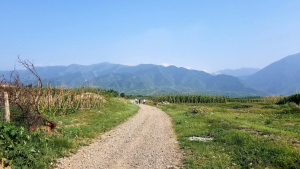 Nous avons passé nos premiers jours à Beijing en visitant des sites bien connus, tels que Tiananmen Square, des temples Buddistes, et nous avons même monté la Grande Muraille de Chine! Nous avons ensuite conduit pendant plus de six heures à une communauté rurale, Gufubao. It was a relief to finally be away from the pollution and smog of Beijing, and beautiful is not a good enough word to describe where we were. Nous étions complètement entourés d’énormes montagnes et des champs de maïs. It was really amazing for us to meet the kind locals, who take great pride in their natural environment, regardless of the extreme poverty that they live in. In addition, they always ensure that their environment is being taken care of, by being cautious of how much water and food they consume, as well as constantly making sure that their agriculture is properly cultivated and protected. Some locals even took us on hikes around the community, where we saw some unbelievable views.
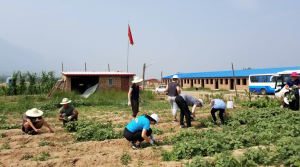 Pendant dix jours, nous avons enseigné l’anglais à des enfants défavorisés, et nous avons travaillé sur la construction d’un enclos pour des cochons, la première source de revenue pour la communauté. L’école était un bâtiment de briques avec trois salles de classe et un petit terrain de jeu dehors, les deux construits par Me to We. Lorsque nous sommes arrivés, nous avons été accueillis par une cinquantaine d’élèves, âgés entre cinq et 12 ans, qui étaient très contents de nous voir. Since it was July, all of these students were in the middle of their summer holiday, so you would think that going to school in 40 degree weather for the entire day was not exactly what they wanted to do, right? Wrong. These kids were more than happy to do so. Puisque les enfants parlaient très peu d’anglais, ils étaient très excités de nous montrer qu’ils pouvaient compter de un à 10, et qu’ils connaissaient les couleurs de l’arc-en-ciel.
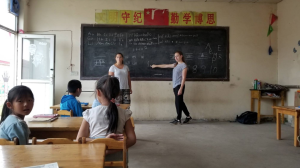 Why did I choose to write about teaching English to students in China? Well, we later learned that only 1% of students who have attended the school in Gufubao go on to university. That’s only seven or eight students at LCC progressing to CEGEP or college. Think about that for a second: all of the hard work that we put into our studies every day would only pay off for seven or eight of us in the Junior, Middle and Senior Schools combined!
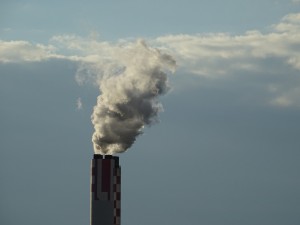 Returning to Montreal by car recently from a weekend out of town, I was disappointed to hear that our city was cloaked in an official smog warning. Many of us may be inclined to associate smog with summer heat and visible thick, orange haze. However, Montreal actually experiences more smog alerts during late fall and winter than we do during the summer. This is because of a combination of heavy cold air and light winds that trap pollution close to the ground.
 In October, I had the privilege of being one of over a thousand student and adult delegates at the Round Square International Conference in Cape Town, South Africa.