 It is easy to denigrate traditional teaching techniques in our high tech world where all of the talk is focused on the global economy and 21st century learning skills. When we can set up video conferences with students from the other side of the world, people wonder why we would spend our time on multiplication tables or on reading novels written decades ago. We make the assumption that some of the vestiges of our schooling memories will not cut it in the 21st century classroom where skills such as critical thinking, problem solving, cooperative learning and the ability to empathize with different cultures and people, are stressed. While education must change to adjust to the new demands of our changing world, some skills are timeless and excellent educators have been stressing them for years. Current research is also showing that some mundane practices, such as rudimentary math calculations, may engage more of the brain than complex video games. It is also showing that sustained concentration on a difficult task allows us the ability to focus and problem solve better than does flittering from task-to-task.
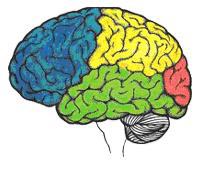
The brain is still a largely undiscovered country. Scientists are only beginning to unlock the secrets of how our brains function and develop. Recent research is showing, however, that certain activities can stimulate the brain to grow and prosper, very much like exercise can help our muscles to develop. We are also learning that sustained reading, solving math equations and stimulating conversation can be much more effective for the development of brain “fitness” than other 21st century activities.
The implications for educators are interesting. We must be certain to use the traditional, somewhat more mundane practices when they will help to develop the brain and mental fitness. This might not always be a popular or entertaining choice, but it is one that will benefit the student in the long run. We must also interject the 21st century applications to stimulate higher order thinking and problem solving skills.
My high school history teacher liked to remind us that the only constant in history is change. The trick for educators is embracing the changes that are beneficial because not all change is for the better. We also need to maintain those practices, no matter how difficult they may seem, that develop the fundamental skills needed to allow higher order thought and expression. This is not an easy task. At Lower Canada College professional development, the sharing of ideas and discussions about current research are key elements of our culture. It is only through life-long learning that we can assure that we are keeping the intellectual needs of our students at the forefront. —Patrick Peotto, Assistant Head – Academics
 End of decades bring on some curious developments. Think about it, music is constantly referred to by the decade. There are entire stations on satellite and local radio dedicated to 60s, 70s, 80s, and 90s classics. Social trends are also attributed to specific decades. We like to classify things this way; hippies and the rise of feminism during the 60s is a perfect example of this tendency. A decade reflects a neat and tidy period, and analysts like to compartmentalize specific trends, developments and orientations.
 This past weekend I read about a conference of language experts in the USA who gathered to determine the most important new words from the past decade. The sponsoring organization is called the American Dialect Society and is composed of leading linguists, writers and independent scholars. Yes, language does evolve and change. In fact through teenagers’ current addiction to texting at an extraordinary rate, young people are actually influencing the English language more dramatically and more rapidly than at any time in history, especially when it comes to the use of new abbreviations for words.
 The Ministry of Education has made dramatic changes to the grade 11 English Language Arts assessment for 2010.
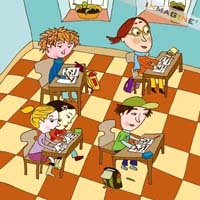
 Every week, LCC’s grade 1 students receive a “Math Problem of the Week,” which is made up of several math activities that they need to solve.
  J’ai beaucoup apprécié le spectacle 20 000 lieues sous les mers. Premièrement, j’ai trouvé que les acteurs ont joué leur rôle d’une façon animée ce qui a stimulé l’audience. Aussi, les effets spéciaux (le son, la lumière) étaient excellents pour une pièce de théâtre. Ils ont contribué grandement à la qualité du spectacle. Cependant, à certains moments, les acteurs parlaient très vite, et c’était difficile de les comprendre. Malgré cela, 20,000 lieues sous les mers était une pièce de théâtre que j’ai trouvé très bien faite en plusieurs aspects.