

LCC and the Relevance of Digital Innovation

CamerasUpThey say that a picture says a thousand words. In essence, images are very powerful and can have great impact.  In the words of Sociology Professor Martin Hand at Queens University in Kingston, “we live in an age of unprecedented visuality.”

Last weekend I attended the World Press Freedom Show at the Marché de Bonsecours in Old Montreal.  It’s a collection of powerful images from some of the world’s most newsworthy or hidden places—images of the revolution last year in Libya, the extraordinary devastation in Japan from the nuclear disaster and tsunami, stunning nature shots, photos of forgotten prisoners in some of the world’s most overcrowded jails.  There are also images that capture scenes that are funny or silly and those that express moments of amazement and surprise.  In short, it’s a powerful and moving photography display, and definitely worth seeing (open until September 30).

As I left, I realized that virtually all of those photos were digital—images built on pixels rather than film. This reflects an extraordinary evolution that has occurred in recent years, even among the world’s best professional photographers.

In the sweep of history, photographs are a relatively recent invention. The first photo of a person was only taken on film in 1839 (black & white of course). Kodak released its first film camera about 50 years later in 1888: it took almost another 80 years, until 1963, for Polaroid to invent the first instant colour film camera.

The next revolution in photography was the advent of the digital age in which we all now live. The world’s first digital camera was invented in 1975 and was about the size of a toaster. The first commercial digital camera was only released in 1991.  At the time, they made less than 1,000 cameras at the cost of about  $20,000 each.

Since 2000, with the advent of the digital phone and small digital cameras, we have all jumped into the digital age with both feet.  The digital cameras are now commonplace. They are built into almost all cell phones, and cameras now sell for less than $50.  We have seen tremendous innovation and progress. Also interesting is that about 3500 photos are now posted to Facebook every second.

With this little lesson and reminders about the evolution of photography, note that the one individual most credited with inventing the digital camera was an LCC graduate by the name of Willard Boyle ’41.  Dr. Boyle was a scientist and researcher who won the coveted Nobel Prize in Physics in 2009. Unfortunately, he passed away just last year.

Willard became globally famous for his achievements working with NASA, preparing for the moon landing in the early 60’s, and his invention of the CCD Sensor that allowed for clear photo images to be sent back to earth from space —and eventually the creation of the digital camera.

But Willard Boyle was once just like our students. The foundation for learning and innovation was laid on Royal Avenue in Montreal, and he always appreciated his affiliation with our school.

As a research scientist, he didn’t wait for others to direct him. He innovated, invented and significantly changed our world, pulling us into the digital age.

Maybe another student at LCC today will have a similar impact one day.  Why not?

As our students become proficient—even expert in some fields, I hope they do what Willard Boyle did: stay both humble and hungry to innovate and have impact on their community.

Remember that Kodak released the first camera in 1888. Unfortunately, after more than a century as a leader in the field of photography, Kodak filed for bankruptcy this year because it didn’t adapt and innovate enough.  That’s another important lesson: take nothing for granted. Indeed, today nothing stays the same and to be successful, no individual and no organization can rest on its laurels, reputation, or press clippings! –Chris Shannon, Headmaster

Middle School Pride: Environnement

Bonjour, je m’appelle Alexandra Gardilcic et je suis la responsable de l’environnement au Middle School Pride cette année. Pour ceux qui ne le connaissent pas, c’est un groupe d’étudiants qui se rencontre chaque mercredi à 7h30 du matin pour planifier des activités pour le Middle School.

My goal as the environment head is to raise awareness about the environment in the Middle School. Cette année, j’espère planifier plusieurs activités pour vous, par exemple, une collecte de bouteilles et de piles. Si vous avez des idées, des commentaires ou des questions vous pouvez me contacter à cette adresse : [email protected].

Last meeting, Holly Faria ’15 came and talked to us about how PASSION+ISSUE=CHANGE. This basically means finding your passion and applying it to real world issues to make a change. For example, if your passion was athletics, you could apply it to an issue such as homelessness. And with this you could make a change. Such as last year there was the Hockey for the Homeless, a tournament that raised money for people in need. Si vous avez une passion pour la musique et que beaucoup de personnes âgées souffrent de la solitude dans les maisons de retraite, vous pourriez peut-être organiser un concert de musique pour eux.

Don’t forget to look at the new announcement board in the Middle School corridor to see any school events that are coming up. All in all, I hope that you have a great year! Thanks! – Alexandra Gardilcic ’16

Des nouvelles de Jouvence

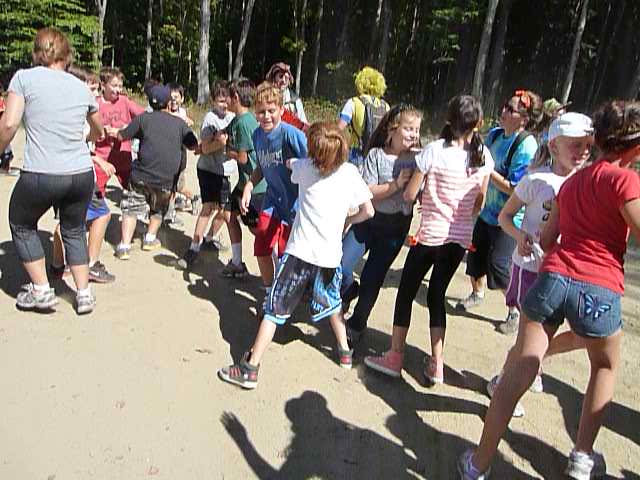
P1020261Aujourd’hui c’était ensoleillé!! On est allé faire du mayak, de l’hébertisme dans la boue, un rallye GPS, de la rabaska et on s’est baigné dans la chute d’eau. C’était très amusant! Les animateurs sont très drôles et fous mais gentils. Il y en a un qui est un accordéoniste, un autre avec des cheveux drôles et un qui s’appelle Windex! Tout le monde a du bon temps. Au revoir et à demain à LCC. Ella Waxman ’19, français enrichi 5A

Photos

Classe Rouge 2012

Hier matin, nous sommes arrivés à Jouvence pour la classe rouge. On était tous très excités! L’endroit où on dort s’appelle D’jouv, c’est grand et coloré. Dans chaque chambre, il y a quatre ou six personnes. Nous étions contents de savoir qui était dans notre chambre. J’ai fait un rallye GPS pendant l’après-midi. Il faut que tu trouves des objets dans la forêt. Le soir, nous avons fait un gros feu, chanté des chansons et écouté des histoires. J’ai hâte de faire d’autres activités amusantes aujourd’hui! — Charlotte Heward ’19

Grit is Good

Lower Canada CollegeIt is interesting that grade 7s focus so much on positive mindset at start of the year. It’s the belief that a “Can Do” mentality can take you far.  According to one acclaimed researcher at Stanford University in California, it is actually your mindset more than anything that will define you well into the future. In fact, there seems to be a lot of discussion right now about this topic. Researchers, writers, and journalists flood our media about back-to-school survival every September. This year I have noted a common theme in education literature: the positive benefits of not just intelligence but what some researchers call “grit.”

So what is “grit?” With a healthy dose of challenge—and even failure—come opportunities.  Every time we “screw-up,” do we walk away to an easier option or do we bounce back and learn from the difficult experience? That is “grit;” what some call “stick-with-itness,” or more familiar words: “resilience,” or “persistence,” or perseverance.

With the start of the new school year, I have thought about this a lot.  We have had a good couple of weeks, but what happens when the sheen of the new wears thin and the homework mounts? How about when you fall or ultimately actually fail at something significant?  Do you seek excuses? “The teacher didn’t like me.” ”He’s so boring in class.” ”She doesn’t know how to motivate kids in math.”  The possibilities for an “easy out” are endless.

It’s important to reflect on how good you are at managing adversity and failure. Do you bounce back because you are told you must, or because you want to?

I am reminded of the words of Dr. Wayne Halliwell—a sports psychologist and former LCC parent—who reminds us that every time we point at an excuse there are actually three fingers pointing back at us (Try it)!

Dr. Halliwell was personal coach to Canadian Olympic skiers Jen Heil, and Alexandre Thibodeau, and skater Joannie Rochette—all medalists at the Vancouver Olympics. He told me a story when he returned from the Vancouver games in 2010. He was with Joannie’s dad, Mr. Rochette, when they woke Joannie at about 6 am in the Olympic village early in the games to tell her that her mother had died from a sudden heart attack. After the initial shock, they eventually asked Joannie if she still wanted to skate, and she decided to do so in honour of her mom.  As you know she had to summon all the resilience she possessed and eventually won a bronze medal, but under the circumstances it was like 10 gold medals with the whole country supporting her.  Joannie showed true “grit.” I think we can all learn a lot from her.

We are only a couple of weeks into school.  To reach your personal goals this year, all of you will have to work hard, and along the way you will experience success, hardship and disappointment. See all those moments and those sentiments as essential ingredients in your personal development.

Every time a teacher, coach or advisor tells you something isn’t “good enough” or that you “can do better,” realize how powerful that message is.  Don’t deny it, or bark back, or point to others for excuses.  Accept the critique as something truly constructive in your learning and development.

Along with celebrating your successes, developing grit, resilience and character should be priorities to better handle life as a young adult in a complicated world. —Chris Shannon, Headmaster